Why a Top Chinese Scientist Calls Wu Yiling a ‘Six‑Dimensional’ Innovator
Academician Wu Yiling, a leading figure in China’s traditional‑medicine community, has been hailed by fellow academician Cong Bin as a “six‑dimensional” modern scientist. Wu’s work centers on the Luo vessel—a network of tiny channels that, according to ancient theory, moves qi and blood throughout the body. By systematically gathering centuries‑old writings, modern lab data, and clinical observations, Wu built a comprehensive Luo‑vessel theory that links micro‑circulatory dysfunction to many chronic illnesses.
His research led to the creation of a national key laboratory, new diagnostic criteria, and a whole new discipline—TCM Luo Vessel Disease Studies—now recognized as a high‑level key field. The theory has driven the development of innovative Chinese medicines, spurred the establishment of specialized hospital departments, and produced dozens of evidence‑based clinical trials that meet international standards. Wu’s textbooks are taught in over 40 universities, and more than 140 professional societies worldwide now focus on Luo‑vessel research.
The project was selected for the Chinese Academy of Engineering’s Major National Projects, earning a national science‑technology progress award. Cong Bin praised Wu’s blend of deep historical knowledge, cutting‑edge science, and collaborative spirit, saying his vision bridges East and West and reshapes how chronic disease is understood and treated.
Read more
AI Detects Dozens of Hidden Worlds in NASA’s TESS Data
Astronomers at the University of Warwick have harnessed a new artificial‑intelligence pipeline, dubbed RAVEN, to sift through more than 2.2 million stars observed by NASA’s Transiting Exoplanet Survey Satellite (TESS). The AI‑driven search has validated over 100 exoplanets – including 31 brand‑new discoveries – and pinpointed thousands of promising candidates. By concentrating on planets that zip around their stars in less than 16 days, the team has produced the most precise estimate yet of how common these short‑period worlds are around Sun‑like stars. “RAVEN lets us analyze massive data sets consistently and objectively,” said Dr. David Armstrong, associate professor at Warwick. “Because the pipeline is rigorously tested, this isn’t just a wish‑list of possible planets; it’s a reliable sample we can use to map planetary demographics.” The researchers have released interactive tools and catalogs so other scientists can explore the findings and select targets for follow‑up with ground‑based telescopes and upcoming missions such as ESA’s PLATO. The work appears in the Monthly Notices of the Royal Astronomical Society and promises to accelerate the hunt for new worlds.
Read more

Agile Robots Teams Up with Google DeepMind to Power Smarter Factories
Munich‑based robotics startup Agile Robots announced a new strategic research partnership with Google DeepMind on Tuesday. The deal will see Agile Robots embed DeepMind’s Gemini Robotics foundation models into its next‑generation machines, while the data gathered by those bots will help fine‑tune Gemini’s underlying AI. Together, the two companies plan to test, refine, and roll out autonomous robots across a range of industrial settings, from electronics assembly lines and car factories to data‑center maintenance and warehouse logistics. By combining Agile Robots’ expertise in hardware design and real‑world deployment with DeepMind’s cutting‑edge machine‑learning research, the partnership aims to create bots that can make decisions on the fly, adapt to unexpected changes, and operate with minimal human oversight. The collaboration reflects a broader trend of AI labs joining forces with robotics firms to accelerate the commercialization of intelligent automation. Earlier this month, German startup Neura Robotics partnered with Qualcomm to use its new IQ10 processor for mobile and humanoid robots. As the demand for flexible, self‑learning machines grows, such alliances are becoming a fast‑track way to bring sophisticated, AI‑driven robots from the lab to the factory floor.
Read more
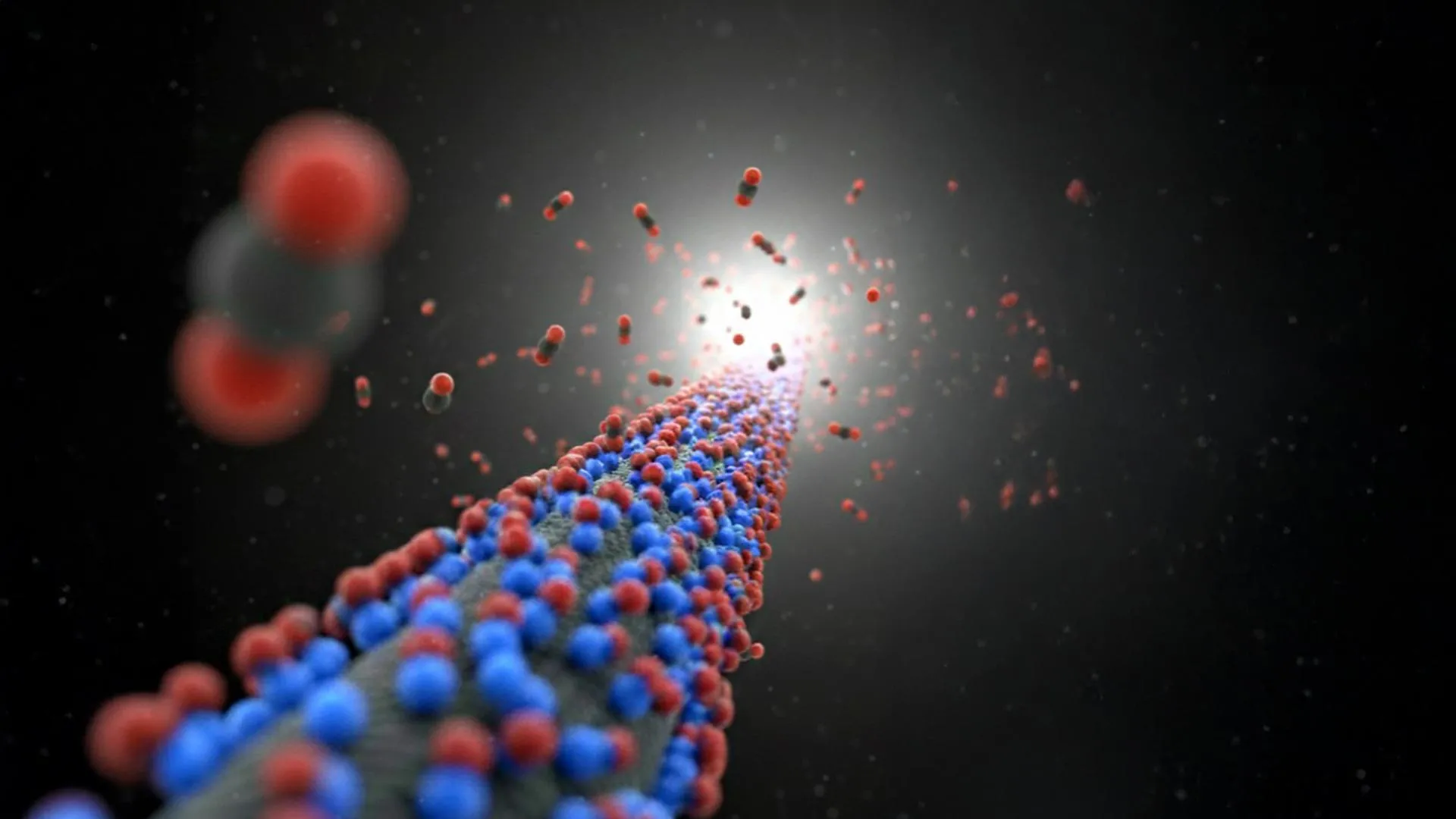
Breakthrough Carbon Material Could Slash Costs of CO₂ Capture
Scientists at Chiba University have unveiled a newly engineered carbon material that could dramatically lower the price and energy demand of carbon‑capture technology. By precisely arranging nitrogen atoms within the carbon framework, the team created a porous structure that grabs carbon dioxide far more efficiently than conventional sorbents. Even more striking, the material releases the captured CO₂ at temperatures below 60 °C, meaning it can be regenerated using low‑grade waste heat instead of the high‑energy steam required by today’s amine‑based systems. In laboratory tests, the new sorbent captured up to 30 % more CO₂ per kilogram of material and needed only a fraction of the heat to unload the gas. This dual advantage—higher uptake and low‑temperature regeneration—offers a practical pathway for power plants, factories, and other emitters to retrofit existing equipment without massive energy penalties. If scaled up, the technology could accelerate the rollout of carbon‑capture projects worldwide, making climate‑mitigation targets more attainable and affordable. The researchers say their design provides a blueprint for the next generation of climate‑friendly materials, opening doors to greener industrial processes and a faster transition to net‑zero emissions.
Read more
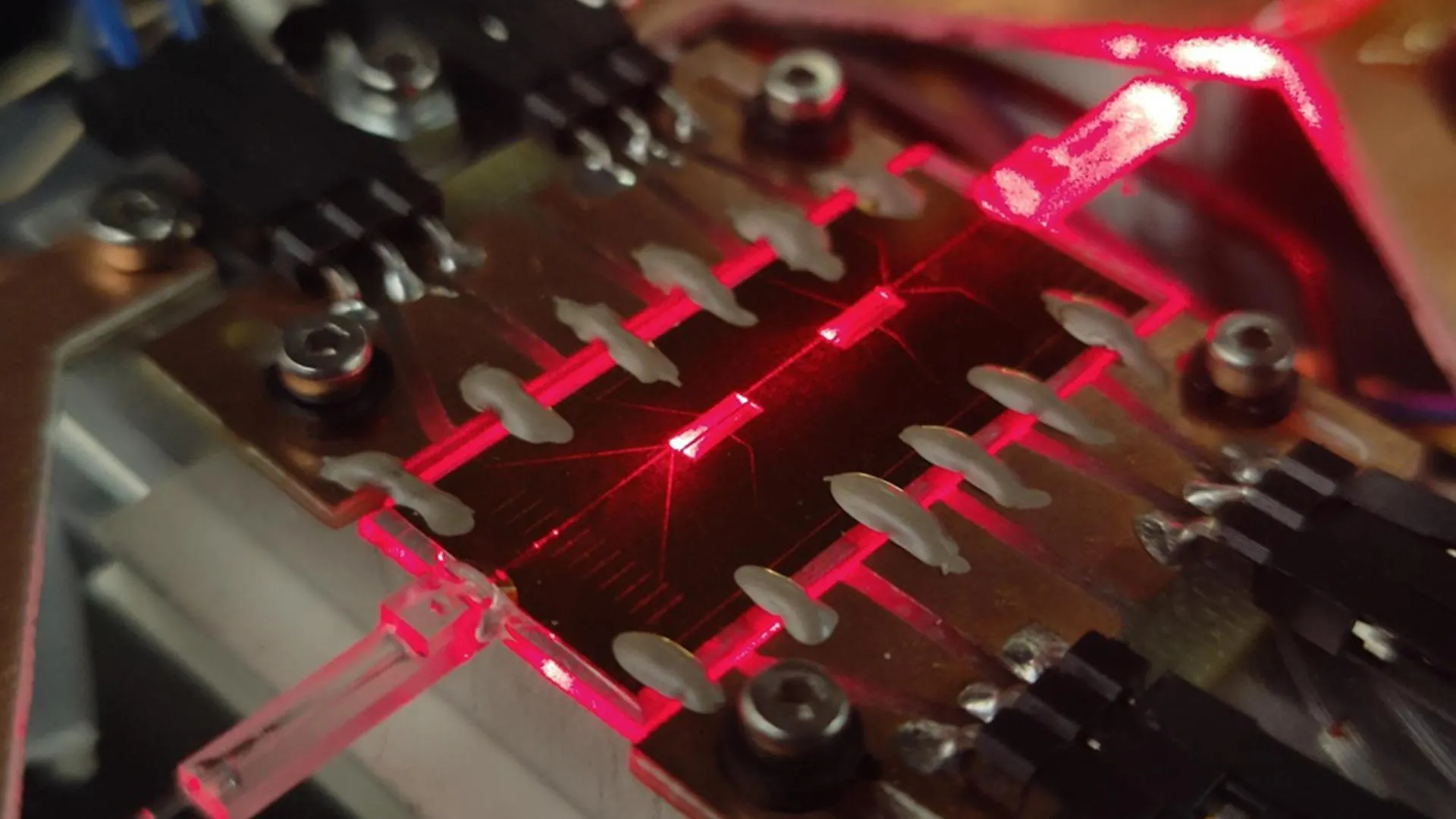
Glass Becomes a Super‑Secure Quantum Shield for Future Communications
A team of physicists has discovered a way to transform ordinary glass into a powerful tool for quantum‑level security. By embedding tiny, specially arranged structures inside the glass, the researchers created a device that can generate and detect quantum keys—unique codes that change instantly if anyone tries to eavesdrop. This breakthrough builds on the promise of quantum key distribution (QKD), which uses the odd rules of quantum physics to guarantee that any interception is immediately spotted. Traditional QKD systems rely on bulky, delicate equipment, but the new glass‑based device is compact, robust, and can be integrated into existing fiber‑optic networks. In tests, the glass module successfully transmitted encrypted messages over long distances while flagging any intrusion attempts, demonstrating a level of protection far beyond today’s encryption methods. The innovation could soon protect everything from banking transactions to military communications, making it virtually impossible for hackers to crack the code without being detected. As quantum computers become more powerful, such ultra‑secure channels will be essential to keep our data safe in the digital age.
Read more