
Conntour Secures $7 Million to Turn Security Cameras into a Google‑Style Search Engine
Security camera footage is about to become as easy to search as the web. Conntour, a startup founded by Matan Goldner, just closed a $7 million funding round led by General Catalyst and Y Combinator. The money will fuel the launch of an AI‑powered tool that lets security teams ask plain‑English questions and instantly pull up relevant video clips.
Imagine a guard typing, “Show me anyone in sneakers handing a bag in the lobby,” and the system instantly scanning thousands of live and recorded feeds to surface the exact moments that match. Conntour’s platform does exactly that, using advanced AI models to understand objects, people, and actions across massive camera networks.
What sets Conntour apart is its focus on scale and responsibility. The technology is built to handle enterprises with tens of thousands of cameras without slowing down, and the company is choosy about who gets access, citing ethical concerns around surveillance misuse.
With the fresh capital, Conntour aims to roll out its search engine to more businesses, making it faster and simpler for security teams to spot incidents, prevent threats, and keep an eye on what matters most—all with a few typed words.
Read more
New Walking Robot Could Speed Up Moon Mining and Mars Life Hunt
Scientists have unveiled a legged robot designed to zip across the Moon’s rugged surface and, later, the Martian terrain, dramatically speeding up the search for valuable resources and signs of past life. In a recent study, researchers tested two ways of using the robot for scientific surveys. The traditional method relied on scientists directing the robot to a single spot, waiting for data, then moving on—an approach that took about 41 minutes per analysis. The new strategy lets the robot operate semi‑autonomously, hopping from one target to the next without constant human input. This multi‑target mode cut the time down to just 12‑23 minutes for the same set of measurements. By handling several locations in a single run, the robot not only saves precious mission time but also reduces the need for constant communication with Earth, a major bottleneck for deep‑space operations. Faster, more flexible scouting could help future lunar bases locate water ice, rare metals, and other materials essential for sustainable habitats, while on Mars it could quickly map promising sites where ancient microbes might have once lived. The breakthrough points to a future where agile, self‑guided machines become the frontline explorers of other worlds.
Read more
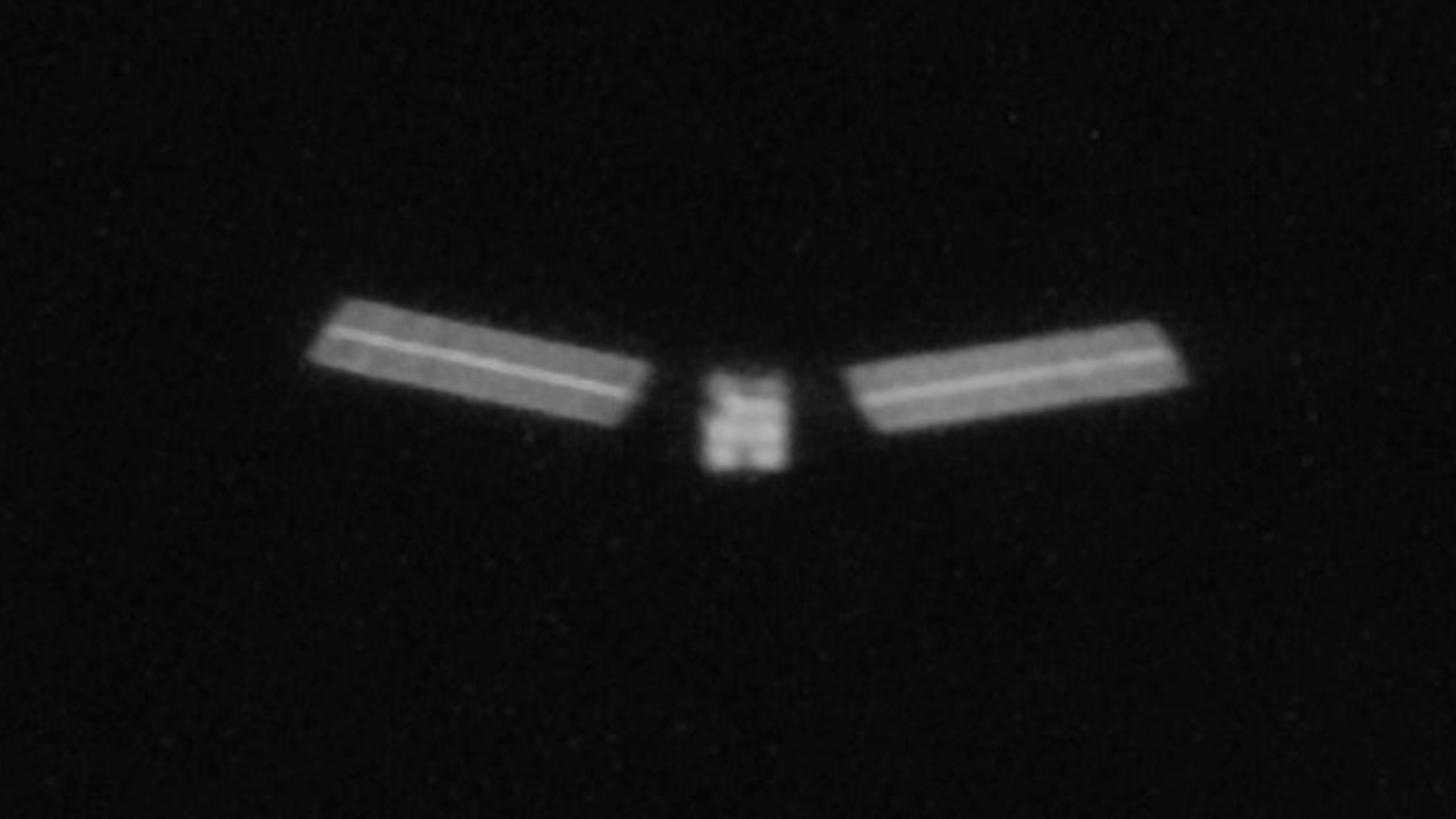
Starlink Satellite Breaks Apart in Orbit – No Threat to the ISS or Artemis II
On March 29, a SpaceX‑operated Starlink satellite (ID 34343) suffered an on‑orbit anomaly at roughly 560 km above Earth and subsequently fragmented into multiple pieces. The incident was first reported on SpaceX’s Starlink X feed, which reassured the public that the breakup poses no new danger to the International Space Station, its crew, or NASA’s upcoming Artemis II lunar mission.
The satellite had been photographed by the High‑Earth‑Orbit (HEO) camera network on February 14, 2026, showing it intact before the failure. HEO is now attempting to capture fresh images of the debris field to better understand the fragmentation. SpaceX is working closely with NASA and the U.S. Space Force to track any remaining fragments and ensure they stay clear of critical flight paths.
While the loss of a single communications satellite is a setback for the Starlink constellation, the company emphasized that its overall network remains robust and that the event does not affect ongoing launch schedules. Space enthusiasts can follow the story through SpaceX’s official channels and Space.com’s newsletter for the latest updates.
Read more
Fat‑Based Nanoparticles Supercharge CAR‑T Therapy Against Pancreatic Cancer
Researchers have found a way to make CAR‑T cell therapy work better against solid tumors like pancreatic cancer by using tiny fat‑based carriers called lipid nanoparticles (LNPs). In a pre‑clinical study, scientists at the University of Pennsylvania’s School of Veterinary Medicine injected LNPs that carry the genetic blueprint for CAR‑T cells directly into mice. The LNPs program the animals’ own T cells to hunt down and destroy cancer‑associated fibroblasts—support cells that form a protective scar around the tumor and keep most treatments at bay. By wiping out these fibroblasts, the tumor’s “shield” collapses, allowing more CAR‑T cells to slip inside and attack the cancer itself. The approach not only slowed tumor growth but also proved safer and cheaper than the traditional method of extracting, engineering, and reinfusing T cells in the lab. Because the LNPs can be given alongside standard chemotherapy or checkpoint‑inhibitor drugs, the technique could become a versatile backbone for combination therapies. If the results translate to humans, this could open the door to affordable, off‑the‑shelf CAR‑T treatments for a range of solid cancers, bringing a powerful immunotherapy option to patients who currently have few choices.
Read more