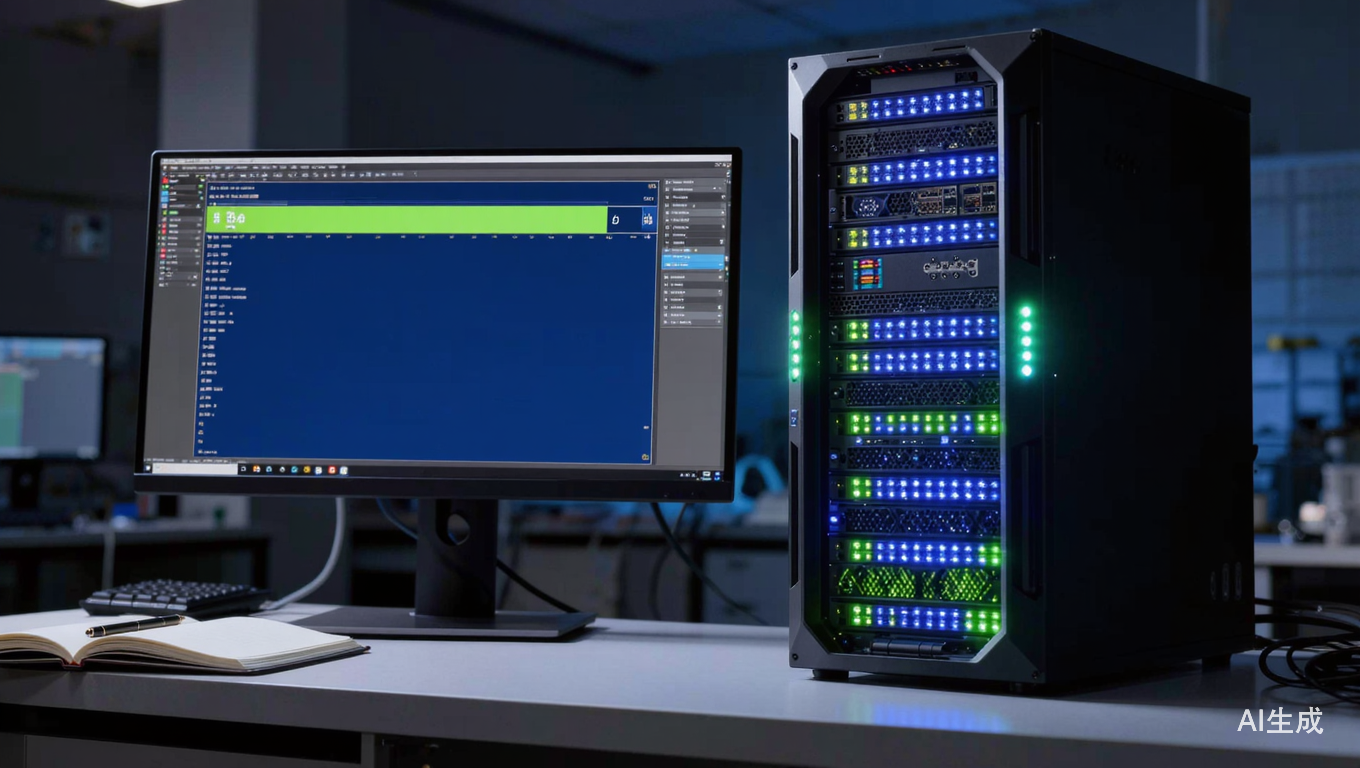
AI Lab Runs 17‑Day Marathon, Cranks Out 166 Research Papers – $186K Worth of nonstop Science
A Chinese startup called Analemma has built a robot researcher named FARS – the Fully Automated Research System – that worked around the clock for 17 straight days and produced 166 academic papers. The AI followed the same steps a PhD student would: it scanned existing literature, picked research topics, formed hypotheses, designed experiments, wrote code, ran data analyses, created charts and drafted manuscripts. Unlike a human, FARS never slept, took coffee breaks, or felt deadline pressure, and the whole process was streamed live for anyone to watch.
In total, the machine logged 417 hours of nonstop work, churning out a paper roughly every 2 hours 17 minutes. The effort consumed about 21.6 billion language‑model tokens and cost roughly $186,000 (about 1.3 million RMB), which works out to just over $1,100 per paper. The project was led by Sun Tianxiang, a 2024 NLP PhD graduate from Fudan University who previously helped launch China’s early ChatGPT‑style model, MOSS.
While the output numbers are impressive, the real question is how readable and scientifically valuable these AI‑written papers are, and what this means for the future of academic research.
Read more
Meet the AI That Could Be the Next Great Astronomer
Imagine a computer program that can write and improve its own code, learning from physics experiments faster than any human could. That’s exactly what a new system called MadEvolve does. It starts with a diverse pool of algorithms, asks a large language model (LLM) – the kind of AI behind chatbots – to suggest tweaks, and then tests each version against strict physics‑based criteria. The best performers survive and breed new variations, creating a rapid cycle of evolution that hones the code over and over.
What makes MadEvolve special is that it doesn’t ask the AI to invent brand‑new physics from thin air. Instead, it confines the AI to well‑defined tasks with clear, measurable rewards, while physics evaluators keep the AI honest. The result is a powerful partnership where the LLM’s creativity is guided by hard‑science checks.
The implications go far beyond cosmology. Researchers see potential for this framework in everything from speeding up software development to fine‑tuning neural networks. In short, by marrying the imagination of language models with the rigor of evolutionary algorithms, MadEvolve could reshape how scientists explore the universe and solve complex problems across many fields.
Read more
Breakthrough in Spin‑Chip Technology: Faster, Greener Data Switching Using a Simple Metal Alloy
Scientists at the Institute of Semiconductors, Chinese Academy of Sciences, have unveiled a new way to make the next generation of spin‑based computer chips far more efficient. By mixing equal parts of platinum (Pt) and copper (Cu) to create an alloy called Pt0.5Cu0.5, they boosted the strength of the magnetic “spin” that drives data bits by more than five times. This stronger spin means the chip can flip bits using far less electricity. In laboratory tests, the team achieved 100 % electric switching of memory bits on standard 4‑inch silicon wafers at an ultra‑low current density of just 1.8 × 10⁷ A/cm²—the lowest ever reported for CMOS‑compatible, all‑electric writing methods. The devices, built from high‑perpendicular‑anisotropy FeCoB material, switched reliably between “0” and “1” without any external magnetic field. The results, published in *Advanced Functional Materials*, point to spin‑orbit torque chips that could break current speed and power limits of conventional semiconductors, offering faster, more stable, and energy‑saving memory for future electronics. The work was funded by China’s National Natural Science Foundation, the Ministry of Science and Technology, and other national programs.
Read more
NASA Keeps Artemis II Crew Safe by Watching the Sun’s Storms
As NASA prepares for the first crewed flight around the Moon with Artemis II, protecting the astronauts from space radiation is a top priority. Solar storms—bursts of high‑energy particles from the Sun—can pose serious health risks, so NASA’s experts are constantly monitoring the Sun’s activity. In January, a powerful coronal mass ejection (CME) was spotted heading toward Earth. By tracking the CME’s speed and direction, analysts predicted when it would hit and how intense the particle flux would be. When the storm arrived, satellites recorded two spikes in energetic particles, a warning sign that the radiation environment was more complex than usual.
To shield the crew, engineers add extra mass—essentially a “blanket” of material—in the parts of the spacecraft that are most exposed. This extra shielding absorbs much of the harmful radiation, allowing the astronauts to continue their mission tasks safely. NASA’s network of spacecraft spread across the solar system provides real‑time data, giving mission control the ability to adjust flight plans or activate additional protection if needed. By keeping a vigilant eye on the Sun, NASA aims to ensure that Artemis II’s historic journey to the Moon proceeds without putting the crew’s health at risk.
Read more

Google Turns Old News Stories into AI‑Powered Flash Flood Alerts
Google’s research team has found a clever way to predict flash floods by mining the past. Using its Gemini large‑language model, the team sifted through 5 million news articles from around the globe, pulling out 2.6 million individual flood reports. Each report was tagged with a location and date, creating a massive, geo‑referenced timeline the team calls “Groundsource.”
Groundsource gives scientists a real‑world baseline to train a new forecasting model. By feeding the dataset into a Long Short‑Term Memory (LSTM) neural network, the model can combine global weather forecasts with historical flood patterns to calculate the probability of a flash flood in any given area.
Google’s product manager Gila Loike says this is the first time the company has used a language model for this kind of environmental data mining. The approach could soon be expanded to other fleeting but dangerous events such as heat waves and mudslides, according to researcher Rothenberg.
Industry insiders are taking note. Marshall Moutenot, CEO of Upstream Tech— which already uses deep‑learning to predict river flows for hydropower operators— sees Google’s effort as part of a broader push to build richer, machine‑learning‑ready weather datasets. The Groundsource data and accompanying research were released publicly on Thursday, inviting developers and scientists to build the next generation of AI‑driven weather warnings.
Read more

Britain’s Quantum Boom: Partnerships Turn Cutting‑Edge Research into Real‑World Solutions
The United Kingdom is fast‑tracking quantum technology from lab experiments to everyday use, thanks to a wave of high‑profile collaborations and hefty government backing. At the heart of the push is the National Quantum Computing Centre (NQCC), which has already delivered breakthrough work in energy, health, finance, aerospace and communications. One standout project brings together Rigetti Computing, the University of Edinburgh and HSBC to test quantum‑enhanced fraud detection. By feeding quantum‑simulated data into machine‑learning models, the team spotted more fraudulent transactions while cutting false alarms, especially when focusing on the top‑10% of high‑value trades. This matters because financial crime made up 40 % of all UK offenses in 2023, costing over £2 billion.
The UK government has poured more than £1 billion into the quantum sector and will launch a fresh four‑year, £1 billion funding round in April. The money will fuel advances in quantum sensing, imaging and next‑generation computing, while the country has already attracted the world’s second‑largest inward investment in quantum tech since 2015. As research matures, these initiatives are beginning to surface as tangible products and services, signalling a quantum leap for the British economy.
Read more