AI Takes Over 180,000 Store Shelves: How a Chinese Startup Is Revolutionizing Unmanned Retail
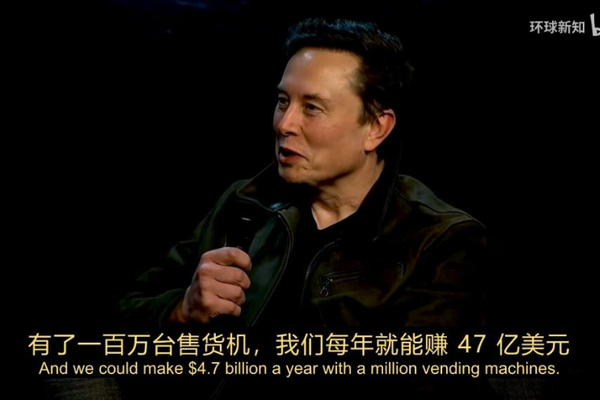
In 2026 the AI boom is moving from simple chatbots to real‑world assistants that can run businesses on their own. Elon Musk recently showed off Grok‑4’s ability to run a vending‑machine business – picking products, setting prices, restocking and handling cash – and even beat a rival AI in sales. In China, a similar transformation is already happening. The unmanned‑retail operator Feng E Zu Shi has deployed artificial‑intelligence agents to manage more than 180,000 smart cabinets, generating about 2 billion yuan in annual revenue.
The company started experimenting with AI back in 2021, long before most retailers were even using large language models. Early on they faced high rental costs, low‑traffic locations and immature AI tech, but a team of PhDs in mathematics and algorithms bet that “fake AI” would soon become real. They poured roughly 250 million yuan into research, hiring over a hundred engineers from firms like Meituan, ByteDance and Tencent. Their home‑grown system, called “Star Voyage Intelligent Navigation,” now handles everything from video‑based product recognition to automated inventory decisions.
By replacing manual oversight with intelligent agents, Feng E Zu Shi has cut operating costs, improved shopper experience and proved that AI can scale across thousands of retail points. The story marks a turning point: unmanned stores are no longer experimental kiosks but fully automated, AI‑driven profit centers.
Read more
UCLA Breakthrough Unclogs the Gate to Faster Perovskite Electronics
A team of researchers at UCLA has found a clever way to speed up the flow of electricity into perovskite semiconductors, a class of materials that could power the next generation of smartphones, solar panels, and LED displays. The problem they tackled was a tiny “doorway” where metal contacts meet the perovskite layer. In many devices this interface acts like a clogged gate, forcing electrons to waste energy and slowing the whole system down. By sprinkling a thin layer of silver oxide (Ag₂O) right at the junction, the scientists created a localized “doping” that dramatically thins the energy barrier. This lets electrons slip through via a quantum‑tunneling process called Fowler–Nordheim tunneling, rather than having to climb over the barrier the old‑fashioned way. The result is a much smoother, more efficient passage for charge carriers, which can boost device speed, lower power consumption, and improve overall performance. The discovery, published in *Nature Materials*, offers a new design blueprint for perovskite‑based electronics and could accelerate the rollout of ultra‑fast, low‑energy gadgets and greener solar technologies.
Read more
Breakthrough Solar Catalyst Could Turn Sunlight into Clean Fuel Faster Than Ever
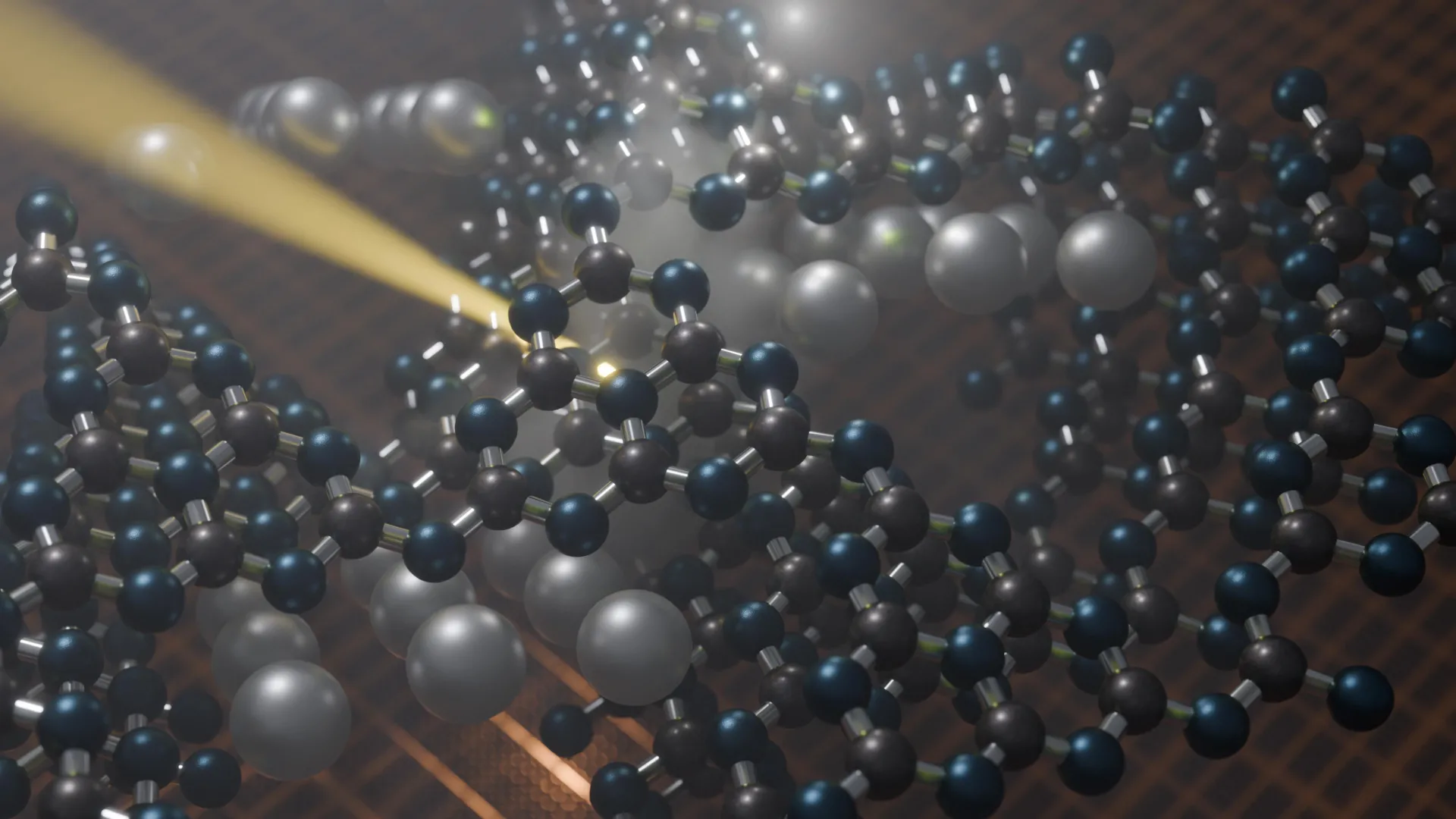
A research team at Germany’s Helmholtz‑Zentrum Dresden‑Rossendorf has solved a long‑standing puzzle in solar‑fuel technology. By using advanced computer simulations, they designed a new class of photocatalyst—ion‑exchanged poly(heptazine imide)—that captures sunlight more efficiently and speeds up the chemical reactions that turn carbon dioxide into useful fuels and chemicals. The breakthrough lies in a “theory‑guided” approach that predicts how tiny changes in the material’s structure affect its performance, allowing scientists to pinpoint the most promising designs without costly trial‑and‑error experiments. In lab tests, the new catalyst showed a dramatic boost in converting CO₂ under visible light, hinting at a future where solar panels could not only generate electricity but also produce liquid fuels directly from the air. This could accelerate the rollout of clean‑energy solutions for transportation, industry, and power generation, bringing us a step closer to a carbon‑neutral world.
Read more
Guangzhou Hosts International Seminar on Cutting‑Edge Micro‑Energy Grids for Net‑Zero Buildings
On March 11, the Guangzhou Institute of Energy Conversion welcomed a delegation of Serbian scholars and Chinese experts for a progress seminar on a joint Chinese Academy of Sciences‑Alliance of International Science Organizations (CAS‑ANSO) research program. The project, titled “Development of a Novel Integrated Heat and Power Micro‑Energy Grid with Coupling Energy Bus and Renewable Microgrid for Net‑Zero Energy Building Areas,” aims to create self‑sufficient, low‑carbon energy systems for Belt‑and‑Road countries.
The meeting featured Professor Željko Đurišić from the University of Belgrade, ANSO project manager Feng Xiaoyan, and senior CAS officials Bai Yu and Lyu Yiran, along with researchers Lin Wenye and Qiao Qingyao. Feng highlighted the project’s role in boosting energy independence and accelerating the Belt‑and‑Road’s high‑quality, green development. Lin gave a concise overview of the research timeline, showcasing China’s progress on an “energy bus” that dynamically balances heating and electricity for high‑performance buildings.
Serbian participants, including Iva Batić and Kristina Lazović, shared their expertise in power‑system research and reported steady advances in energy‑storage, microgrid integration, and overall system design. The seminar concluded with a strong sense of collaboration and optimism that the joint effort will deliver practical, zero‑carbon energy solutions for future building districts.
Read more
Glow‑In‑The‑Dark Nanoparticles Light Up Tumors and Deliver Chemo More Safely
Researchers at the University of São Paulo have created a new class of engineered nanoparticles that shine on their own and act as tiny drug‑carriers for cancer therapy. By attaching the chemotherapy drug gemcitabine to a biocompatible polymer called carboxymethylcellulose, the team built a “prodrug” that stays inactive until it reaches a tumor. The particles emit a bright, intrinsic luminescence, allowing doctors to see exactly where they travel inside the body using standard imaging equipment. At the same time, the particles are designed to release the drug only when they bind to cancer cells, a feature known as active targeting. Laboratory tests on breast and cervical cancer cells showed that the nanocarriers deliver higher concentrations of gemcitabine directly to the tumor while sparing healthy tissue, potentially cutting the side‑effects that often limit chemotherapy. The dual‑function system—combining real‑time imaging with controlled drug release—offers a promising route toward more precise, less toxic cancer treatments and could be adapted for a range of diseases that benefit from targeted drug delivery.
Read more

AI Breakthrough Predicts Cancer Spread with 80% Accuracy, Paving Way for Smarter Treatments
Scientists at the University of Geneva have uncovered a surprising pattern in how cancers spread: they follow a biological “program” rather than moving at random. By examining colon‑tumor cells, the team identified a set of gene signatures that act like warning lights, indicating whether a tumor is likely to metastasize. They fed these signatures into a new artificial‑intelligence model called MangroveGS, which can forecast the risk of metastasis with roughly 80 % accuracy. Remarkably, the tool works not only for colon cancer but also shows promise across several other tumor types. The implications are huge. Doctors could use MangroveGS to decide which patients truly need aggressive therapy, sparing low‑risk individuals from harsh side effects and costly treatments. At the same time, high‑risk patients would receive closer monitoring and early intervention. The technology could also streamline clinical trials by pinpointing the most suitable participants, reducing the number of volunteers needed while boosting the statistical power of studies. In short, this AI‑driven insight could transform personalized cancer care, making it more precise, less invasive, and ultimately more effective for the patients who need it most.
Read more