China’s AI Surge: From Low‑Cost Models to Global Leadership
China is carving a distinct path in artificial intelligence by prioritizing efficiency over sheer size. By combining “software‑defined computing power,” algorithmic tweaks such as mixture‑of‑experts (MoE) and sparse attention, and real‑world AI applications, Chinese teams have shown that high‑performing models can be trained on modest hardware. The breakthrough DeepSeek‑R1 exemplifies this approach, proving that clever engineering can push model performance far beyond traditional limits.
On the data front, China is shifting from sheer volume to high‑quality, synthetic data. New pipelines clean and generate textbook‑grade Chinese corpora, dramatically boosting training efficiency. A joint MIT‑Hugging Face report predicts Chinese open‑source models will capture 17 % of global downloads in 2025, overtaking the United States.
Algorithmically, Chinese models such as DeepSeek‑V3/R1 and Alibaba’s Qwen 2.5 are moving beyond simple Llama fine‑tunes, introducing original architectures, multi‑head latent attention, and better long‑text handling. The focus on “cost‑performance” makes these models ideal for edge devices and small‑business use.
While hardware gaps—like single‑card speed and interconnect bandwidth—remain, China’s massive computing infrastructure and system‑integration expertise provide a solid foundation for future advances. Across finance, education, healthcare, and energy, AI is already delivering faster risk analysis, personalized learning, rapid medical scans, and smarter grid management, signaling a rapid transition from experimental tech to everyday utility.
Read more
NASA’s Pocket‑Size Spacecraft Captures First Glimpses of Distant Worlds
NASA’s ultra‑small SPARCS (Star‑Planet Activity Research CubeSat) mission has delivered its first images of stars that host exoplanets, opening a new window on how stellar flares might affect alien worlds. The 6‑kilogram CubeSat carries the SPARCam ultraviolet camera, a cutting‑edge detector developed at JPL’s Microdevices Laboratory. Thanks to an onboard computer that can process data in real time, the spacecraft can tweak its observations on the fly, catching stellar eruptions as they happen.
The breakthrough shows that tiny, low‑cost satellites can perform science once reserved for massive observatories. The success paves the way for NASA’s next flagship, the Habitable Worlds Observatory, and for intermediate missions such as the UVEX (UltraViolet Explorer) led by Caltech.
“Seeing how a star’s activity influences the habitability of its planets is a game‑changer,” said Shouleh Nikzad, chief technologist at JPL and lead developer of the SPARCam. “We’re thrilled that our detector and filter technology made this possible.”
With this milestone, NASA demonstrates that compact spacecraft can deliver high‑impact data, accelerating the search for life‑friendly planets across the galaxy.
Read more

Quantum Chips: The Next Tech Race That Could Redefine Computing
China’s quantum‑technology boom is moving from big‑budget labs to real‑world products, and experts say 2026 could be the turning point when quantum computers start solving practical problems. Two very different approaches are battling for dominance.
The first, championed by IBM and other U.S. giants, builds superconducting chips that sit on the same manufacturing lines as today’s silicon chips. IBM’s new “quantum‑centric supercomputer” stitches quantum processors together with traditional CPUs and GPUs, letting each handle the tasks they do best.
The second path, where China currently leads, uses light‑based (photonic) chips. Researchers at the University of Science and Technology of China, led by Pan Jianwei, have created a chip that generates a continuous‑variable entangled cluster state – a breakthrough published in *Nature* that closes a major gap for photonic quantum hardware. Photonic chips work at room temperature, keep quantum information stable longer, and are less vulnerable to noise.
Beyond the tech, the rivalry mirrors a broader geopolitical split. The U.S. ecosystem includes Google, Intel, IonQ, Rigetti and top universities, while China’s effort is driven by institutions like USTC, Origin Quantum and Huawei, backed by strong government funding and coordinated policy. Export controls added in 2022 have tightened the race even further. As both camps push forward, the world watches to see which quantum chip design will become the foundation of the next computing revolution.
Read more
Scientists Twist Light’s Handedness with Adjustable Bilayer Photonic Crystals
A team of physicists has unveiled a new kind of photonic crystal that can actively switch the “handedness” of light—its circular polarization—by simply rotating two stacked layers relative to each other. These twisted bilayer structures act like a microscopic kaleidoscope: when the top layer is twisted a few degrees, the crystal’s internal pathways for photons rearrange, causing the light that passes through to flip from left‑handed to right‑handed (or vice versa) on demand. The breakthrough hinges on precise control of the lattice alignment, which alters the crystal’s band structure and opens a tunable gap for specific polarizations. Because the effect can be turned on and off quickly and without any external electric fields, the technology promises compact, low‑power components for next‑generation optical communications, quantum computing, and advanced imaging systems. Researchers demonstrated the concept using laser light in the near‑infrared range, achieving a polarization conversion efficiency exceeding 90 % across a broad wavelength band. The work showcases how engineered nanostructures can give us dynamic, real‑time control over fundamental properties of light, opening doors to faster, more secure data transmission and novel photonic devices.
Read more
China’s Humanoid Robots Leap Into the Spotlight: How ‘Embodied AI’ Is Changing Everyday Life
Embodied intelligence – the blend of sensors, motors and language‑processing AI that lets machines see, think and act in the real world – is moving from labs to streets. A recent report from the UK’s Alan Turing Institute highlighted this trend, and industry analysts say the global market, worth $4.4 billion in 2025, could hit $23 billion by 2030, growing at nearly 40 % a year. China is leading the charge. From autonomous demos at CES to live performances at the Spring Festival Gala, Chinese humanoid robots have become internet sensations. Government backing, massive investment funds and the inclusion of “embodied intelligence” in the 2025 work report have turned the technology into a national priority. Companies such as Unitree are racing to build large‑scale robot models, while experts warn that data quality and robust training remain hurdles. Nevertheless, shipments of humanoid robots reached about 18,000 units in 2025, with China supplying the bulk. Observers predict that these advances will soon reshape logistics, manufacturing and even home life, bringing smarter, more helpful machines to ordinary people. The next “ChatGPT moment” for physical AI may be just around the corner.
Read more
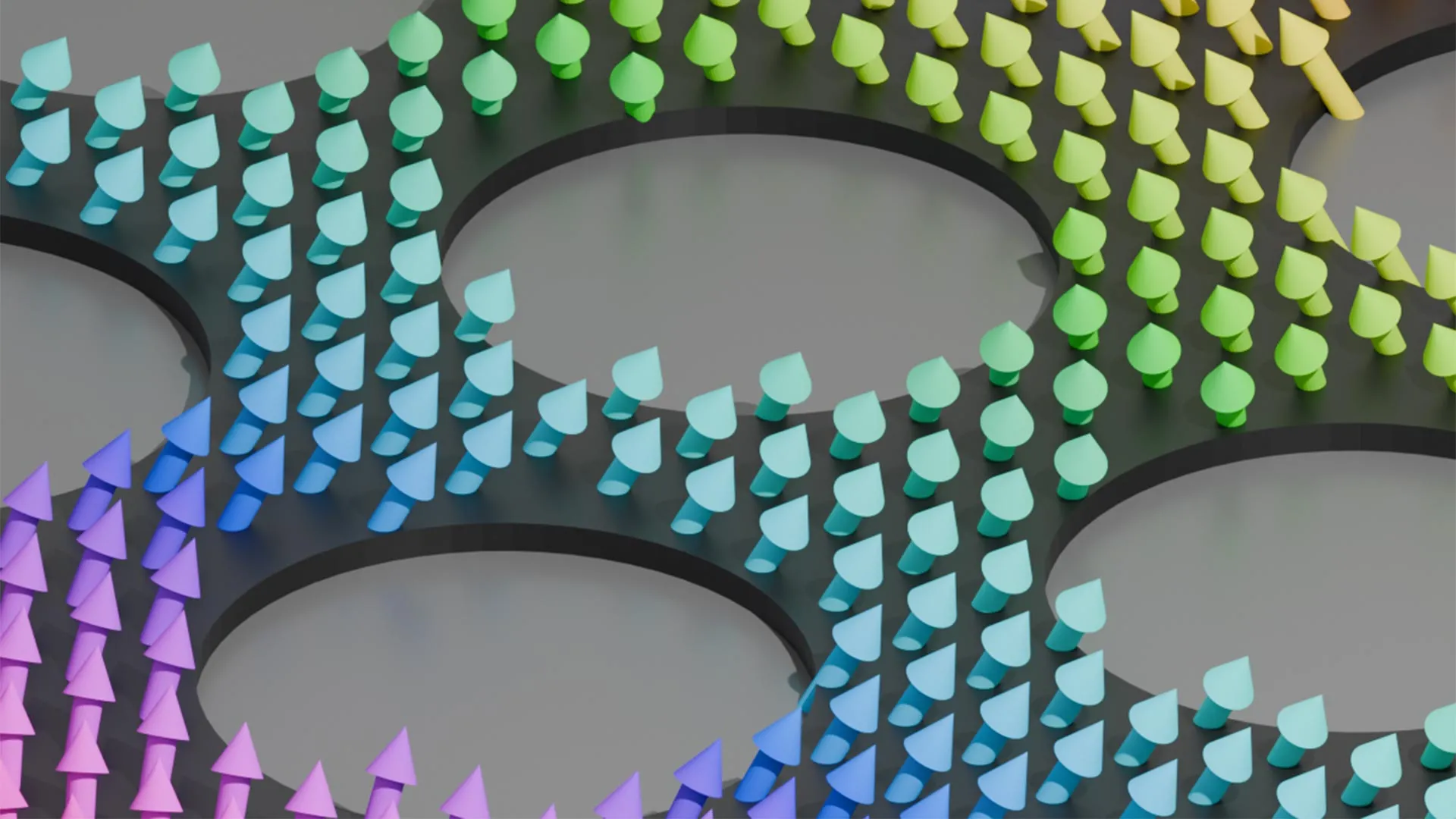
Engineers Turn Magnets into Graphene‑Like Super‑Materials, Opening New Tech Horizons
Researchers at the University of Illinois Urbana‑Champaign have discovered a way to make ultra‑thin magnetic sheets behave like the wonder material graphene. By carefully arranging atoms in a two‑dimensional magnetic lattice, they showed that the magnetic excitations follow the same mathematical rules that govern electrons moving through graphene. This breakthrough, reported in *Physical Review X*, means that magnet‑based devices could now mimic graphene’s remarkable speed and flexibility, but with magnetic properties that are easier to control with external fields. The team, led by Professor Axel Hoffmann of the Grainger College of Engineering, believes the finding could reshape the design of radio‑frequency components, sensors, and future spin‑based electronics—technologies that rely on the spin of electrons rather than their charge. In practical terms, engineers might soon build faster, more energy‑efficient communication chips or ultra‑sensitive magnetic detectors using these graphene‑like magnets. The work also provides scientists with a new playground for exploring exotic quantum phenomena, potentially accelerating the development of next‑generation materials that blend the best of magnetism and graphene’s conductivity.
Read more
Quantum Computers Power Up: How China’s New Tech Is Transforming Medicine, Finance and More
China is turning quantum computers from a laboratory curiosity into a practical engine for industry. In drug research, the machines can model complex molecules in a fraction of the time it takes traditional computers, cutting development cycles and costs. Financial firms are using the same power to assess risk more accurately and build smarter investment portfolios, boosting overall efficiency. The technology also promises breakthroughs in areas that demand massive computing power, such as password security, aerospace design and artificial‑intelligence training.
Across the country, cities like Hefei, Beijing and Shanghai have built thriving quantum‑computing clusters, bringing together researchers, manufacturers and start‑ups. These hubs are helping China move from simply following global trends to leading in certain quantum applications. A milestone was reached when the home‑grown operating system “Origin Sinan” was released for free download, the world’s first open‑source quantum OS that can run locally. This lowers the barrier for innovators worldwide to experiment with quantum hardware.
Officials say the rapid progress reflects a broader national push to develop future industries—including quantum tech, next‑generation energy and brain‑computer interfaces—outlined in the latest government work report. The message is clear: quantum computing is no longer a futuristic fantasy; it’s becoming a real‑world tool that could reshape everyday life.
Read more
China Turns Up the Heat on Fusion Power: A Race to the Sun’s Energy
China is stepping up its quest for fusion energy, the clean‑power technology that mimics the Sun’s own fire. Under the latest five‑year plan, both state‑run labs and private start‑ups like Nova Fusion have attracted a flood of investment – more than 100 firms showed interest by the end of last year.
In Hefei, engineers are lowering an 18‑meter, 400‑ton steel disc into the “Compact Fusion Energy Experimental Device” (BEST), a key step toward lighting the first fusion reaction by 2030. Nearby, the EAST tokamak already held a plasma at a scorching one billion degrees for a thousand seconds, proving China can sustain the extreme conditions needed for fusion.
Experts say the push is strategic: mastering fusion could reshape global energy markets and give China a long‑term advantage over rivals, especially the United States, which relies more on private firms and sees slower public funding growth. While the U.S. still leads in some high‑tech areas like superconducting magnets, China’s strength lies in its ability to marshal resources and keep policies steady over decades.
If either side cracks the code, fusion could deliver virtually limitless, carbon‑free power and spark a new wave of AI‑driven technologies, changing how the world is powered forever.
Read more
Scientists Turn ‘Dark’ RNA Into Potential Anti‑Inflammatory Drugs
A team of researchers has taken a bold step toward new medicines by synthesizing the first drug‑like molecules from long non‑coding RNAs (lncRNAs) – parts of our genome that don’t code for proteins but can still control important cellular processes. The scientists focused on three lncRNA sequences – GAPLINC, MIST and DRAIR – that earlier studies hinted might act as master switches for inflammation. By copying these sequences in the lab using in‑vitro transcription, tweaking them with chemical modifications to improve stability, and purifying the products with high‑performance liquid chromatography, they created clean, functional RNA fragments that can be tested outside of living cells. The goal is simple: if these RNAs can be harnessed to dial down an overactive immune response, they could become a new class of anti‑inflammatory drugs, offering alternatives to traditional small‑molecule pills that often have side‑effects. While the work is still in early stages, the breakthrough shows that the “dark transcriptome” – the vast, largely uncharted territory of non‑coding RNA – holds promising clues for future therapies. The researchers now plan to move from test‑tube experiments to animal models, hoping to prove that these synthetic RNAs can safely and effectively calm chronic inflammation in real biological systems.
Read more