Join the Future of Display Tech: 2026 Hiring at China’s Premier Semiconductor Lab
The Key Laboratory of Semiconductor Display Materials and Chips, launched in 2024 at the Suzhou Institute of Nano‑tech and Nano‑bionics (Chinese Academy of Sciences), is on the hunt for fresh talent to power the next wave of screen technology. The lab tackles two big challenges: reducing defects in display materials and boosting chip energy efficiency. Its researchers are working on everything from crystal‑perfect growth of light‑emitting materials (like GaN and GaAs) to building ultra‑bright red‑green‑blue micro‑LEDs, high‑speed lasers, and advanced display components such as digital micromirrors and flexible screens. The goal is to turn breakthrough science into real‑world products—think brighter, thinner, and more energy‑saving TVs, smartphones, AR/VR headsets, and holographic displays. To achieve this, the lab is hiring scientists and engineers for three main tracks: (1) growing and testing semiconductor crystals, (2) designing and fabricating full‑color micro‑LED modules, and (3) creating and characterizing cutting‑edge semiconductor lasers. If you’re passionate about turning high‑tech research into everyday visual experiences, this is your chance to join a fast‑growing team at the forefront of the display revolution.
Read more
Breakthrough Computer Tool Accelerates Design of Green Light‑Powered Catalysts
A team of researchers has unveiled a powerful new computer‑based method that could speed up the hunt for cleaner energy materials. Traditional computer studies of photocatalysts—substances that use sunlight to drive chemical reactions—usually look only at their most stable, “ground‑state” form. That approach misses the crucial, fleeting excited states that actually power reactions like splitting water into hydrogen or turning water into hydrogen peroxide.
The new framework, described by lead scientist Hajiahmadi, goes beyond these limits by applying many‑body perturbation theory, a sophisticated technique that captures how electrons behave when they’re jolted by light. This lets scientists predict how a material will perform under real‑world illumination, not just on paper.
Professor Thomas D. Kühne, senior author, emphasizes that the design space for carbon‑nitride photocatalysts is massive. Researchers can now systematically test tweaks such as adding functional groups to the surface or swapping nitrogen or carbon atoms for oxygen or phosphorus. The CASUS team’s algorithms are both fast and chemically accurate, offering a practical way to explore thousands of possible tweaks without costly lab experiments.
In short, the method provides a reliable, reproducible roadmap for engineering next‑generation, sunlight‑driven catalysts that could make clean hydrogen fuel and green chemical production more affordable and scalable.
Read more
Smart Robots Set to Transform Factories and Homes: Expert Predicts a Decade of Breakthroughs
Zhao Xiaoguang, a leading researcher at the Chinese Academy of Sciences, says that huge AI models are becoming the "brain" of the next generation of robots. In factories, these intelligent machines are already taking over repetitive tasks on production lines, in warehouses and in procurement, boosting efficiency and cutting costs. Unlike traditional industrial robots, the new "embodied" robots can use two hands, work side‑by‑side with humans and handle flexible, collaborative jobs that were previously impossible.
Zhao also sees a huge opportunity in elder‑care, where smart robots could provide personalized assistance at home or in care facilities. However, he warns that for robots to become everyday household helpers three hurdles must be cleared: they must be truly helpful rather than a nuisance, they must be safe for people and property, and they must be affordable for the average family. He expects the next ten years to focus on solving these issues.
To achieve this, Zhao calls for disruptive advances in hardware, software and algorithms, drawing on breakthroughs from brain science and quantum computing. He notes that his recent policy proposals—especially on autonomous logistics trucks and better tech‑transfer support for young researchers—have been welcomed by officials, signaling strong momentum toward a smarter, robot‑enabled future.
Read more
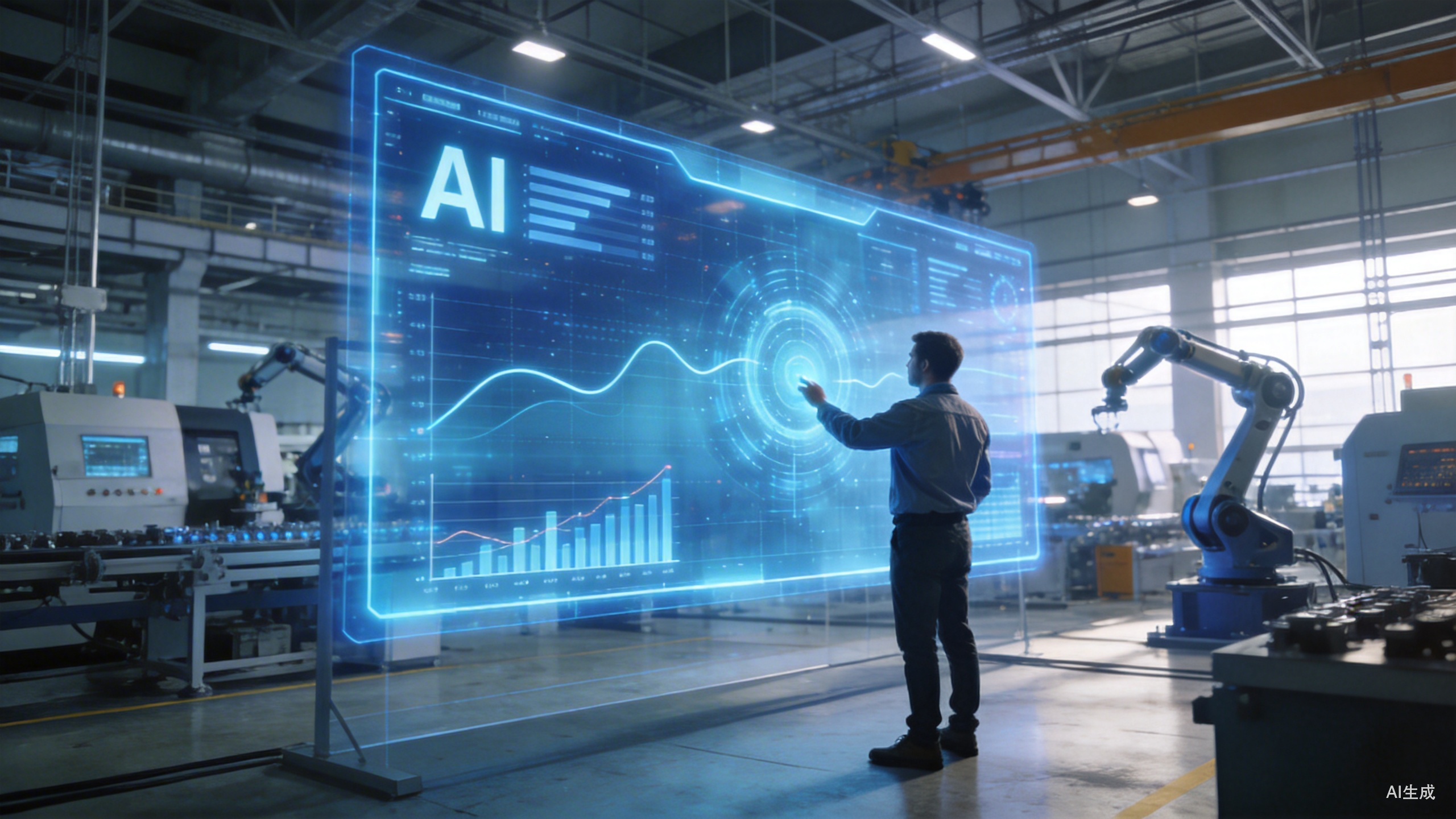
How AI Is Revolutionizing the Display Industry – Smarter Screens, Faster Factories
Artificial intelligence is no longer a back‑office tool for the display sector; it’s becoming the brain behind every pixel and the engine that powers whole factories. From design to production and after‑sales, AI helps engineers turn weeks‑long projects into hour‑long tasks, cuts maintenance costs by up to 30 %, and boosts yields by double‑digit percentages.
Companies such as LG Display, Samsung and China’s BOE are already using AI‑driven design software, predictive‑maintenance models and digital twins to shrink cycle times, improve colour accuracy and slash power consumption.
China’s new‑type display market – OLED, Mini‑LED, QLED and beyond – now accounts for more than half of global output, with 2025 revenues topping $120 billion. The country’s massive production scale provides a flood of data that fuels AI algorithms, giving Chinese firms a cost advantage of 30‑50 % over overseas rivals. At the same time, they face hurdles: reliance on foreign equipment, gaps in core AI research and a lower share of high‑value patents.
The synergy of AI and next‑generation displays promises richer, interactive experiences for everything from smartphones and cars to AR/VR headsets, while reshaping the competitive landscape of the global tech industry.
Read more