Breakthrough Simulations Reveal New Paths for Superconducting Quantum Chips
Researchers have pushed the frontier of quantum computing by simulating superconducting chips that mimic a variety of Chern insulators—exotic materials whose electronic properties are defined by topological rules rather than ordinary chemistry. Using advanced first‑principles calculations, the team mapped how the quantum Hall effect, a hallmark of topological physics, can be reproduced in engineered superconducting circuits. Their work shows a clear link between the bulk electronic structure and the edge states that carry current without resistance, confirming the bulk‑edge correspondence that underpins Chern insulators. By tweaking the design of the superconducting qubits, they demonstrated how to control Chern numbers, the mathematical fingerprints that distinguish different topological phases. This insight opens the door to building more robust quantum processors that are naturally protected against errors, a major hurdle for scaling up quantum computers. The findings, published in a leading physics journal, also provide a blueprint for experimentalists seeking to fabricate real‑world devices that harness topological protection for ultra‑fast, low‑energy computation.
Read more
Laser‑Powered Space Sails Get a Boost from Tiny Crystal Structures
Scientists are bringing the sci‑fi dream of laser‑driven spacecraft a step closer to reality by using specially engineered photonic crystals. In a new study, researchers modeled a one‑square‑metre “light sail” that reflects a powerful 100‑kilowatt laser beam. The crystal‑based surface is designed to bounce back almost all of the laser light, turning it into continuous thrust. Simulations show that, under ideal conditions, the sail could speed up to several hundred metres per second in just one hour – fast enough to launch lightweight probes across the solar system. While this acceleration falls short of what would be needed for interstellar voyages, it demonstrates a practical pathway for using laser propulsion on nearer‑term missions, such as rapid trips to Mars or fast‑flyby probes to distant asteroids. The breakthrough lies in the photonic crystal’s ability to maintain high reflectivity without adding extra weight, making the concept both efficient and scalable. If further refined, laser‑powered sails could become a versatile tool for future space exploration, offering a new way to travel farther and faster without relying on traditional rockets.
Read more
Brain‑Inspired Learning Algorithm Cuts AI Energy Use and Forgetting
A research team led by Xu Bo at the Institute of Automation, Chinese Academy of Sciences, has introduced a novel learning framework called Neuromodulation‑Dependent Adaptive Classification (NACA). Inspired by how real brains adjust synaptic strength through chemical signals, NACA dynamically modulates neural plasticity during training, allowing artificial networks to learn new tasks with far fewer mistakes and dramatically lower power consumption. In benchmark tests, the method achieved higher classification accuracy than conventional deep‑learning approaches while using a fraction of the energy, a crucial advantage for edge devices and battery‑powered AI. Moreover, NACA mitigates "catastrophic forgetting," the tendency of AI systems to lose previously acquired knowledge when learning new information. The team believes this biologically grounded strategy could guide the design of future neuromorphic chips that operate more like human brains—efficient, adaptable, and resilient. Their results, published in a top AI journal, mark a significant step toward sustainable, lifelong learning machines.
Read more

China’s Humanoid Robots Are Racing Ahead: Why They’re Dominating the Early Market
China’s humanoid‑robot sector is sprinting ahead of the competition, and experts say it’s not by accident. While Japan leans on its deep‑rooted robotics culture—citing labor shortages, a love of robot “friends” like Doraemon, and a strong supply‑chain—China is already mass‑producing friendly, factory‑ready bots that can work side‑by‑side with humans. Hyundai’s Boston Dynamics arm, for example, plans to roll out a new Atlas model for factories by 2028, aiming for up to 30,000 units a year in the United States alone.
The real breakthrough, however, lies in how Chinese startups are tackling the toughest problem: teaching robots to anticipate the next physical state in chaotic, real‑world settings. Unlike large language models that can scrape the web for text, humanoid robots need physical experience. Companies are turning to high‑fidelity simulation environments to generate synthetic training data, while still gathering real‑world footage to fine‑tune their “foundation models.”
With aggressive investment, a supportive policy climate, and a cultural embrace of robots as helpers rather than threats, China’s early‑market lead looks set to widen. As the technology matures, the next few years could see humanoid robots moving from labs and factories into everyday life, reshaping how we work and live.
Read more
Optoelectronic Transistor Powers Real‑Time Vision AI at the Edge
The Microelectronics Institute has unveiled an optoelectronic transistor that functions as an adaptive reservoir computer, enabling ultra‑fast, low‑power visual processing directly at the sensor level. Traditional vision pipelines separate image capture, storage, and computation, causing latency and high energy use. By integrating sensing, memory, and processing within a single transistor that responds to light, the system performs analog computation on incoming visual data in real time. Demonstrations with moving‑object recognition and edge‑detection tasks showed millisecond‑scale response times while consuming less than a tenth of the power of conventional digital processors. This neuromorphic approach is especially suited for autonomous vehicles, smart home cameras, and industrial inspection systems where rapid decision‑making and energy efficiency are paramount. The breakthrough points toward a new generation of AI‑enabled devices that can see and act without relying on cloud resources.
Read more

Honor Unveils ‘Robot Phone’ That Can Dance and Capture Cinematic Shots
At a flashy launch in Boston, Honor introduced a new smartphone that looks more like a tiny robot than a traditional phone. The standout feature is a 200‑megapixel camera mounted on a three‑axis gimbal that can swivel, tilt and spin on command. In a demo, the camera twirled 90 and even 180 degrees while a beat played, making the device literally “dance” to music.
Beyond the party trick, the moving lens promises smoother video and photo capture, with a Super Steady mode that reduces shake and a Spinshot function that delivers cinematic angles without a separate rig. An AI‑powered tracking system keeps the camera focused on you during video calls, a step up from Apple’s Center Stage.
Honor says it built a custom micro‑motor and borrowed hinge technology from its Magic V6 foldable to keep the robotic arm sturdy yet compact, using the same high‑strength material that can withstand 2,800 MPa of tension.
The event also showcased the Honor Magic V6 foldable phone, a 6,600 mAh‑powered MagicPad 4 tablet and a MagicBook 14 laptop, signaling a broader push into premium, innovative hardware. The robot‑camera phone could reshape how we think about mobile photography and video, turning everyday snaps into mini‑productions.
Read more
28‑Nanometer RRAM Chips Bring Memory‑Compute Fusion Closer to Reality
The Microelectronics Institute has announced a major milestone in the development of 28 nm resistive‑random‑access‑memory (RRAM) devices tailored for in‑memory computing architectures. By integrating RRAM cells directly with logic circuits, the team demonstrated that data can be processed where it is stored, eliminating the costly data shuttling between separate memory and CPU units. The new chips exhibit fast switching speeds, low write energy, and excellent endurance, making them suitable for AI inference tasks that demand high throughput and low latency. Prototype experiments showed a 3‑fold reduction in power consumption compared with traditional von Neumann designs while maintaining comparable accuracy on image‑recognition benchmarks. This progress paves the way for compact, energy‑efficient AI accelerators that can be embedded in edge devices such as smartphones, drones, and IoT sensors.
Read more
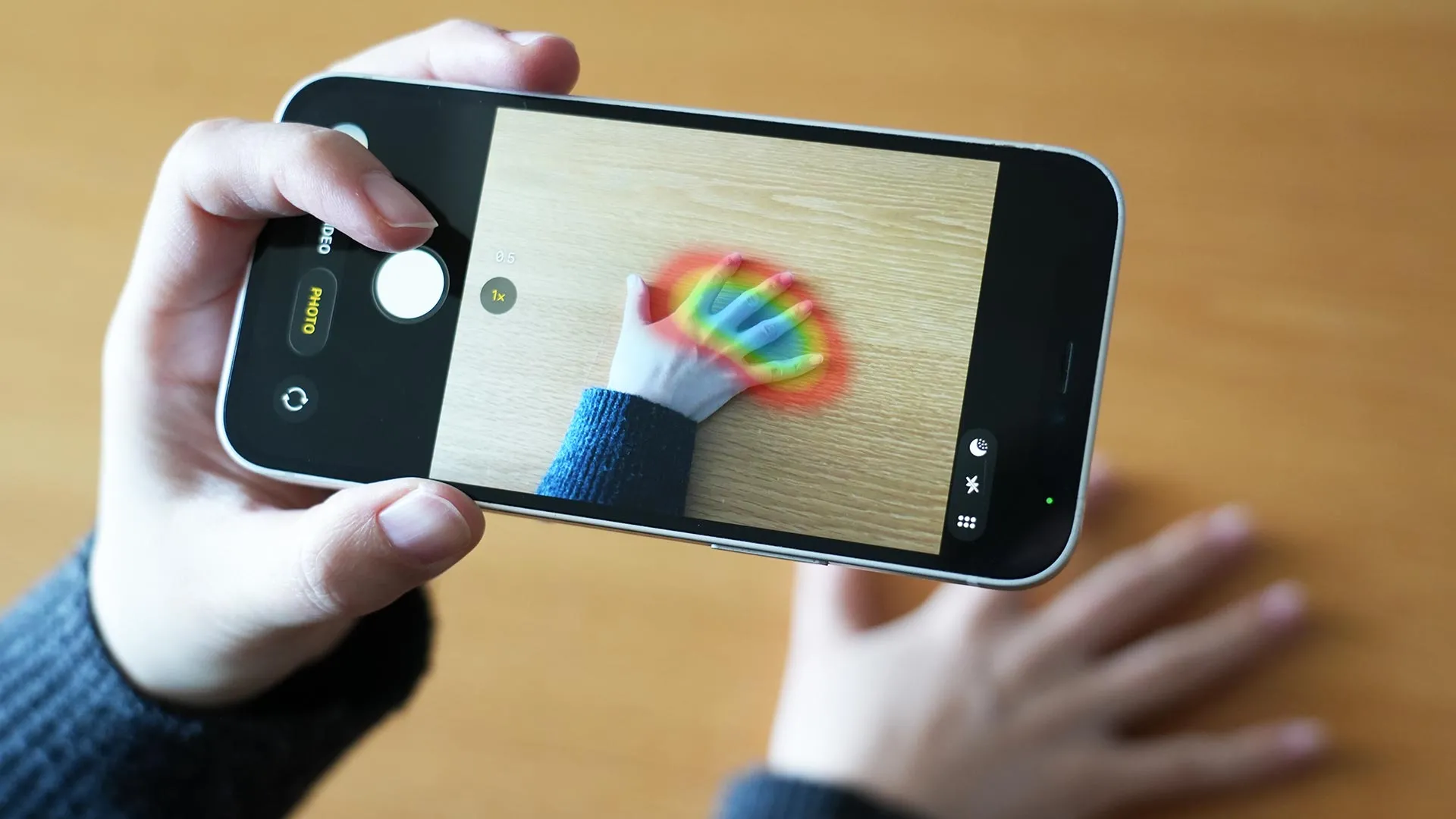
Snap a Hand, Spot a Hormone Disorder: AI Detects Acromegaly in Seconds
A team of researchers at Kobe University has created a clever new way to catch a rare but serious hormone condition called acromegaly—simply by looking at a picture of your hand. Using artificial intelligence, the system examines the shape of the back of the hand and a clenched fist, spotting subtle changes that doctors usually miss until years later. Acromegaly develops slowly, often going undiagnosed for a long time, and if left untreated it can shorten life expectancy and cause a host of health problems. The AI model was trained on thousands of hand images, learning to recognize the tell‑tale swelling of bones and soft tissue that signal the disease. Because taking a quick photo with a smartphone is fast, cheap, and non‑invasive, this approach could become a game‑changer for early screening, especially in places where specialist doctors are scarce. The project, funded by the Hyogo Foundation for Science Technology and involving dozens of universities and hospitals across Japan, hopes to move the technology from the lab to everyday clinics, giving patients a faster path to diagnosis and treatment.
Read more