Breakthrough 3‑D Printing Technique Lets Scientists Build Tiny Machines From Any Material
A team of researchers has unveiled a game‑changing 3‑D micro‑ and nanofabrication method that sidesteps the material restrictions that have long hampered tiny device engineering. Using an innovative optofluidic assembly process, they can arrange multiple substances—polymers, metals, and more—into intricate structures just a few micrometres across. To demonstrate the method’s versatility, the scientists fabricated a suite of miniature devices. One example is a set of micro‑valves that can separate particles by size as they flow through hair‑thin channels, offering a new way to sort cells or contaminants in lab‑on‑a‑chip platforms. Another showcase is a fleet of multi‑material micro‑robots that respond to different stimuli: they can be steered with focused light beams or guided by an external magnetic field, depending on the material composition of each segment. This flexibility opens doors to advanced medical probes, ultra‑compact sensors, and next‑generation soft robotics. By removing the need to stick to a single polymer or metal, the technique promises faster prototyping, lower costs, and broader adoption of micro‑scale technologies across biotech, environmental monitoring, and consumer electronics.
Read more
Quantum Computers Crack Particle‑Shuffle Puzzle Classical Machines Can’t Solve
A recent breakthrough shows that quantum computers can solve a tricky puzzle that stumps even the most powerful classical supercomputers. The problem involves figuring out whether a group of particles has been rearranged an even or odd number of times – a property known as "parity." In everyday terms, imagine trying to determine if a deck of cards has been shuffled an even or odd number of times without looking at each card individually. Classical computers would need to label every single particle to keep track, which quickly becomes impossible as the system grows.
The research team demonstrated that quantum effects, such as superposition and entanglement, let a quantum device assess the parity of the particle shuffle without assigning a unique label to each particle. This means the quantum machine can reach the answer using far fewer resources, showcasing a clear "quantum advantage" over traditional computing methods. The finding not only deepens our understanding of how quantum mechanics can be harnessed for computation but also points toward practical applications where complex ordering problems arise, from cryptography to materials science. As quantum technology continues to evolve, demonstrations like this bring us closer to real‑world tools that outperform classical computers on specific, hard‑core tasks.
Read more
China’s ‘Artificial Sun’ Race Accelerates: Companies Gear Up for Fusion Power
The Hefei BEST (Compact Fusion Energy Experiment) project is now the fastest‑moving fusion plant in China, and a local supplier Jia Dexing says its capacitors are already being shipped, with a second‑phase order worth nearly 80 million yuan secured last week. The company expects to start production after the Spring Festival and continue for about a year.
Policy backing and a national push to make controllable nuclear fusion a strategic industry are turning the “artificial sun” from a distant dream into a near‑term reality. China’s 15th Five‑Year Plan earmarks hydrogen and fusion as new growth engines, and three major devices—EAST, BEST and CRAFT—form a tiered research network aimed at lighting the first fusion lamp by 2030.
At a recent industry conference, dozens of listed firms showcased their role across the supply chain. AT&M’s tungsten‑copper plates will line the reactor’s first wall, while Western Superconducting and East Superconducting provide magnets and high‑temperature superconducting tapes. Hefei Forging won a 209 million‑yuan vacuum‑vessel contract, and giants such as China National Nuclear Corp., Shanghai Electric and Dongfang Electric are joining the construction effort.
China Fusion Energy Co., launched in 2025, has laid out a roadmap: fusion‑burn experiments in 2027, a test reactor by 2035 and a commercial demonstration around 2045. Funding is surging—global fusion equity has hit $9.7 billion, and Chinese firms are catching up, with Critical Technologies raising 30 million yuan and a new Fusion Financial Institution Alliance bringing together 130 investors to fuel the next wave of industrialisation.
Read more
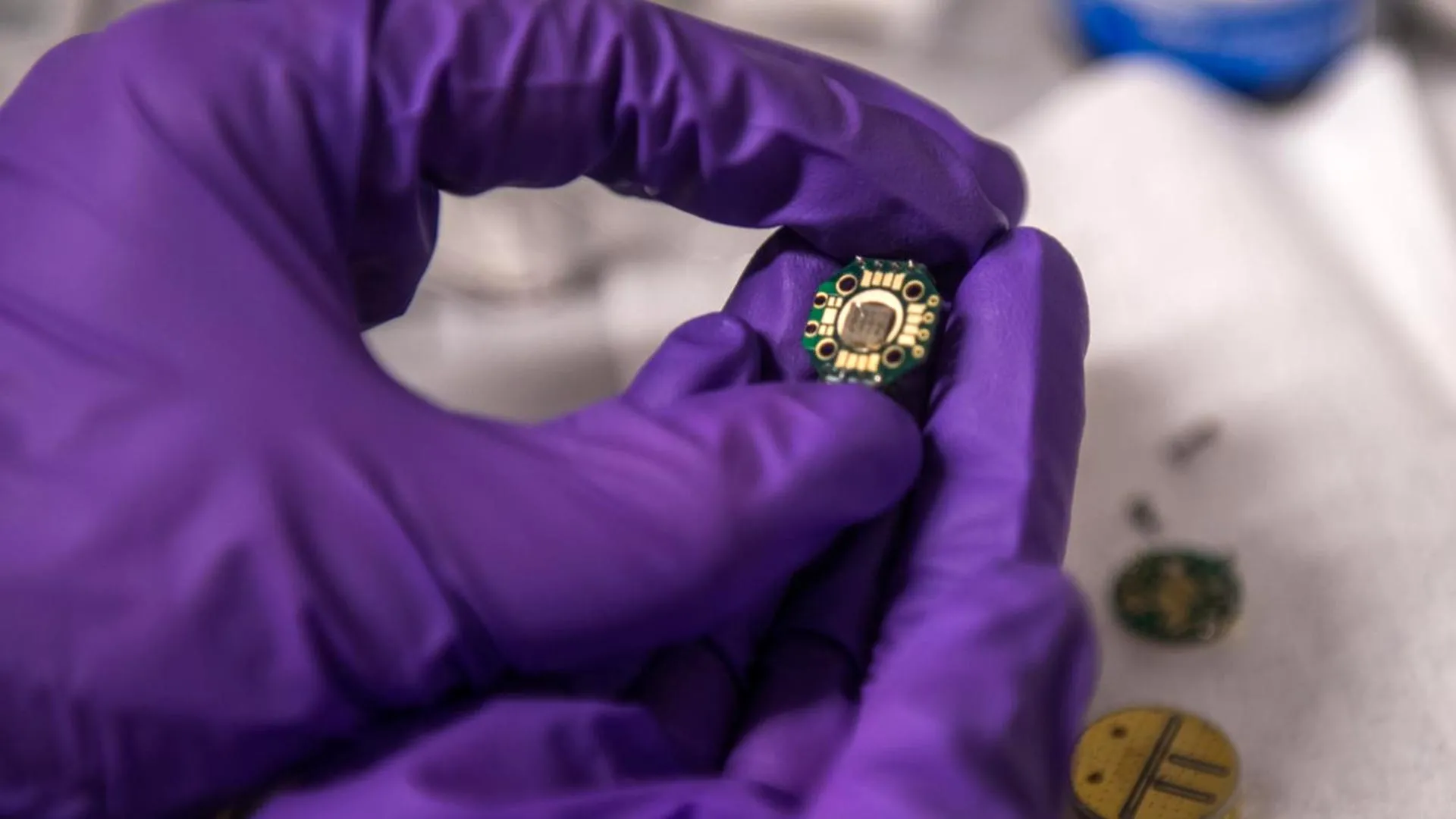
Quantum Leap: Tech Hits Its ‘Transistor Moment’ and Heads for Everyday Use
A fresh study in *Science* says quantum technology is moving out of the lab and into real‑world applications, hitting a milestone comparable to the invention of the transistor that sparked the modern computer age. Researchers from the University of Chicago, Stanford, MIT, the University of Innsbruck, and Delft University teamed up to assess today’s quantum hardware and map the road ahead for building large‑scale quantum computers, ultra‑secure communication networks, and ultra‑sensitive sensors. They highlight both the exciting possibilities—like dramatically faster data processing, unbreakable encryption, and new medical imaging tools—and the hurdles that still need clearing, such as error‑correction, reliable qubit connections, and power efficiency. The paper also points to a breakthrough micro‑chip‑sized device that can fine‑tune laser frequencies with far less energy than current bulky setups, a step that could speed up quantum processors. Meanwhile, educators are getting a hands‑on kit that lets students experiment with quantum systems, signaling a second wave of quantum innovation that could transform computing, the internet, telecommunications, cybersecurity, and biomedicine. In short, quantum tech is poised to become a practical, everyday engine of progress.
Read more