
Chinese Robots Win Over the Middle East, Fueling a 200,000‑Robot Surge
The 2025 Asia‑Pacific Robot World Cup, held in Abu Dhabi, chose Chinese manufacturers as its technology partner after a delegation impressed by China’s rapid AI‑driven robotics progress. Hamad Obeid, chair of the competition, said Chinese bots are the only ones that combine power, speed, easy programming and self‑righting abilities needed for the event.
Abu Dhabi’s Smart and Autonomous Driving Industry Cluster (SAVI) is courting Chinese firms to supply aerial drones, driverless taxis and, crucially, industrial robots. The UAE’s Robotics and Automation Association plans to deploy more than 200,000 robots by 2030, aiming for the sector to account for 9 % of national GDP.
A key driver is China’s strength in core components. Lingzu Times, a maker of high‑precision joint modules, shipped over 100,000 units in 2025, with 26,000 exported to high‑end markets. Local distributor Ednex Automation, working with Unitree, showcases robots that can scan, bag and label produce, replace cashiers, and assist in warehouses and hospitals.
In wealthier Gulf states like the UAE and Saudi Arabia, buyers favor complete machines from brands such as Unitree, ZhiYuan and Zhongqin, while less‑stable regions rely on robust bots for hazardous tasks. The partnership underscores China’s growing influence in the global robotics supply chain and the Middle East’s push toward an AI‑led economy.
Read more

How AI Chip Wars Shaped the US Semiconductor Scene in 2025
The 2025 US semiconductor story reads like a high‑stakes chess match between tech innovators and policymakers. It kicked off on Jan. 6 when Anthropic co‑founder Dario Amodei penned a Wall Street Journal op‑ed defending existing AI‑chip export controls and urging the incoming Trump administration to tighten the rules. He warned that lax regulations were letting Chinese firms snag advanced chips, slowing their AI progress.
Fast‑forward to early February, where Senator Josh Hawley and Rep. Mark Alford wrote to the Commerce Secretary‑designate, Howard Lutnick, demanding even stricter limits on Nvidia’s H2O AI chips—hardware that powers DeepSeek’s new R1 “reasoning” model. The model’s open release on Jan. 27 sent shockwaves through Silicon Valley, sparking fears that open‑source AI could erode the competitive edge of US chip makers.
Meanwhile, President Biden’s executive order on chip exports tried to strike a balance, tightening controls on the most advanced nodes while preserving supply‑chain stability for American manufacturers like Intel, Nvidia, and TSMC’s US facilities. The tug‑of‑war between open AI research, national security concerns, and industry growth defined the year, leaving the US semiconductor market more guarded, yet still fiercely innovative.
Read more
China’s Basic Science Hits ‘Zero‑to‑One’ Breakthroughs Across Energy, Quantum, Space and More
China’s frontier research is entering a rapid “zero‑to‑one” era, with a string of headline‑making discoveries that span energy, quantum tech, life sciences and space. In October 2025, scientists at a desert‑based thorium molten‑salt reactor in Gansu recorded the first ever conversion of thorium‑uranium fuel, proving the concept of a thorium‑powered next‑generation nuclear plant and cementing China’s lead in molten‑salt reactor research. The same year, China topped the Nature Index 2025 list, expanding its global lead with record‑breaking outputs in quantum computing (the “Zu Chongzhi III” processor) and a nation‑wide secure communication network that links sky and ground. In biomedicine, researchers unveiled new ways to treat central‑nervous‑system disorders using newborn brain neurons and decoded locust swarm pheromones, opening doors to pest control. Space scientists made the first detailed reconstruction of the lunar far side’s history, identifying two distinct basaltic eruptions 4.2 billion and 2.8 billion years ago and retrieving ancient magnetic field data. Meanwhile, the Five‑Hundred‑Meter Aperture Spherical Telescope (FAST) discovered a rare eclipsing pulsar, a find made possible by its unmatched sensitivity and promising fresh insights into stellar evolution and gravitational waves. Together, these achievements illustrate a shift from isolated breakthroughs to a systematic, nation‑wide surge in basic research that fuels the next wave of technological innovation.
Read more
Breakthrough in Stretchable Electronics: Liquid Metal Tech Moves Toward Mass Production
Scientists at the Chinese Academy of Sciences have announced a major step forward in making flexible, stretchable electronic devices using liquid‑metal inks. By refining a low‑temperature printing process, the team can now deposit ultra‑thin, conductive pathways that remain functional even when bent, twisted, or stretched like a rubber band. The new method improves the uniformity of the metal film, reduces defects, and speeds up manufacturing, bringing the technology closer to large‑scale commercial use.
Liquid‑metal circuits promise a host of applications, from wearable health monitors that conform to skin, to soft robotics, foldable displays, and implantable medical sensors that move with the body. The researchers demonstrated a prototype skin‑like sensor array that can track pulse and motion while maintaining signal integrity after repeated deformation.
The breakthrough is part of a broader push by the Academy to accelerate high‑tech innovation through its new Science and Technology Special Project Information Management Service Platform, which streamlines project coordination and funding. Alongside the liquid‑metal work, CAS reported progress in 3D‑printed bioceramics, green hydrogen‑sulfur processes, and large‑scale carbon‑capture pilots, underscoring its role as a national hub for cutting‑edge science.
This advance marks a pivotal moment for flexible electronics, moving the field from laboratory curiosity toward real‑world products that can bend, stretch, and survive the rigors of everyday life.
Read more
One Enzyme Holds the Key to Building Vital Immune Cells, Opening New Paths for Disease Treatment
Researchers have pinpointed a single enzyme that acts like a master switch for creating tissue‑resident macrophages—immune cells that live in organs and keep them healthy. These macrophages are the body’s first responders, helping to clear infections, repair wounds, and keep inflammation in check. The discovery, led by Daniel Puleston, Ph.D., an assistant professor of immunology at the Icahn School of Medicine at Mount Sinai, shows that tweaking this enzyme could boost or dampen the production of these cells, offering a powerful new lever for treating a wide range of conditions.
Because tissue‑resident macrophages are involved in cancer growth, scar formation, fibrosis, and chronic inflammatory diseases, the enzyme’s pathway may become a target for therapies that aim to slow tumor spread, improve healing after surgery, or reduce harmful tissue scarring. The findings also have implications for aging, where chronic low‑grade inflammation and sluggish tissue repair are common problems. By understanding how this enzyme directs macrophage formation, scientists hope to design drugs that fine‑tune the immune system, delivering more precise and effective treatments for patients across the health spectrum.
Read more
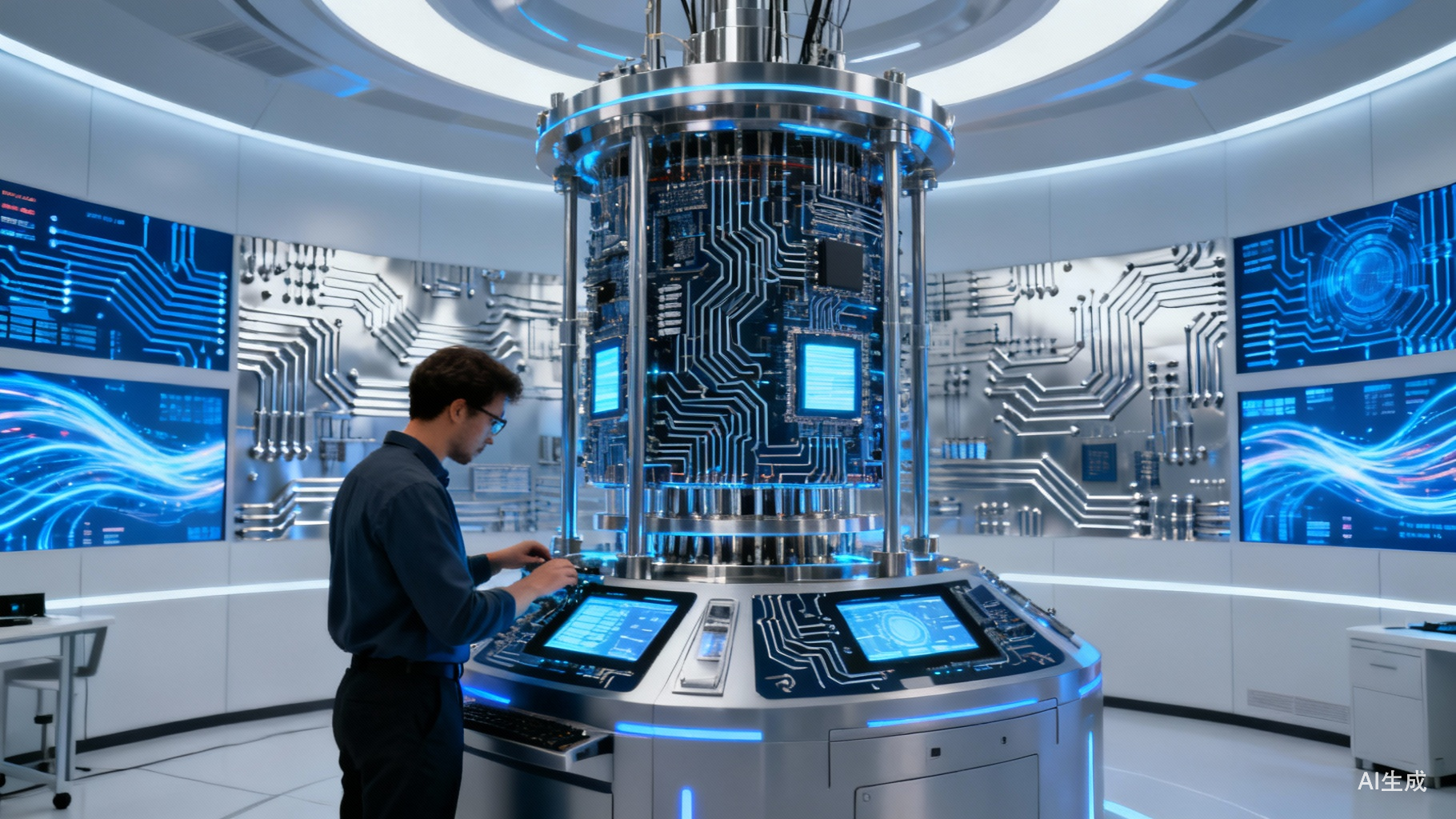
From One‑Dimensional Qubits to a Thousand‑Ion Quantum Lab: China’s Leap in Quantum Computing
In a candid interview, Chinese quantum pioneer Duan Luming explains how his team turned a long‑standing limitation—quantum simulators confined to a single line of ions—into a breakthrough two‑dimensional platform that now holds over a thousand ions. The key was proving that the dreaded “micromotion” noise in ion traps could be tamed, allowing high‑fidelity operations even in noisy conditions. By pairing this theory with innovative cryogenic traps, Duan’s lab achieved unprecedented stability and scale, a method now adopted by several international groups.
Duan attributes his success to a rare blend of theory and hands‑on experimentation, a habit he cultivated while working under the legendary physicist Enrico Fermi at the University of Michigan. He stresses that true innovation sits at the intersection of these two worlds, where mentors can spot experimental bottlenecks and guide students toward practical solutions.
Looking ahead, Duan sees a future where many quantum hardware “flowers” bloom—ion traps, superconductors, photonics—linked together by optical interconnects to form a quantum internet. While China now leads in qubit count, the United States still holds the edge in gate fidelity (99.9%). The ultimate goal, Duan says, is a million‑qubit, general‑purpose quantum computer that can serve both scientific research and industry, though patience is required as the technology matures.
Read more

Chinese Quantum Startup SpinQ Secures Billion‑Yuan Funding, Aims for 2028 Breakthrough
SpinQ Technology, a Shenzhen‑based quantum‑computing firm founded by Tsinghua alumnus Xiang Gen’gen in 2018, has just closed a Series C round worth billions of yuan, bringing its total financing to the same scale. The company’s rapid rise rests on two bold moves: it launched the world’s first programmable desktop quantum computer – a compact, affordable system sold to universities and research labs in more than 40 countries – and it began mass‑producing superconducting quantum chips and control hardware for export.
Traditional quantum machines weigh a ton and cost millions, keeping them out of reach for most institutions. SpinQ’s desktop solution trades raw power for accessibility, opening a large education market while laying the groundwork for larger, industrial‑grade machines. Xiang predicts a pivotal shift by 2028, when medium‑scale (500‑1,000 qubit) quantum computers will outperform classical supercomputers in niche fields such as drug discovery, new‑material design and catalyst research, unlocking a market worth tens of billions of dollars.
The company’s order book has surged, with superconducting product sales overtaking NMR lines in 2024 and growing 130 % year‑on‑year in 2025. Global quantum‑computing revenue topped $1 billion in 2025 and could reach $28‑$72 billion by 2035, according to McKinsey. SpinQ’s latest funding round will fuel further chip development, expand its desktop lineup, and accelerate the move from academic labs to commercial applications.
Read more