5 Surprising AI Breakthroughs Shaping 2025 – What You Need to Know
Artificial‑intelligence giants are racing ahead, and by 2025 the global AI market is projected to hit $5 billion. China is powering most of that growth, yet the United States still leads in investment and user numbers. Three technical milestones are driving the surge: next‑generation Transformers that can handle million‑token inputs, Mixture‑of‑Experts (MoE) architectures that make trillion‑parameter models run efficiently, and a flood of edge‑AI smartphones—over 170 million units shipped annually. These advances are already reshaping real‑world sectors. In finance, JPMorgan reports loan‑approval speeds that are 90 times faster than before. In healthcare, AI‑based diagnostics now match or exceed human doctors in accuracy. In manufacturing, predictive‑maintenance tools cut equipment downtime and save billions. Looking ahead, three trends will dominate: deeper vertical integration of AI into specific industries, the convergence of multimodal technologies (text, image, audio, video), and collaborative global governance to steer responsible use. Finally, a sobering fact: 95 % of AI agents flop because they ignore four key success factors that the top 5 % follow. Understanding these insights can help innovators stay ahead of the curve.
Read more

Reddit Scandal: AI‑Generated Post Fakes Food‑Delivery Fraud Claims
A Reddit thread that seemed to expose a massive fraud scheme at a popular food‑delivery service turned out to be nothing more than a computer‑generated hoax. The post, which quickly went viral and sparked angry comments from users who believed the brand was cheating customers, was later traced back to an artificial‑intelligence tool that fabricated the story and even created fake screenshots. Max Spero, the founder of AI‑research startup Pangram Labs, warned that the problem is getting worse as large language models become easier to access. He explained that some companies with deep pockets are now paying for what they call “organic engagement” on platforms like Reddit—essentially hiring AI to craft sensational posts that mention their brand in order to generate buzz, clicks, or even manipulate public perception. According to Spero, this practice blurs the line between genuine user conversation and paid propaganda, making it harder for everyday readers to separate fact from fiction. The incident serves as a reminder that not everything that trends online is authentic, and that the rise of AI‑generated content is reshaping how misinformation can spread across social media.
Read more
AI’s Next Leap: How DeepSeek and China’s Supercomputers Are Sparking a New Industrial Revolution
DeepSeek has just crossed a major milestone: its AI agents are moving beyond simple perception and into true "cognitive intelligence." This shift marks the start of an explosive era where machines can think, reason, and learn much like humans. China is positioning itself at the front of this change by building the world’s first AI‑symbiotic ecosystem, anchored by the ultra‑powerful Tianhe+ supercomputing clusters and linked through the Mozi quantum network. The goal is to create a digital‑nuclear‑fusion environment where every sector—manufacturing, energy, healthcare, and more—can tap the combined firepower of massive AI workforces and cutting‑edge hardware. Analysts predict a surge of up to 10 billion AI‑driven agents working alongside people, reshaping how products are designed, how factories operate, and how data is turned into insight. At the same time, “physical AI” and digital twins are emerging as the new high ground for tech giants, blending multiple models into a single, deeply analytical system. This multi‑model fusion promises breakthroughs in everything from smart grids to drug discovery, ushering in what experts call the "cognitive nuclear fission" of industry. In short, the convergence of supercomputing, quantum networking, and advanced AI is set to rewrite the rules of business and everyday life.
Read more
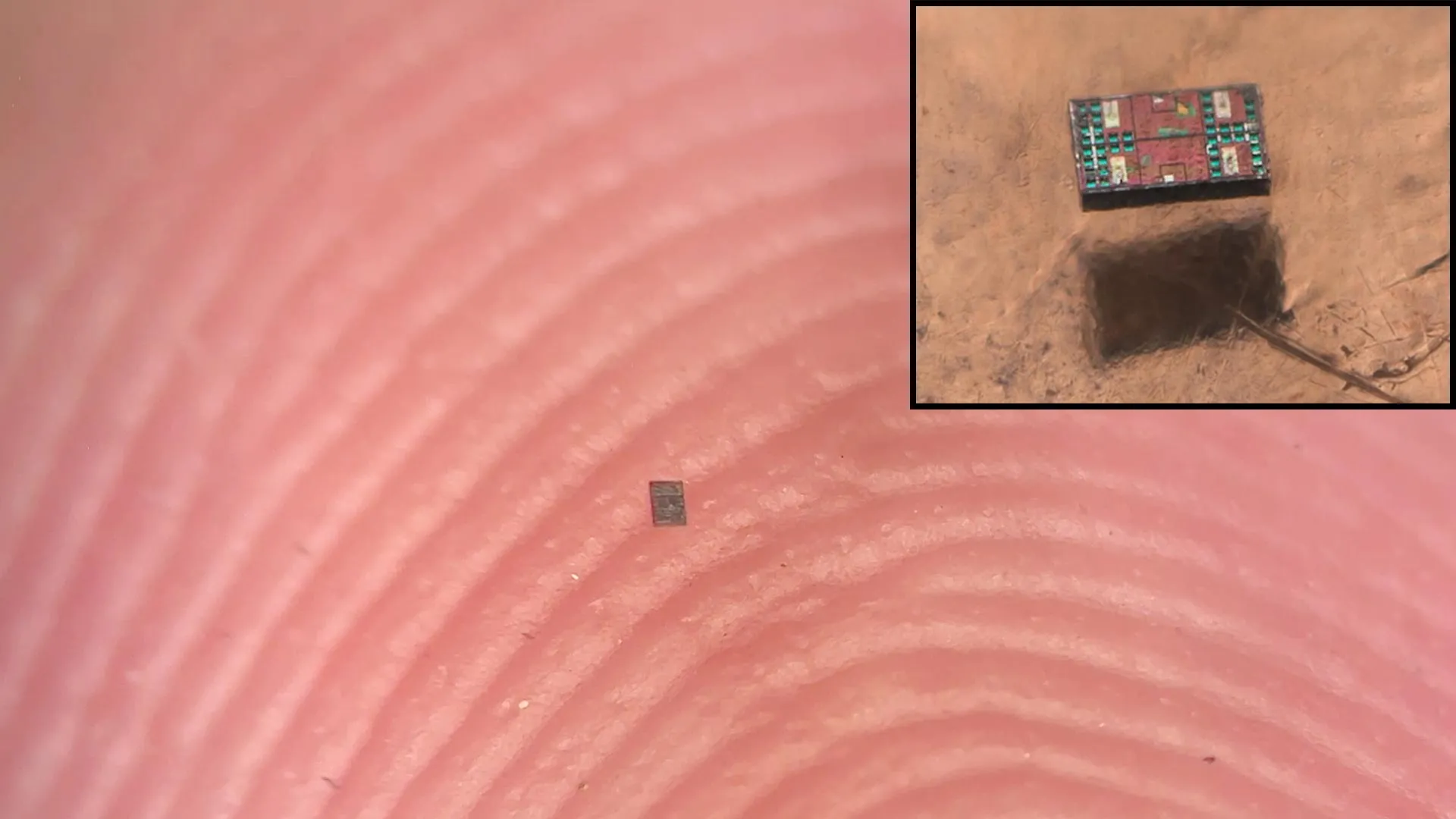
Tiny Light‑Powered Robots the Size of a Salt Grain Can Think, Swim and Live for Months
Researchers at the University of Pennsylvania School of Engineering and Applied Science have unveiled a new class of microscopic robots that are smaller than a grain of salt yet capable of autonomous thought and movement. Powered entirely by light, these “microrobots” contain tiny onboard computers that let them sense temperature changes, follow pre‑programmed routes, and make simple decisions without any external control. Instead of tiny motors, they propel themselves by manipulating electric fields, allowing them to glide smoothly through liquid environments.
What makes these bots truly remarkable is their longevity: they can survive and operate for months, a timescale far beyond previous micro‑machines. The team also demonstrated that the robots can work together, coordinating their actions in swarms to accomplish more complex tasks. Potential applications range from targeted drug delivery inside the human body to environmental monitoring in hard‑to‑reach places like deep‑sea vents or contaminated groundwater. This breakthrough marks the first time fully autonomous, light‑driven robots have been built at such a tiny scale, opening the door to a new era of smart, ultra‑small machines that could transform medicine, industry, and scientific research.
Read more
China Pushes Quantum Computing from Lab to Factory: A New Era of Super‑Fast Tech
China is shifting its quantum‑computing push from pure research into real‑world industry. For the first time the country has built a full‑stack, self‑controlled quantum system – from custom chips and measurement hardware to operating‑system‑level software – all developed domestically. New policies and targeted funding are guiding research money straight into market‑ready projects, turning laboratory breakthroughs into commercial products. Experts say the real test is not just "making" quantum machines, but "using" them in practical scenarios such as drug discovery, climate modelling and secure communications. To speed this transition, China is focusing on three pillars: rapid advances in core technology, scenario‑driven pilots that showcase value, and a massive push to train and retain quantum talent. Professor Guo Guoping of the University of Science and Technology of China, who has authored over 270 scientific papers and filed 90 patents, highlights the need for an innovative ecosystem that links universities, firms and government agencies. All of this is part of the 15th Five‑Year Plan, which earmarks quantum tech as a new engine for economic growth and aims to build a national, autonomous quantum‑computing infrastructure that can power the next generation of high‑quality productivity.
Read more

Why the Next Internet Boost Is Coming From Satellites Just 70‑90 km Above Us
Imagine a fleet of tiny satellites cruising just 70 to 90 kilometres above the Earth—so low they’re almost skimming the atmosphere. That’s the promise of Very Low Earth Orbit (VLEO) satellites, and they could soon super‑charge the internet, sharpen weather forecasts, and tighten security monitoring. Industry analysts at Juniper Research predict a staggering $220 billion will pour into VLEO projects over the next three years, turning what once sounded like science‑fiction into real‑world deployments.
At Penn State, Professor Sven Bilén and his interdisciplinary team—working with Georgia Tech and funded by the U.S. Department of Defense—are tackling the toughest hurdle: the thin but relentless drag of the upper atmosphere. Their solution is a novel propulsion system that can keep satellites stable at altitudes traditionally considered “below” low‑Earth orbit. By mastering spacecraft‑plasma interactions, electrodynamic tethers, and advanced software‑defined radio techniques, they aim to keep these low‑flying platforms aloft long enough to deliver high‑speed data links and ultra‑clear Earth‑observation imagery.
If successful, VLEO constellations could bring faster, more reliable broadband to remote corners of the globe, improve the accuracy of storm tracking, and provide sharper eyes for defense and disaster response—all from a slice of sky that’s closer than ever before.
Read more
China’s Fusion Frenzy: Billions Bet on the ‘Artificial Sun’
China is throwing unprecedented money into nuclear‑fusion research, aiming to turn the long‑dreamed‑of “artificial sun” into a real power source. In July 2025 the state‑backed China Fusion Energy Co. raised a record 11.5 billion yuan (about US$1.6 billion) in its first funding round, making it a “super‑unicorn” and gathering heavyweights such as China National Nuclear Corporation, China National Nuclear Power and PetroChina Kunlun Capital. At the same time, private firms are racing ahead: Energy Singularity’s “Honghuang 70” became the world’s first fully high‑temperature superconducting tokamak, cutting cooling costs and shrinking the machine, while StarRing Fusion is experimenting with compact spherical designs. By contrast, the U.S. Department of Energy’s annual fusion budget hovers around $700‑800 million, and many American tokamaks are aging, forcing reliance on foreign equipment. China’s fusion effort has moved into an “engineering feasibility” stage, highlighted by a national conference in Hefei that brought together industry, academia and investors. Proponents say successful fusion could end energy scarcity, power massive desalination, enable 24‑hour vertical farms, and even power spacecraft that could reach nearby stars within a human lifetime. The race is on, and China is betting big on a future where energy is limitless and cheap.
Read more
China Powers Up Green Revolution: Record Renewable Growth Fuels Eco‑Friendly Economy
Since the launch of the 14th Five‑Year Plan, China has turned green development into a national priority, linking it to the goal of a "beautiful China" and the twin targets of peaking carbon emissions and achieving carbon neutrality. The shift is already showing measurable results. In 2024, after stripping out energy used for raw materials and non‑fossil sources, the country’s energy use per ten‑thousand yuan of GDP fell 3.8% from the previous year, and air and water quality continued to improve. Renewable power is the star of the show: by the end of September 2025, China had installed 2.198 billion kilowatts of wind and solar capacity – about 59 % of all its power generation assets – keeping it at the top of global renewable rankings for several years running. Provinces are turning policy into practice. Zhejiang is using fiscal incentives and green finance to decouple industrial growth from carbon output, while Guangdong leverages the tech strength of the Greater Bay Area to push new‑energy firms like BYD toward greener supply chains. In Inner Mongolia, former coal‑rich lands are being transformed into massive wind‑and‑solar farms, turning a historic "coal sea" into a clean‑energy highland. Together, these regional pilots are creating a thriving green‑innovation ecosystem that not only drives China toward its dual‑carbon goals but also fuels a higher‑quality, low‑carbon economy.
Read more
Breakthrough Error‑Correction Could Make Quantum Computers Everyday Powerhouses
A team of researchers in Tokyo has unveiled a new error‑correction method that could finally unlock the practical potential of quantum computers. Until now, quantum machines have struggled with a built‑in flaw that causes tiny mistakes to creep into calculations, no matter how carefully they are built or operated. Those errors have kept large‑scale quantum computers—machines that would need millions of quantum bits, or qubits—out of reach for real‑world tasks.
The new technique directly removes the source of those errors, pushing the accuracy of quantum operations to the edge of what theory predicts is possible. In simple terms, the computers can now keep their delicate quantum information stable long enough to perform useful calculations. This leap brings the dream of quantum‑powered breakthroughs in fields like drug discovery, climate modeling, and cryptography much closer to reality.
While the research is still in the laboratory stage, the results suggest that future quantum devices could be built with far fewer overheads for error‑handling, making them cheaper, faster, and more reliable. If the approach scales, we could see the first generation of quantum computers tackling everyday problems within the next few years, turning a once‑theoretical technology into a practical tool for industry and science alike.
Read more