China’s AI Boom: How Large Language Models Are Changing Business and What’s Next
Large language models (LLMs) are powerful but they stumble over three big problems: they can make up facts (hallucinations), they often miss the latest information, and they raise data‑security concerns. A fast‑growing fix is Retrieval‑Augmented Generation (RAG), which lets the model pull in up‑to‑date knowledge from external sources. The article walks readers through a hands‑on RAG demo built with LangChain—covering data loading, chunking, vector storage, retrieval and answer generation—while also comparing RAG to traditional fine‑tuning so you know when each approach shines.
Beyond the tech, the piece paints a vivid picture of China’s AI landscape in 2025. The industry is moving from sheer size‑up ("brute‑force stacking") to smarter, on‑the‑fly computation, with AI agents and multimodal tools taking center stage. A US‑China bipolar market dominates, yet faces hurdles like energy limits, dwindling data pools, and safety alignment. Chinese giants such as Baidu’s ERNIE Bot, iFlytek’s Spark, and Alibaba’s Tongyi Qianwen are already powering offices, travel services, e‑commerce livestreams, government work and finance, while iFlytek also rolls out AI‑enhanced hardware like smart notebooks and learning machines. Funding is still concentrated in early‑stage rounds, and the highest adoption rates appear in finance, government, entertainment and education—each topping 50% penetration. Meanwhile, GitHub trends show AI tools weaving into everyday software development, from code generation to real‑time data pipelines, signaling that LLMs are becoming a mainstream engine for solving real‑world problems.
Read more
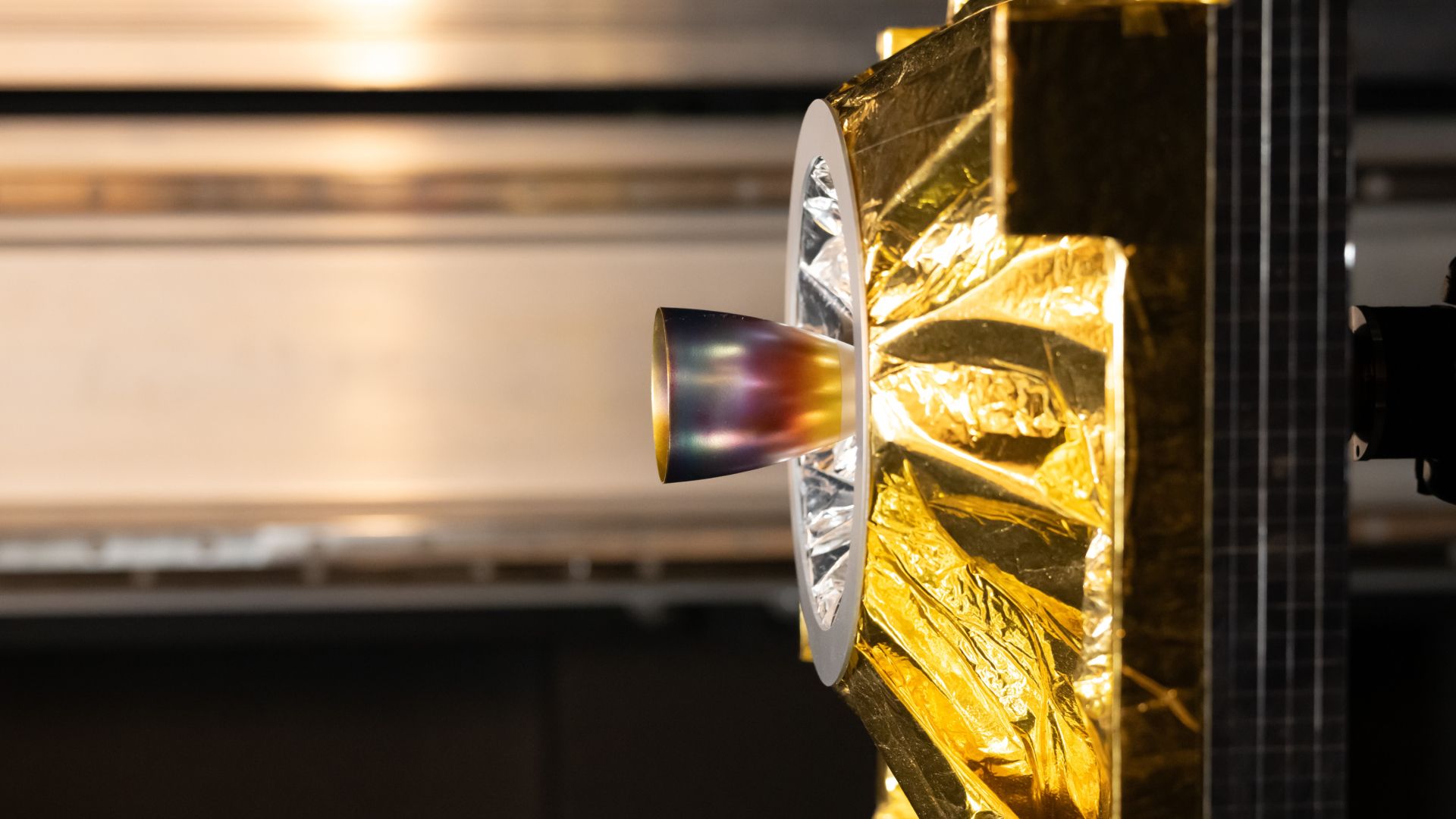
Shimmering Satellite Shield Stuns Engineers in Ground‑Breaking Test Photo
A gleaming, gold‑colored insulation panel on a mock satellite caught the eye of space enthusiasts when it was photographed at the European Space Agency’s ESTEC facility in the Netherlands. The striking image isn’t just a pretty picture—it showcases a crucial step in preparing future spacecraft for the increasingly crowded orbital environment.
Engineers at ESA are using ultra‑realistic lighting that mimics the harsh glare of the Sun in space to test how satellite surfaces behave during close‑range maneuvers. By pairing these physical tests with computer‑generated imagery that trains artificial‑intelligence systems, they can spot weak spots, fine‑tune autonomous navigation algorithms, and boost confidence that robots will safely dock or avoid collisions in orbit.
The golden insulation, designed to protect delicate electronics from extreme temperatures and micrometeoroid impacts, reflects light in a way that makes even tiny imperfections visible. This level of detail helps researchers understand how debris and “space junk” might affect a satellite’s performance.
The successful test not only demonstrates the durability of the new material but also highlights the importance of realistic, hands‑on testing before launching costly hardware into space. As the skies become busier, such rigorous validation will be key to keeping satellites—and the services they provide—safe and reliable.
Read more
China’s Space Leap: Asteroid Sample Return, New Weather Station, and Cutting‑Edge Materials
China ended 2025 with a string of headline‑making science feats that feel straight out of a sci‑fi movie. In July, the Tianwen‑2 probe blasted off toward a tiny asteroid called 2016 HO3, aiming to scoop up rocks and bring them back to Earth – the country’s first mission to collect samples from a small body. After the asteroid, the probe will swing by a mysterious comet in the main asteroid belt, testing new autonomous navigation tech that lets the spacecraft “think” on its own.
Meanwhile, the crewed Shenzhou‑22 spacecraft lifted off successfully, marking the first emergency‑ready launch in China’s manned program. At the same time, the Meridian Project completed a space‑weather “weather station” that watches the Sun‑Earth environment in real time, helping scientists predict solar storms.
On the ground, researchers at the Chinese Academy of Sciences created the world’s first large‑area two‑dimensional metal sheets—ultra‑thin layers just a few atoms thick—opening a brand‑new field of ultra‑light, super‑conductive materials. And lunar scientists, using rocks brought back by Chang’e‑6, announced fresh insights into the Moon’s far‑side geology, magnetic history, and hidden water.
Together, these breakthroughs showcase China’s push to explore the extremes of space, matter and technology, while delivering discoveries that could benefit everyone on Earth.
Read more

Gene Switch: New CRISPR Tool Activates DNA Without Cutting It
Researchers at the University of New South Wales have unveiled a game‑changing CRISPR system that can flip genes on without snipping the DNA strand. Traditional CRISPR‑Cas9 works like molecular scissors, cutting DNA to edit or disable genes—a powerful but risky approach because unintended cuts can cause mutations. The new platform, dubbed “CRISPR‑a,” uses a deactivated Cas9 protein that’s been fused to a transcription‑activating domain. Guided by the same RNA “address labels” that steer regular CRISPR, the complex docks onto a target gene’s promoter region and recruits the cell’s own machinery to boost gene expression, all while leaving the underlying DNA untouched.
In laboratory tests on human cell lines, CRISPR‑a successfully turned on several disease‑related genes, demonstrating precise control and minimal off‑target effects. Because it avoids double‑strand breaks, the technique promises a safer route for therapeutic gene activation, such as reawakening dormant tumor‑suppressor genes or boosting production of therapeutic proteins. The UNSW team envisions rapid translation into treatments for genetic disorders, neurodegenerative diseases, and even regenerative medicine. While further animal studies are needed, this breakthrough marks a pivotal step toward gene‑based therapies that are both effective and low‑risk, expanding the CRISPR toolbox beyond editing to fine‑tuned gene regulation.
Read more
TSMC Unveils 2nm Chip Breakthrough as Industry Races Toward 1nm
TSMC has officially filed its research results for a groundbreaking 2‑nanometer (nm) chip, marking the latest milestone in the race to shrink transistors even further. While TSMC pushes the 2nm frontier, Samsung is already teasing its "Dream Process" – a 1nm technology slated for mass production after 2029 – and Intel is developing the next‑gen 14A node. In parallel, Rapidus, the University of Tokyo and France’s Leti research institute have teamed up to explore the fundamentals of 1nm design.
Beyond sheer size, the semiconductor world is reinventing itself with new materials and architectures. Traditional silicon is hitting its limits, so engineers are turning to silicon‑carbide (SiC) and gallium‑nitride (GaN) for high‑voltage, high‑frequency applications such as electric‑vehicle power systems and 5G base stations. Even more futuristic are two‑dimensional materials like graphene and molybdenum disulfide, which promise ultra‑thin, ultra‑fast chips—though scaling them for mass production remains a challenge.
Architecturally, chiplet technology is reshaping how chips are built. By stitching together separate “bare dies” made on different processes, manufacturers can pair cutting‑edge compute cores with mature, cost‑effective peripheral functions, delivering better performance‑per‑dollar. Intel, AMD and TSMC already offer chiplet‑based products.
Packaging advances complete the picture. 3D‑IC stacking and CoWoS (chip‑on‑wafer‑on‑substrate) bring chips closer together, slashing signal delays and boosting integration density. These innovations let diverse materials and processes work together, unlocking performance gains that no longer rely solely on making transistors smaller.
Read more
China’s Tech Boom Shines in 2025: Robots, AI Rival, and Global Innovation Rankings
As 2025 draws to a close, a dazzling performance captured worldwide attention: six silver‑clad robots executed a flawless “Webster” somersault in perfect time with the music, sparking cheers from the live audience and millions of online viewers abroad. The spectacle mirrors a bigger story unfolding in China’s tech scene. In January, Hangzhou‑based AI startup DeepSeek unveiled its R1 model, which quickly overtook ChatGPT to become the most downloaded app on the U.S. Apple App Store. Remarkably, DeepSeek achieved this feat with just $294,000 in training costs—an amount dwarfed by the billions spent by its American rivals.
The momentum didn’t stop there. The World Intellectual Property Organization’s 2025 Global Innovation Index placed China in the top ten most innovative economies for the first time, while Chinese innovation clusters topped the world’s list of the top 100 for the third year running. Bloomberg summed up the trend, noting that China’s technological breakthroughs are now “cool” and that the nation’s soft power is beginning to shine. Together, these milestones signal a new era where Chinese ingenuity is reshaping the global tech landscape.
Read more