China’s AI Boom 2024‑2026: Massive Model Growth, New Agent Tech, and Industry Opportunities
The Chinese AI scene is entering a rapid expansion phase that will reshape both technology and the job market by 2026. 2025 research shows that AI agents are moving past simple “search‑and‑retrieve” tricks and are now building structured, hierarchical memory systems that work like an operating system for the model. This makes it easier for developers to get high‑quality answers without juggling separate services. In multi‑agent setups, a new “orchestrator” model—often called O3—acts like a team leader, turning vague user requests into clear sub‑tasks and handing them off to faster specialist models.
At the same time, rumors about OpenAI’s secret “Q‑Star” project have sparked debate. Supposedly blending reinforcement learning with classic A* search, the prototype claims near‑perfect math reasoning and the ability to self‑optimize millions of parameters in seconds—features that sound like a step toward true artificial general intelligence. Whether fact or hype, the buzz highlights how quickly AI research is pushing beyond statistical guessing toward logical reasoning.
Industry analysts also note a shift from a “model‑first” mindset to real‑world applications. AI agents are now being mapped out as a full supply chain, with clear tracks for hardware, software, and services, opening fresh opportunities for startups and talent alike. As large language models become core engines for digital transformation, the demand for engineers who understand both the underlying tech and its practical deployment is soaring, signaling a vibrant new career landscape in China’s AI ecosystem.
Read more

Why 2025 Felt Like AI’s Reality Check
After two years of headline‑making model launches that seemed to rewrite what AI could do, 2025 turned out to be the year the hype finally hit a wall. OpenAI’s much‑anticipated GPT‑5 arrived with impressive specs on paper, but it didn’t deliver the jaw‑dropping breakthroughs that made GPT‑4 and its 4o variant feel like magic. Instead, the upgrades felt more like fine‑tuning than a leap forward, and the excitement in the tech community dimmed.
The pattern repeated across the industry: new language models offered modest, domain‑specific improvements rather than sweeping new capabilities. At the same time, a surprise challenger emerged. DeepSeek released R1, a “reasoning” model that matched OpenAI’s o1 on key benchmarks while costing a fraction of the price. This showed that smaller labs could ship credible, competitive AI quickly and cheaply, shaking up expectations about who would lead the next frontier.
Investors also shifted focus. Rather than betting solely on breakthrough research, they started rewarding companies that could turn incremental advances into solid business models. The result? A wave of funding rounds that pushed valuations—some as high as $10 billion—into the stratosphere, even as the technology itself settled into a more realistic, less sensational pace.
Read more
China’s High‑Tech Triumphs: From Deep‑Space Probes to Fusion Power
China is hitting a series of headline‑making milestones across space, energy and ocean research. In orbit, the Tianwen‑2 probe lifted off to become the nation’s first mission that will land on an asteroid, scoop up samples from the near‑Earth rock 2016 HO3 and later study a distant comet. Its advanced AI lets the spacecraft make real‑time decisions far from Earth, showcasing a new level of autonomous navigation.
On the human‑spaceflight side, the Shenzhou XXII capsule completed a flawless launch, marking the success of China’s first contingency crewed mission. At the same time, the Meridian Project put a “space‑weather sentinel” into place, constantly monitoring solar activity to improve forecasting.
Back on the ground, the world’s largest Hualong One nuclear unit at Zhangzhou connected to the grid for the first time, delivering clean power to millions. Under the Arctic ice, the Jiaolong manned submersible teamed up with the Fendouzhe vehicle for a historic dual‑crew dive, proving a new model for deep‑sea exploration.
In the quest for limitless energy, the EAST fusion reactor achieved a breakthrough in ion‑cyclotron wave technology, reaching 100 % domestic component use and earning praise from international peers. Together, these achievements underline China’s push toward self‑reliant, cutting‑edge science and engineering.
Read more
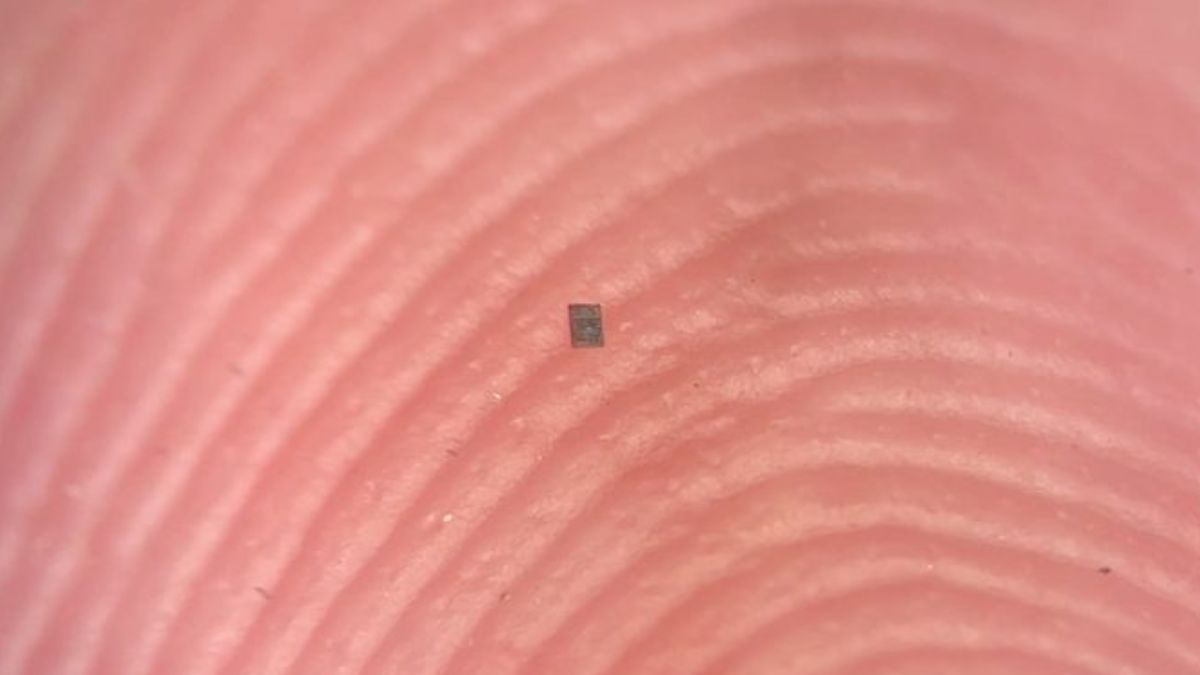
Meet the Invisible Robot: The World’s Smallest Programmable Machine Yet
Engineers at the University of Pennsylvania and the University of Michigan have unveiled a robot so tiny it’s almost invisible to the naked eye, yet it can sense its surroundings, make decisions and move on its own. The new device shrinks the size of previous autonomous robots by roughly 10,000 times, slipping from the millimeter scale down to a scale that can barely be seen. Unlike earlier designs that relied on external controllers, this micro‑robot packs a full computer inside – complete with a processor, memory, tiny sensors and its own propulsion system – allowing it to navigate fluids completely on its own. In practical terms, the robot can drift through a liquid like a speck of dust while simultaneously nudging the fluid around it, a behavior the team likened to a fish swimming in a river that also pushes the water as it moves. The breakthrough opens doors for ultra‑small devices that could one day deliver medicine inside the body, monitor environmental conditions in hard‑to‑reach places, or perform microscopic repairs, all without being seen.
Read more
China’s Race to Build the World’s First 6G Super‑Network
China is turning its massive 5G rollout into a springboard for the next‑generation 6G network, aiming to move from simply moving data to providing smart, AI‑driven services. In August, Chinese researchers unveiled a flexible, ultra‑wideband optoelectronic system that can wirelessly transmit data across every frequency band, a key step toward the ultra‑fast, reliable 6G links of the future.
Unlike earlier generations—2G sent text, 3G added pictures, 4G brought video, and 5G enabled high‑definition streams and IoT—6G is being designed as a digital “butler.” It will not only move information but also process it on the fly, offering real‑time decision support, coordinated scheduling, and intelligent integration of devices.
The breakthrough hinges on tapping the terahertz spectrum (0.1‑10 THz), which could push peak speeds into the terabit‑per‑second range—tens to hundreds of times faster than 5G. China already holds about 40 % of the world’s 6G patents and has catalogued more than 300 key technologies, from space‑air‑ground networking to perception‑computing fusion.
A national “IMT‑2030 Promotion Group” brings together telecom operators, manufacturers, universities and research institutes to coordinate research, standards and testing. Meanwhile, China’s existing 5G backbone—over 4.5 million base stations and gigabit‑capable ports in every county—provides the infrastructure needed to test and scale 6G innovations. As the United States, Europe, Japan and South Korea also pour resources into 6G, China’s coordinated push aims to secure a leading role in the next digital revolution.
Read more
China’s Robot Revolution: Humanoid Machines Set to Hit $100 Billion Market by 2030
China’s embodied‑intelligence sector – the industry behind humanoid robots – is booming, growing at more than 50 % a year and moving from a niche hobby to a mainstream powerhouse. Government plans in the 15th Five‑Year Plan, together with a massive industrial base, are driving the market toward RMB 100 billion (about $14 billion) by 2030 and potentially a trillion‑yuan industry by 2035.
Key drivers include a dense network of factories, logistics hubs and aging‑population services that need flexible, collaborative robots. Companies are already rolling out humanoid units for assembly lines, warehouse sorting, medical assistance and public‑safety tasks such as hazardous‑material handling. A new “Robotics‑as‑a‑Service” model lets firms pay for robot capabilities like a subscription, lowering upfront costs and spurring rapid adoption.
China now hosts over 150 robot firms and has produced more than 5,000 humanoid units, outpacing many rivals in sheer volume. The state is backing breakthroughs in robot “brains,” sensors and actuators, while also pushing standards for safety, operating systems and swarm‑robot coordination.
If these plans stay on track, China will not only dominate the global robot market but also reshape how factories, hospitals and cities work, ushering in an era where humans and machines collaborate seamlessly.
Read more
Green Breakthrough: Eco‑Friendly Way to Make Super‑Strong Graphene Materials
A team of scientists has found a cleaner, cheaper way to create a high‑tech material called graphene, which is known for being incredibly strong and conductive. Instead of using harsh chemicals and lots of solvent, the researchers used a simple, solvent‑free process that mixes tiny graphene sheets with natural, nitrogen‑rich compounds derived from amino acids. By grinding the mixture in a ball‑milling machine—a method known as mechanochemistry—they were able to embed nitrogen atoms into the graphene structure. This nitrogen‑doping gives the material new abilities, such as helping it bond better with plastics and enabling it to repair itself when damaged. The new approach cuts down on waste, lowers energy use, and avoids toxic chemicals, making the production of advanced composites much greener. The study, published in *ACS Sustainable Chemistry & Engineering*, shows that these eco‑friendly graphene sheets can be turned into high‑performance polymer composites that are lighter, tougher, and even self‑healing. This breakthrough could pave the way for greener manufacturing of everything from aerospace parts to consumer electronics, proving that sustainability and cutting‑edge technology can go hand in hand.
Read more

China Surpasses the U.S. in Global Science Output – What’s Driving the Leap?
A new analysis of the Nature Index – a yearly tally of papers published in the world’s top scientific journals – shows China has overtaken the United States as the world’s leading producer of high‑impact research. In the 2025 report (covering 2024 data), China’s share of papers in chemistry, physics, earth sciences and biology is 46 % higher than that of the U.S., a gap that has widened dramatically over the past decade. The surge is reflected not only in basic science but also in applied research, where China accounts for more than half of the world’s top‑journal output.
The article highlights several breakthrough stories that illustrate the trend: Yuan Junying’s work on programmed cell death that could lead to Alzheimer’s therapies; Gao Shaorong’s stem‑cell advances that helped complete the Nobel‑winning reprogramming experiments; and Xu Huiji’s low‑cost, allogeneic CAR‑T therapy for autoimmune diseases. It also covers China’s rapid progress in quantum photonics, single‑photon detection, and nuclear fusion, with projects like the EAST tokamak and the upcoming BEST reactor aiming for net‑energy gain by the early 2030s.
While China now dominates the Nature Index rankings, the piece notes that Nobel laureates and per‑capita citations still favor the West, suggesting the rise is a matter of scale and output rather than a wholesale shift in scientific prestige.
Read more