China’s AI Boom: How Big Models Are Shaping the Future – A Beginner’s Guide
China is rapidly accelerating its artificial‑intelligence ambitions, and large‑scale language models sit at the heart of the push. This article breaks down the nation’s AI roadmap into three clear layers: foundational support, application‑driven empowerment, and ecosystem building. First, the government and tech giants are investing heavily in the hardware, data pipelines, and research talent needed to train massive models. Second, the focus shifts to real‑world use cases—healthcare diagnostics, smart manufacturing, finance, and education—where AI can add immediate value. Third, a vibrant open‑source community and low‑code platforms are emerging to lower the barrier for developers, especially newcomers, to experiment with AI tools without deep expertise.
For beginner programmers, the guide offers a step‑by‑step entry path: start with familiar languages like Python or R, explore low‑code AI services from Baidu and other local providers, and gradually move to fine‑tuning pre‑trained models using accessible libraries. The author stresses that successful AI adoption hinges on identifying the right industry problem, understanding current implementation challenges, and scaling deployment carefully. By following this structured approach, newcomers can ride the wave of China’s AI explosion and contribute to the nation’s "AI+" transformation.
Read more
What’s Next for AI: The 2025 Roadmap for Large Language Models in China
China’s AI scene is entering a new phase. Government backing and a surge of local startups are shaping an ecosystem that will sit side‑by‑side with the big overseas players. Over the next three to five years, six technical directions are expected to drive the next generation of large language models (LLMs).
1. **Longer context handling** – Models will be able to follow extended conversations and chain together complex instructions without losing track.
2. **Sharper reasoning** – Multi‑step logical thinking will improve, cutting down on errors and “hallucinations.”
3. **True multimodality** – Text, images, speech and even 3‑D data will be processed together, opening doors to richer applications.
4. **Semantic memory & dynamic learning** – LLMs will retain useful knowledge over time and adapt on the fly to new tasks.
5. **Low‑resource training & edge inference** – More efficient algorithms will let powerful models run on smaller hardware, expanding deployment possibilities.
6. **Security, bias control & interpretability** – Greater emphasis on compliance will make AI outputs safer and more trustworthy.
Real‑world pilots already show the payoff. A biotech team used a GPT‑5‑style model to suggest experiment steps, slashing repeat trials and boosting productivity by over 60 %. Meanwhile, a securities firm automated research‑report writing, lifting analyst output by roughly 70 %. These examples illustrate how the upcoming wave of LLM capabilities will translate into tangible gains across industries.
Read more
China Leads the Race to 6G: How the Next‑Gen Network Will Transform Everyday Life
China is now at the front line of 6G research, having started large‑scale trials in 2025 and aiming to validate core technologies by 2026‑27, set standards by 2028‑30, and roll out commercial services around 2030. 6G promises ultra‑fast data rates measured in terabits per second, sub‑millisecond latency, near‑perfect reliability and the ability to connect millions of devices per square kilometre.
The technology is expected to power a wave of new experiences: holographic video calls, tactile‑internet sensations, and fully immersive virtual meetings. Factories will run with near‑instant remote control, enabling smarter automation and safer industrial environments. Smart cities will benefit from real‑time traffic management, public‑safety monitoring and energy‑saving services. In healthcare, 6G could make remote surgery and continuous patient monitoring routine, while autonomous vehicles will communicate instantly with road infrastructure for safer travel.
Analysts forecast a global 6G market worth $2 trillion by 2030, with China capturing roughly 30 % of that share. The United States, the EU, Japan and South Korea are also racing to set standards, turning 6G into a new arena of geopolitical competition.
Meanwhile, China’s biotech sector is receiving strong policy backing: the 14th Five‑Year Plan pushes innovative drug sales, speeds up insurance coverage for new medicines, and forces generic manufacturers toward R&D. Together, these trends suggest a future where faster connectivity and advanced pharmaceuticals reshape daily life, industry, and global competitiveness.
Read more
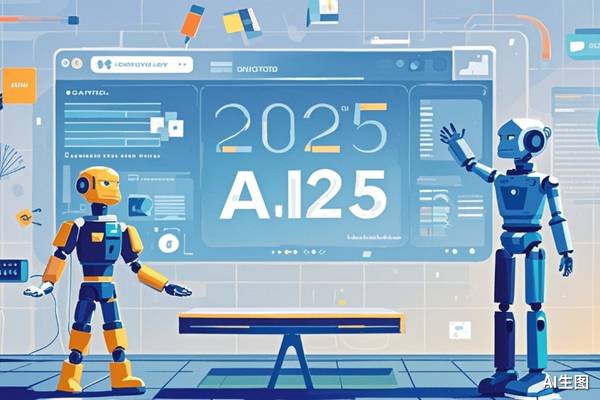
Robots Edge Closer to Real‑World Use, Yet 96% of Chinese Robot Start‑ups Face Extinction
Industry insiders say 2024 marked a quiet but important step forward for Chinese robotics. Simple tasks—like picking up a cup or moving a box—can now be done by robots with near‑perfect reliability, and more complex jobs are steadily improving. A standout advance is Vision‑Language Navigation (VLN), which lets robots understand spoken or written instructions and move through completely new spaces without the need for pre‑mapped routes. This "zero‑shot" ability could slash deployment costs and open up profitable, scenario‑based services.
However, the road ahead is still rocky. Two big hurdles remain: the lag between what a robot perceives and the decisions it makes, which can be dangerous, and hardware that isn’t yet robust enough for repeated, real‑world work. Experts also warn that the AI models powering these machines haven’t reached a "ChatGPT moment"—they still suffer from inaccurate perception and unreliable choices. High component prices keep the technology out of reach for most businesses, and the software‑hardware ecosystem is still fragmented.
New research trends are shifting from separate perception, decision, and actuation modules toward end‑to‑end systems that combine VLN, reinforcement learning, and emerging "world models" that could simplify data creation and replace costly simulation tools. While the first widely adopted robot may still be a few years away, many predict that by 2026 robots will handle multi‑task coordination, long‑term autonomy, and smooth human collaboration, reshaping the market—if the cost and reliability challenges can be solved.
Read more