Zhejiang Startup Eagle Semiconductor Raises $970 Million to Challenge US Chip Dominance
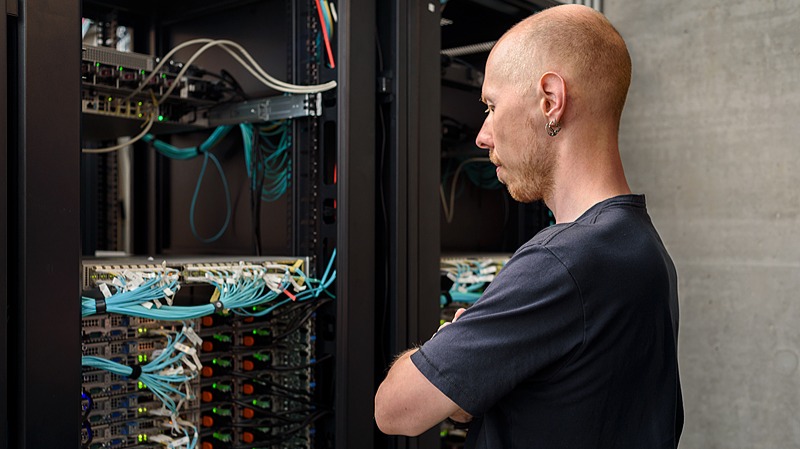
A little‑known chip maker in a small industrial park outside Shanghai is shaking up the global semiconductor scene. Eagle Semiconductor, based in Zhujiang, Zhejiang, just closed a 7 billion‑yuan (about $970 million) Series B financing round – the biggest single‑round investment ever seen in China’s optical‑interconnect market. The round was led by CITIC Jinshi and Guoxin Fund, with participation from deep‑tech venture capital firms, the Zhejiang Provincial Science and Innovation Mother Fund, and strategic investors such as SAIC Group’s direct‑investment arm and Hengkun Capital.
Eagle’s focus is on VCSEL (vertical‑cavity surface‑emitting laser) technology, the tiny light sources that act like accelerators for ultra‑fast optical data links. Think of a high‑speed railway that shuttles massive amounts of data between a GPU “kitchen” and a storage “cold warehouse” in the blink of an eye – VCSELs are the high‑speed trains that make that possible. By building dedicated optical interconnects, Eagle aims to replace slow, truck‑like data highways with lightning‑quick light rails, a breakthrough that could power next‑generation AI, drones, and lidar systems.
The massive funding not only validates Eagle’s technology but also signals China’s intent to break the United States’ long‑standing monopoly on advanced photonic chips. With strong backing from both government‑linked funds and private investors, Eagle Semiconductor is poised to become a dark horse in the race for next‑generation computing infrastructure.
Read more
Breakthrough ‘Cloaking’ Material Could Shield Electronics from Harmful Magnetic Fields
Scientists have unveiled a new way to protect delicate electronic components from powerful magnetic interference by using a specially designed “magnetic cloaking” material. Unlike previous concepts that required exotic or hard‑to‑make substances, this approach relies on commercially available alloys and composites that can be shaped into thin shells or guides around a device. When a magnetic field hits the cloak, the material redirects the field lines around the protected object, effectively making it invisible to the magnetic disturbance.
The technique opens up practical solutions for a range of high‑tech fields. In fusion reactors, where intense magnetic fields are essential, the cloaks could keep control electronics safe and functional. Medical imaging equipment such as MRI scanners could benefit from reduced stray fields, improving patient safety and machine reliability. Even the most sensitive quantum sensors—used for navigation, communication, and fundamental research—could be isolated from background magnetic noise, boosting their accuracy.
Because the materials are already on the market, engineers can start testing prototypes within months, accelerating the path from lab to real‑world applications. This development marks a significant step toward making magnetic shielding more affordable, adaptable, and widely available across industry and research.
Read more
China Unveils First 6G Prototype, Spotlighting Fast‑Track R&D and Big Market Potential
China Mobile has rolled out the nation’s first 6G transmission‑system prototype, marking a shift from lab theory to real‑world testing. The demo, called “6G Transmission System Prototype Sample 1.0,” proved three key abilities: it can sense traffic patterns and automatically pick the best transmission strategy, it creates ultra‑fast, dynamic channels for rapidly changing applications, and it coordinates multiple data streams—covering communication, sensing, computing, AI and security—so they work together without delay.
The breakthrough comes as Chinese firms such as Quectel, a 3GPP member, push forward on 6G research, filing high‑value patents in AI‑driven networking and integrated sensing. Government policy is also accelerating progress; the 2025 work report and regional plans in Beijing, Shanghai and Shandong pledge funding, spectrum allocation and standards work. Analysts at Tianfeng Securities predict the 6G market could hit 1.3 trillion yuan by 2030, making China the world’s largest 6G arena.
Major operators are not standing still. China Telecom is developing a “global intelligent beneficial network” and leading the first 6G billing standard, while China Unicom is testing low‑orbit satellites for space‑earth connectivity. Together, these efforts suggest that by the 2040s 6G could enable holographic calls, intelligent agents and a seamless, ultra‑fast internet that spans land, sea, air and space.
Read more
Science Magazine Unveils 2025’s Top 10 Game‑Changing Discoveries – From China’s Renewable Energy Surge to Gene‑Edited Babies
Science magazine has just released its list of the ten most groundbreaking scientific advances of 2025, and the headlines read like a glimpse into the future. Leading the pack is a massive leap in renewable energy, driven largely by China. Solar panels, wind farms and massive lithium‑ion storage installations have expanded so fast that clean power already meets the world’s growing electricity demand and has overtaken fossil fuels in total output. Affordable rooftop solar kits, built in China’s low‑cost factories, are now lighting homes across Europe, South Asia and the Global South.
In the realm of ancient humans, a joint Chinese team uncovered Denisovan remains in Harbin, confirming that these mysterious relatives once lived far east of their known range. Meanwhile, scientists at Huazhong Agricultural University identified a “gene switch” that makes rice plants tolerate scorching heat, a discovery that could safeguard global food supplies as temperatures rise.
Medical breakthroughs also made the list. In May, doctors at Children’s Hospital of Philadelphia performed the first customized gene‑editing treatment on an infant with a rare genetic disorder, opening the door to personalized cures for countless rare diseases. Finally, two new antibiotics to fight drug‑resistant gonorrhea received approval, offering fresh hope in the battle against superbugs.
Read more
Free Treasure Trove: Alibaba’s Qwen AI Resources Now Open on CSDN!
A massive bundle of Alibaba Cloud’s Qwen AI research and tools has just been uploaded to CSDN, and it’s completely free. By scanning the official QR code with WeChat, anyone can instantly download the entire collection—no strings attached. Inside, you’ll find the latest Qwen3 large‑language‑model series, including a live demo of its new voice‑AI capabilities, and a deep‑dive paper from the NeurIPS 2025 conference that explains how gated attention could reshape model architecture. The package also contains a comprehensive PDF titled “2025 China’s AI Rise,” which maps out the country’s breakthrough technologies and real‑world applications, plus Alibaba’s own technical report on the Qwen2.5‑1M series. For developers eager to fine‑tune models, there are step‑by‑step guides on Qwen1.5‑SFT, Qwen1.5‑2B/7B‑Chat, and PEFT‑LoRA inference tricks. A brand‑new multimodal model, Qwen2.5‑VL, is also included, along with best‑practice notes for integrating big‑data and AI on Alibaba Cloud. Whether you’re a researcher, engineer, or AI enthusiast, this curated library gives you direct access to cutting‑edge resources that were previously scattered across papers, repos, and internal docs. Grab the QR code, scan it, and start exploring the future of large‑model AI today.
Read more