China’s ‘Artificial Sun’ Hits New Milestone: 1 Million‑Amp Fusion Breakthrough
China’s latest fusion experiment, the HL‑3 “artificial sun,” has set a new record by sustaining a high‑confinement plasma current of one million amperes. This achievement pushes the performance envelope of magnetic‑confinement devices and brings the dream of a commercial fusion power plant a step closer. The breakthrough came after a series of technical hurdles, including unstable helium‑cooling cycles and mis‑aligned magnetic fields, were tackled by a dedicated team led by researcher Jing. By fine‑tuning the magnetic confinement and deploying advanced heating methods—such as electron cyclotron resonance, ion cyclotron resonance, and neutral‑beam injection—the HL‑3 maintained stable plasma long enough to demonstrate the coveted high‑confinement mode (H‑mode). The result not only resets China’s national record but also validates key design concepts for future tokamak reactors. Experts say the success could accelerate the global race toward clean, limitless energy, provided remaining challenges—like sustaining the reaction for longer periods and scaling up power output—are solved. The HL‑3’s performance is being closely watched by the international fusion community as a promising sign that practical, commercial fusion energy may be on the horizon.
Read more

Inside Thea Energy’s ‘Helios’: A Pixel‑Inspired Fusion Power Plant That Could Light Up the Future
Thea Energy has lifted the curtain on its newest project, Helios, a fusion power plant that looks like it was drawn from a pixel‑art video game. The startup’s CEO, Alex Berzin, says the design is a fresh spin on a type of reactor called a stellarator, which uses powerful magnets to twist and hold super‑hot plasma—essentially a cloud of charged particles—until the atoms fuse and release energy.
Unlike the laser‑based “inertial confinement” approach that squeezes tiny fuel pellets, Helios relies on magnetic fields to keep the plasma stable, a method scientists have been perfecting for decades. Thea’s twist is the plant’s visual layout, inspired by the blocky aesthetics of classic games, making the complex technology feel more approachable.
Berzin announced that the team has just released an overview paper and is eager for feedback from the global fusion community. The next steps involve forging partnerships, securing collaborations, and engaging potential customers to build the first prototype. If successful, Helios could provide a clean, virtually limitless power source, dramatically cutting carbon emissions and reshaping the energy landscape. Thea Energy’s bold, eye‑catching design may just be the spark needed to bring fusion power out of the lab and into everyday life.
Read more
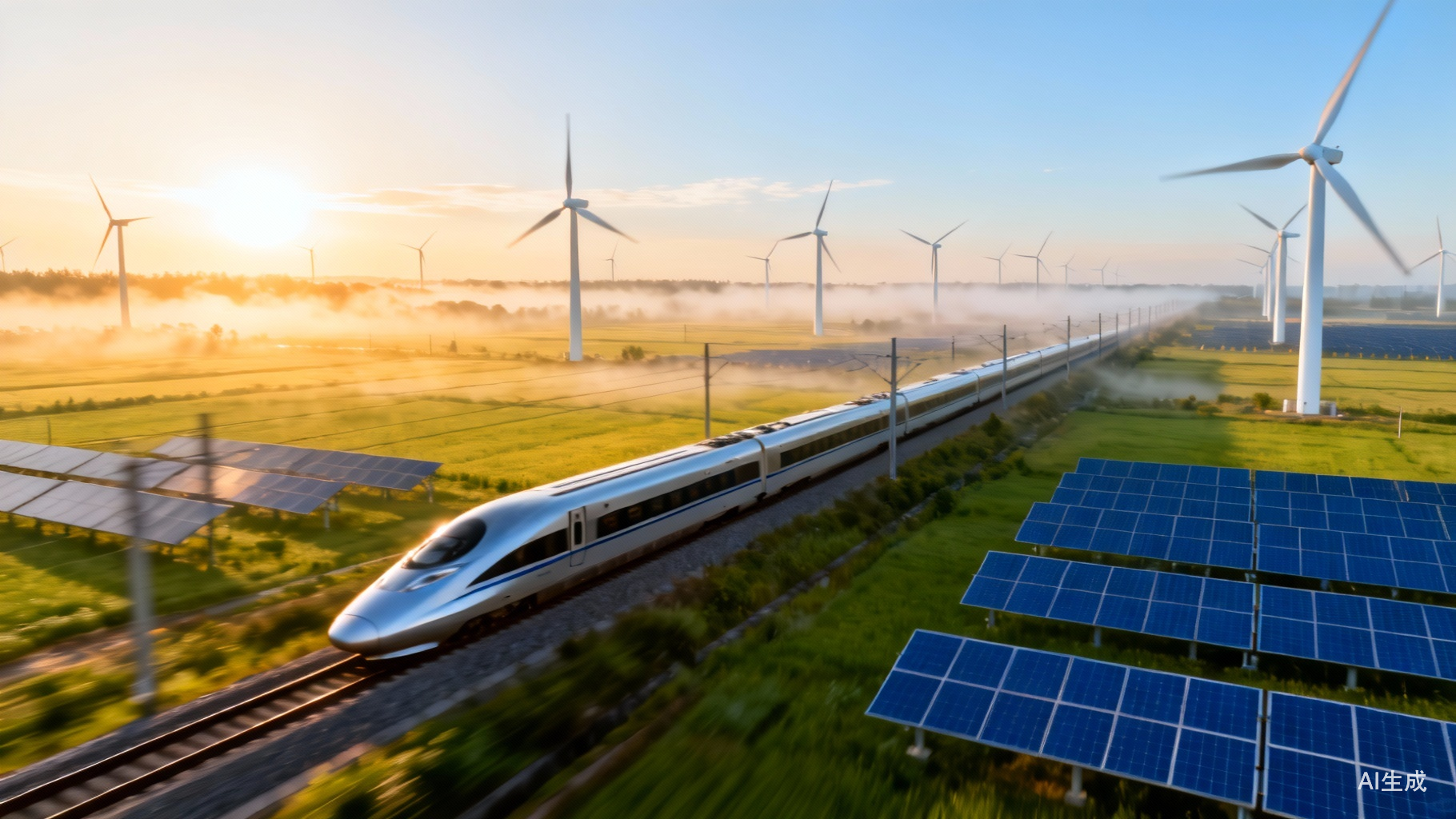
China Leads the Green Revolution: Massive Wind, Solar Projects Power a New Future
China’s push toward clean energy is now visible on a massive scale. The country has launched the world’s biggest offshore wind turbine—a 50‑megawatt floating unit that could power a gigawatt of electricity with just twenty of them, a feat unimaginable a decade ago. In Chengdu, Tongwei Solar is churning out more panels than any nation outside China, while the Gobi Desert now hosts the first dual‑tower, single‑engine solar‑thermal plant, using 27,000 computer‑guided mirrors to store heat in molten salt for round‑the‑clock power. These projects are reshaping China’s economy: traditional real‑estate and heavy‑industry growth is slowing, and clean‑tech sectors such as solar, wind, electric vehicles and batteries are becoming the new engines of jobs and innovation, narrowing the gap between coastal and inland regions. Yet challenges remain. China still depends on imported advanced chips, and U.S. export limits have created bottlenecks. Integrating more renewables also demands a modernized grid, especially in coal‑dependent provinces, and the transition must include miners and farmers. Abroad, Chinese green firms are building EV factories in Thailand and Brazil, battery plants in Indonesia and Malaysia, and solar hubs in Mexico, creating local jobs and tighter supply chains. The article argues that, rather than viewing China’s rise as a threat, the world should deepen cooperation to turn today’s tensions into shared opportunities.
Read more

Can You Crack This Week’s Space.com Crossword? Guess Which Mars Probe Went Silent!
Every Saturday, Space.com rolls out a fresh batch of cosmic headlines, jaw‑dropping telescope photos, and the latest launch updates—plus a fun crossword to test how closely you’ve been following the heavens. This week’s puzzle asks a timely question: which NASA Mars spacecraft lost contact in the past few days?
The quiz is more than a brain teaser; it’s a quick way to catch up on the most exciting space news, from breakthrough experiments aboard the International Space Station to stunning new images from the James Webb Space Telescope.
If you’re stuck on the Mars mystery, the answer is hidden among the week’s top stories, so a quick skim will set you straight.
The piece is curated by Kenna Hughes‑Castleberry, Space.com’s content manager and former science communicator at the JILA physics institute. Kenna also writes about quantum tech, AI, and the clever minds of corvids and cephalopods.
Ready to play? Dive into the crossword, confirm your public display name to join the comments, and see how much of the universe’s latest you’ve retained—all in under five minutes.
Read more

iRobot’s Missteps: How the Roomba Maker Lost Its Way
iRobot, once the darling of home‑automation thanks to its iconic Roomba vacuum, has stumbled into a perfect storm of strategic blunders and market shifts. After a decade of rapid growth, the company doubled down on pricey premium models while neglecting the budget‑friendly segment that first made it a household name. At the same time, fierce competition from Chinese manufacturers offering comparable robots at a fraction of the cost eroded iRobot’s market share. Internally, a series of leadership changes created confusion over product direction, and a costly push into AI‑driven home assistants stretched resources thin. The result? Delayed launches, software glitches, and a string of recalls that dented consumer confidence. Analysts point to a failure to adapt to the evolving expectations of a post‑pandemic consumer who now demands seamless integration across smart‑home ecosystems. As iRobot scrambles to regain footing, it’s cutting underperforming lines, refocusing on core cleaning technology, and seeking partnerships with major smart‑home platforms. The story serves as a cautionary tale: even beloved brands can lose their way if they ignore price sensitivity, competitive pressure, and the need for clear, consistent vision.
Read more
How Heat Sneaks Through Ultra‑Thin Materials: Scientists Unveil the Secrets
A team of physicists has finally cracked the puzzle of how heat moves across materials that are only a few atoms thick. While bulk solids conduct heat through a sea of vibrating atoms called phonons, the behavior changes dramatically when the material is reduced to just a handful of layers. In these ultra‑thin sheets, phonons encounter new boundaries, quantum effects, and altered wave properties that either speed up or bottleneck thermal flow.
Using ultra‑fast laser pulses and cutting‑edge microscopy, the researchers tracked the minute vibrations in real time, revealing that heat can hop across the sheet in discrete packets rather than flowing smoothly. They discovered that the material’s crystal structure and the way its atoms are arranged dictate whether heat travels efficiently or gets trapped. This insight explains why some two‑dimensional materials, like graphene, are superb conductors, while others act as thermal insulators.
The findings open doors for designing next‑generation electronics that stay cool despite being packed tighter than ever. By engineering the atomic layout, engineers could create chips that whisk heat away instantly or, conversely, build ultra‑thin thermal barriers for energy‑saving devices. The work also paves the way for new thermoelectric technologies that convert waste heat into electricity, promising greener, more efficient tech in the years ahead.
Read more