Jiangsu’s Space Push: Schools, Start‑ups and New Policies Fuel a Commercial Space Boom
Jiangsu is turning its classrooms, factories and new government rules into a launchpad for commercial space. In January, students and teachers from Nanjing Mechatronics Vocational College sent the “Nanjing” science satellite into orbit, then built a library of 12 textbooks and hands‑on guides to train the next wave of engineers. The college has also linked its own ground‑station to professional satellite networks, giving students real‑time data experience. Meanwhile, DeepBlue Aerospace’s CEO sold two sub‑orbital tickets for 2027 during a livestream, showing that space travel for ordinary people is becoming a reality. The China National Space Administration’s new Commercial Space Department promises unified launch permits and product standards, moving the industry from “wild growth” to orderly development. University‑enterprise teams are already solving on‑orbit radiation problems and preparing the country’s first commercial unmanned spacecraft, the Dier‑5, for launch from Jiuquan. In the Yangtze River Delta, Galaxy Aerospace’s smart factory in Nantong aims to build more than 50 satellites a year and add onboard AI for real‑time data processing. Nearby, Tianbing Technology’s massive rocket workshop in Suzhou has already flown the privately‑developed Tianlong‑2 liquid rocket and is testing the larger Tianlong‑3, with plans to recover and reuse first‑stage boosters by 2027. Together, education, industry and policy are turning Jiangsu’s commercial space dream into a fast‑moving reality.
Read more

2025 Global Space Awards Celebrate Game‑Changing Tech and Science Breakthroughs
The 2025 Global Space Awards shone a spotlight on the innovators who are turning science‑fiction ideas into everyday reality. Skylo Technologies stole the show, earning the Innovation Breakthrough Award for its bold new tools that let smartphones, smartwatches and cars talk directly to satellites. Their "Voice Gateway" lets users make calls over satellite, while bidirectional messaging on wearables and instant hazard alerts for drivers promise safer, more connected journeys—even in the most remote corners of the planet. The company also rolled out a satellite‑based SOS service that could speed emergency responses worldwide.
The Science Breakthrough Award went to Beatriz Sánchez‑Cano for her work on the M‑MATISSE project, a cutting‑edge experiment that deepens our understanding of planetary atmospheres and could reshape future space missions. Together, these winners illustrate how space technology is moving from the lab to our daily lives, delivering faster communication, smarter safety systems, and fresh scientific insights. As the space community celebrates these achievements, the excitement builds for the next wave of discoveries and the day astronauts set foot on the Moon again.
Read more

From Living Rooms to Assembly Lines: 1X’s Home Robots Land Their First Industrial Jobs
Robotics startup 1X has just announced a partnership that will see its consumer‑focused humanoid robot, the Neo Bot, move out of kitchens and onto factory floors. The deal, struck earlier this month, places a fleet of Neo Bots in a major warehouse and a manufacturing plant, where they will handle repetitive tasks such as parts sorting, inventory checks and light‑weight material handling. 1X says the move is a test‑run for a broader rollout that could eventually see home‑style robots working side‑by‑side with human crews in a variety of industrial settings.
While the company is excited about the new revenue stream, it also acknowledges safety concerns. The robots’ small size and limited stability raise questions about how they’ll interact with pets, children and heavy equipment in busy work environments. Industry experts have warned that widespread adoption of humanoid robots in workplaces may still be a decade away, citing technical hurdles and regulatory hurdles.
Despite the challenges, 1X reports that pre‑orders for the Neo Bot have "far exceeded" its original targets, suggesting strong consumer interest. The company declined to reveal exact numbers, but the partnership marks a significant step toward turning a household gadget into a practical tool for businesses.
Read more
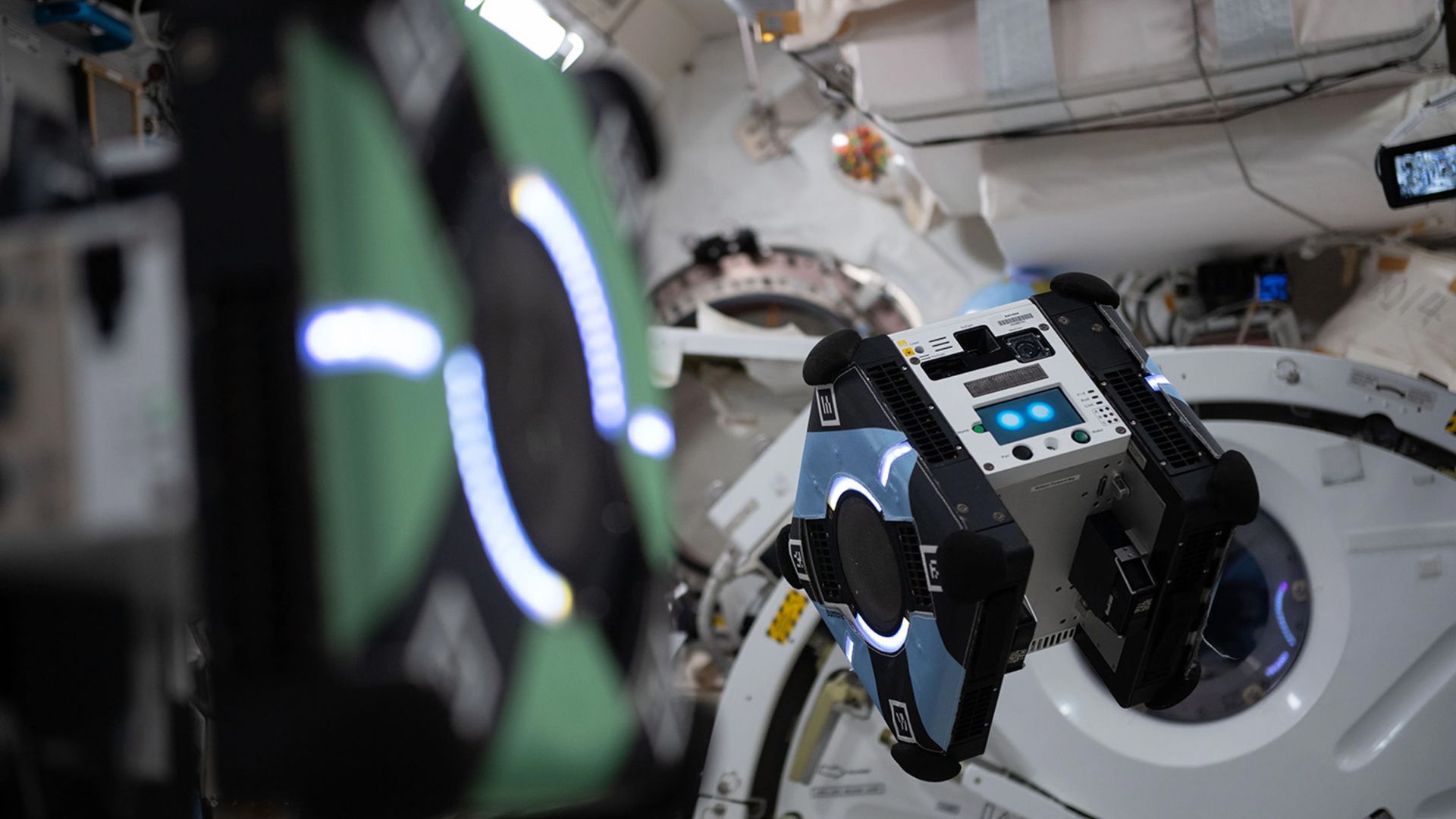
AI Guides Space Robot on First Free‑Flight Around the ISS
A team of researchers from Stanford University has shown that artificial intelligence can steer a free‑flying robot inside the International Space Station, marking the first time a machine‑learning system has plotted a safe, rapid route through the station’s cramped corridors. The robot, called Astrobee, is a small, cube‑shaped device that NASA uses for routine tasks such as moving equipment and taking photos. Traditionally, planning Astrobee’s movements required lengthy calculations and constant astronaut oversight, because the ISS’s tight, cluttered modules leave little room for error.
To overcome these limits, the Stanford team first broke the complex navigation problem into many tiny steps using a standard optimization technique. They then fed thousands of previously solved paths into an AI model, teaching it to start each new plan with a “warm‑start” guess instead of starting from scratch. The result is a system that can generate safe routes in a fraction of the time required by older methods, even with the modest onboard computers available in space.
The breakthrough could free astronauts from routine piloting duties, reduce the risk of collisions, and pave the way for more autonomous robots on future missions to the Moon, Mars, and beyond.
Read more