
China’s Humanoid Robot Boom: 3 Game‑Changing Trends Unveiled from 60 Start‑ups
A fresh survey of 60 Chinese humanoid‑robot firms reveals three clear trends that are reshaping the industry. First, AI‑driven large‑model brains are giving robots human‑like perception, voice understanding and real‑time navigation. Galaxy General’s GALBOT G1, for example, uses a "Navigation Foundation Model" that lets it move around untrained spaces, avoid obstacles and follow spoken commands.
Second, hybrid locomotion—combining wheels and legs—is delivering both agility and energy efficiency. GAC Group’s GoMate sports 38 degrees of freedom and a variable wheel‑leg design that can roll over rough terrain or walk upright, cutting power use by more than 80% and lasting up to six hours.
Third, rugged, weather‑proof builds are making robots viable outdoors. DeepRobotics’ DR02 earned an IP66 rating, tolerating rain, dust and temperatures from –20 °C to 55 °C, a first for full‑size humanoids.
Other notable players include Daimon Robotics, whose Sparky 1 demonstrates delicate hand‑eye tasks like circuit‑board welding and precise pipetting, and Tsinghua‑backed StarEra, which is gearing up for large‑scale demos in 2025 and mass production by 2027. Together, these trends point to a near‑future where humanoid robots will move from labs into hospitals, security posts and factories, delivering real‑world value across China and beyond.
Read more
Inside Shenzhen’s Cutting‑Edge Science Hub: From Synthetic Biology to Carbon‑Neutral Tech
The Shenzhen Institute of Advanced Technology (SIAT), part of the Chinese Academy of Sciences, is fast becoming a powerhouse of modern research. Its flagship Center for Synthetic Biology Evolution tackles how microbes evolve and interact with their surroundings, blending cutting‑edge synthetic biology, microbiology, physics and bioinformatics to turn theory into real‑world applications.
In late 2018, SIAT unveiled the Institute of Advanced Materials Science and Engineering at the bustling Shenzhen Convention and Exhibition Center. Construction kicked off at the start of 2019 and the institute opened its doors in November 2020. Its specialty? Electronic materials—especially packaging and functional components that keep our gadgets running smoothly.
Responding to China’s climate goals, SIAT launched the Institute of Carbon Neutrality Technology in June 2021. This new unit focuses on breakthrough science and frontier technologies that will help the nation hit its carbon‑peak and carbon‑neutral targets, serving industry needs across China, Guangdong and Shenzhen. The institute was officially established in November 2022.
Looking ahead, SIAT is also preparing an Institute of Scientific Instruments, which will further expand its research capabilities. Together, these centers position Shenzhen as a global leader in high‑tech innovation, from tiny microbes to the big challenge of a greener future.
Read more
Why Electrons Refuse to Jump: The Surprising Stability of Mismatched Quantum “Legos”
A team of researchers led by Dr. Kourkoutis has captured striking microscope images of a new class of “misfit” materials—structures where atomic layers don’t line up perfectly, like mismatched Lego bricks. By visualizing these imperfect stacks, the scientists could pinpoint exactly where each atom sits, allowing them to run rapid computer calculations on how electrons behave inside. The surprising result? Electrons tend to stay locked in their own layers instead of hopping across the mismatched boundaries. This confinement challenges conventional wisdom that electrons freely roam in layered crystals and opens fresh avenues for designing next‑generation electronic devices. If engineers can deliberately introduce such mismatches, they could craft materials where electric currents are tightly controlled, leading to faster, more energy‑efficient transistors, robust quantum bits, or novel sensors. The work also showcases how advanced microscopy combined with fast computational modeling can accelerate material discovery, turning what once seemed a messy, unpredictable atomic landscape into a playground for precision engineering. In short, the study reveals that a little “imperfection” at the atomic level can give electrons a reason to stay put—an insight that could reshape the future of nano‑electronics.
Read more
China’s Top 10 Digital‑Twin Trends for 2025 Unveiled at Suzhou Conference
On December 4, 2025, the second Digital Twin Technology and Industry Development Conference gathered experts in Suzhou. At the event, Mu Chunbo, deputy director of the Industry and Planning Research Institute at the China Academy of Information and Communications Technology (CAICT), announced the "Top Ten Digital Twin Keywords for 2025."
The list spotlights the most promising directions for digital‑twin technology over the next few years. It includes a "low‑altitude economy," where digital twins help manage drones and other aerial services; a "resilient city" concept that uses virtual replicas to plan for disasters and keep urban life running smoothly; and "smart factories," where manufacturers rely on real‑time digital copies of production lines to boost efficiency.
Other key themes are "green and low‑carbon" twins that model energy use and emissions, "intelligent‑agent‑empowered" twins that act like AI assistants, and "spatiotemporal intelligence" that blends location and time data for richer insights. The list also highlights "high‑performance simulation and rendering," "multimodal data fusion" (combining video, sensor, and text data), "digital‑twin asset circulation" (sharing virtual assets across industries), and a "generative model data supply" that creates realistic data for training AI.
Together, these trends point to smarter capabilities and a more fluid flow of data, promising to reshape sectors ranging from logistics and manufacturing to urban planning and sustainability.
Read more

Hidden Heart Danger: Study Reveals Millions Missed by Current Cholesterol Tests
A new investigation by the Mayo Clinic has uncovered a startling blind spot in heart‑health screening. The researchers found that the existing guidelines for detecting familial hypercholesterolemia—a common inherited condition that drives dangerously high cholesterol—miss nearly 90 % of those who actually have it. In plain terms, millions of people could be living with a silent genetic risk for heart disease without ever knowing it.
The study examined a large patient population and discovered that many individuals who already showed early signs of heart trouble never met the traditional criteria for genetic testing. As a result, they slipped through the cracks of routine medical care. The researchers argue that adding simple DNA screening to standard check‑ups could dramatically widen detection, allowing doctors to intervene earlier with lifestyle advice or medication.
Beyond the numbers, the findings highlight a broader shift toward genomics‑driven healthcare, where a person’s genetic blueprint informs prevention strategies. By catching this hidden risk sooner, the medical community hopes to reduce heart attacks and improve long‑term outcomes for countless families. The study calls on policymakers and clinicians to rethink current protocols and embrace broader genetic testing as a standard part of heart‑health assessments.
Read more
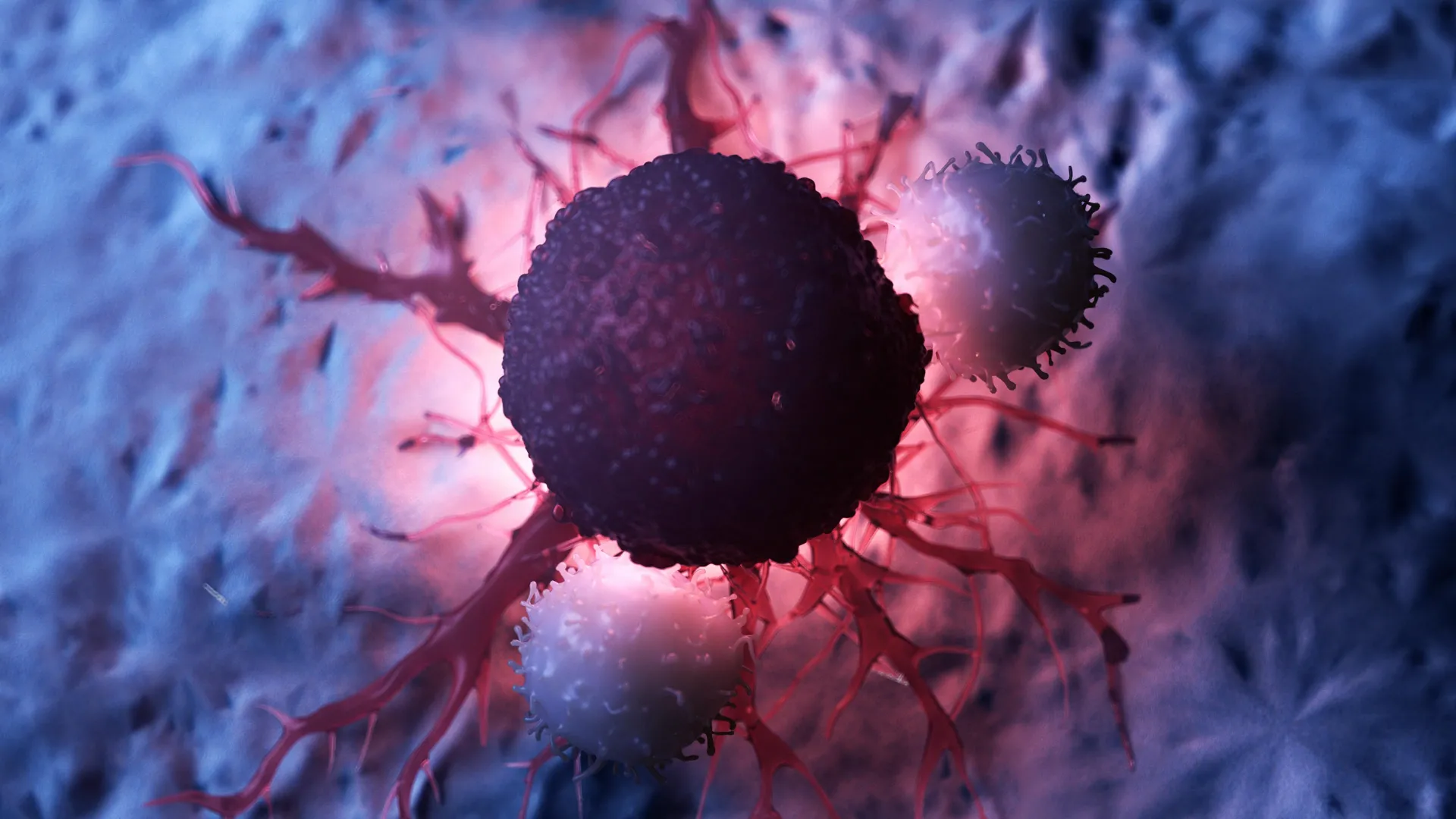
Smaller Dose, Bigger Win: Low‑Dose Melanoma Therapy Beats Expectations
A new study from Sweden’s Karolinska Institutet shows that giving melanoma patients a lower dose of a popular immunotherapy drug can actually improve outcomes. Researchers found that the reduced dosage not only cut side‑effects dramatically but also slowed tumor growth and extended survival compared with the standard high‑dose regimen. The surprise comes from experiments in mice and early‑phase human trials, where the low‑dose approach sparked a stronger, more sustained immune attack on cancer cells. Lead author Hildur Helgadottir explains that the findings could reshape how oncologists prescribe checkpoint‑inhibitor drugs such as PD‑1 blockers, moving away from “more is better” toward personalized, gentler dosing. The study also hints that gut bacteria may play a role in boosting the therapy’s effectiveness, opening doors for combined probiotic strategies. If confirmed in larger trials, this could mean fewer hospital visits, lower treatment costs, and a better quality of life for melanoma patients worldwide.
Read more