
Anthropic Teams Up with Snowflake in $200 Million AI Power Play
Anthropic, the AI startup behind the Claude chatbot, has inked a massive $200 million partnership with cloud‑data platform Snowflake. The deal means Snowflake’s business customers will soon be able to tap Claude’s advanced language‑model capabilities directly within their own data warehouses, giving them smarter, context‑aware tools for everything from report generation to decision‑making. Snowflake co‑founder and CEO Sridhar Ramaswamy praised the collaboration, saying the combined tech will set a new standard for how enterprises use AI on critical business data.
This move is part of Anthropic’s broader strategy to focus on large‑scale enterprise contracts rather than courting individual users—a clear contrast to rival OpenAI’s consumer‑first approach. Recent weeks have seen Anthropic lock in several high‑profile deals, including a partnership with Deloitte to roll Claude out to more than half a million employees and a collaboration with IBM to embed its models into IBM’s software suite. By aligning with heavyweight partners, Anthropic aims to prove that its AI can be both powerful and responsibly managed, helping companies unlock insights while keeping data safe. The partnership with Snowflake is expected to roll out later this year, giving businesses a seamless way to add sophisticated AI to their existing data workflows.
Read more

Giant Robot Showdown: Unitree’s 6‑Foot Humanoid Throws Punches, Kicks and Breaks Its Little Sibling
Chinese robotics firm Unitree has taken its robot‑fighting spectacle to a whole new level. In a jaw‑dropping video, the company’s nearly six‑foot tall humanoid, dubbed the H2, steps into a makeshift ring and starts delivering powerful punches, swift kicks, and even knee strikes—so forceful that they shatter parts of the company’s much smaller G1 robot, which had previously been the star of its own training videos.
The showdown isn’t just about brute strength. Hidden in the footage are clues about Unitree’s latest teleoperation system, which lets operators control the robot’s movements with remarkable precision, and newly designed hands that give the H2 a grip strong enough to grab and manipulate objects during combat. Unitree’s rise to fame has been fueled by viral clips that showcase its robots’ agility and by winning the most gold medals at China’s inaugural World Humanoid Robot Games earlier this year. The latest demo hints at even more advanced capabilities on the horizon, suggesting that humanoid robots could soon move beyond research labs and into dynamic, real‑world roles—whether in sport, rescue missions, or entertainment.
Read more

Meet Octoid: The Color‑Changing Soft Robot That Moves Like an Octopus
A team of researchers in South Korea has unveiled a soft‑robot prototype they’ve named Octoid, and it’s turning heads for its uncanny ability to mimic an octopus’s graceful motions while shifting its skin color on demand. Built from flexible, skin‑like materials, Octoid can squeeze through tight spaces, stretch its limbs, and even change hue to blend into its surroundings—much like the real creature does to hide from predators or stalk prey.
The scientists say the breakthrough opens doors to a host of practical uses. Imagine underwater drones that can camouflage themselves for marine research, medical devices that slip through the body’s narrow passages without causing damage, or military gear that adapts its appearance to match any terrain. The research, published in the journal *Advanced Functional Materials* on October 15, 2025, highlights a “triple‑in‑one” system that combines movement, color change, and a simple way to capture objects, all without rigid parts.
Lead researcher Kim envisions the next generation of “intelligent” soft machines—robots that can learn, react, and perhaps even develop a sense of self‑awareness. While Octoid is still in the lab, its blend of biology‑inspired design and cutting‑edge materials hints at a future where robots are as adaptable and stealthy as the sea creatures that inspired them.
Read more
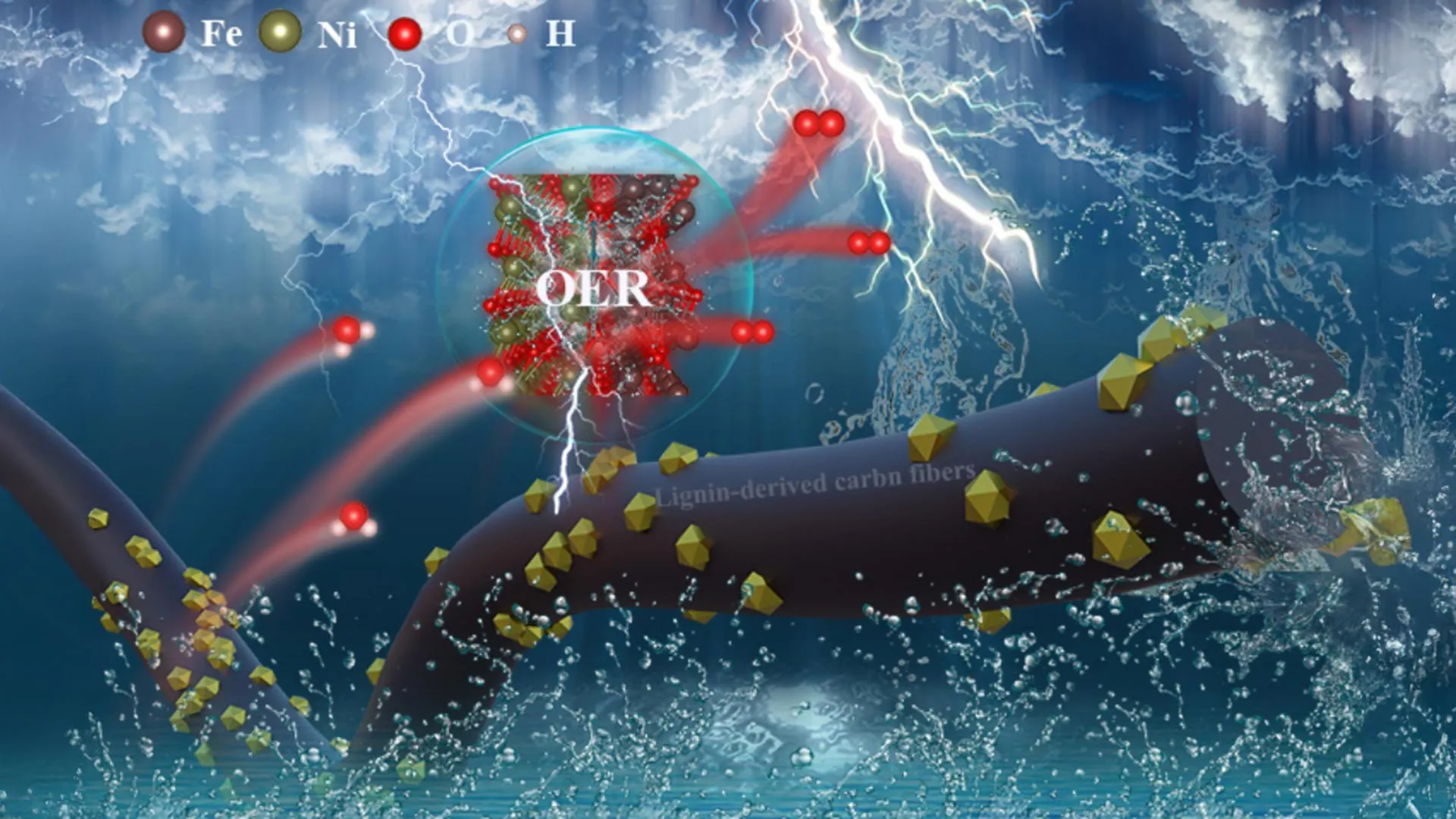
Turning Paper Waste into a Power‑Boosting Hydrogen Catalyst
Scientists at Shenyang Agricultural University have found a clever way to turn the leftovers from paper mills into a game‑changing material for clean‑energy production. By extracting lignin—a natural polymer found in plant fibers—from paper waste, they created carbon fibers that act like a tiny scaffold. Tiny particles of nickel oxide and iron oxide are then embedded into this scaffold, forming a new catalyst that speeds up the crucial step of splitting water into hydrogen and oxygen.
In simple terms, this catalyst makes the electrolysis process—where electricity is used to pull hydrogen out of water—more efficient and longer‑lasting. Because the raw material comes from abundant, renewable waste, the overall cost of producing green hydrogen could drop dramatically. Hydrogen, when generated without fossil fuels, is a clean fuel that can power everything from cars to factories while emitting only water vapor.
The breakthrough could help bridge the gap between today’s expensive hydrogen production methods and the affordable, large‑scale clean energy future many countries are aiming for. By turning a common industrial by‑product into a high‑performance energy tool, the research points to a greener, cheaper path for the world’s growing demand for sustainable power.
Read more