7 AI Agent Trends Set to Shape 2026 – From Early Ideas to Real Profits
On October 19, 2025 the AI world saw a wave of breakthroughs that point to a busy 2026. In China, iFlytek unveiled its Spark platform, Ant Group rolled out the powerful Ling‑1T language model, and ByteDance introduced Self‑Forcing++, a tool that can generate four‑minute‑long videos in a single pass. Across the Pacific, OpenAI and Anthropic released fresh model upgrades, while NVIDIA pushed its next‑gen Blackwell chip toward local production, promising faster inference for large models.
Beyond the tech, regulators are tightening ethics rules, and industry leaders are sharing real‑world deployment stories, signaling that AI is moving from labs to profit centers. Meanwhile, developers are digging into the nitty‑gritty of performance tuning – for example, TensorRT’s “timingCache” feature, which stores execution timings to speed up future runs, is gaining attention after a recent deep‑dive article.
Researchers are also exploring how massive models can be used for MapReduce‑style data processing, with Chinese‑language corpora serving as testbeds. All these signals – rapid model upgrades, new hardware, tighter governance, and practical deployment tips – combine into a clear trend: AI agents are maturing fast, and businesses that adopt them early stand to reap significant financial rewards in 2026.
Read more
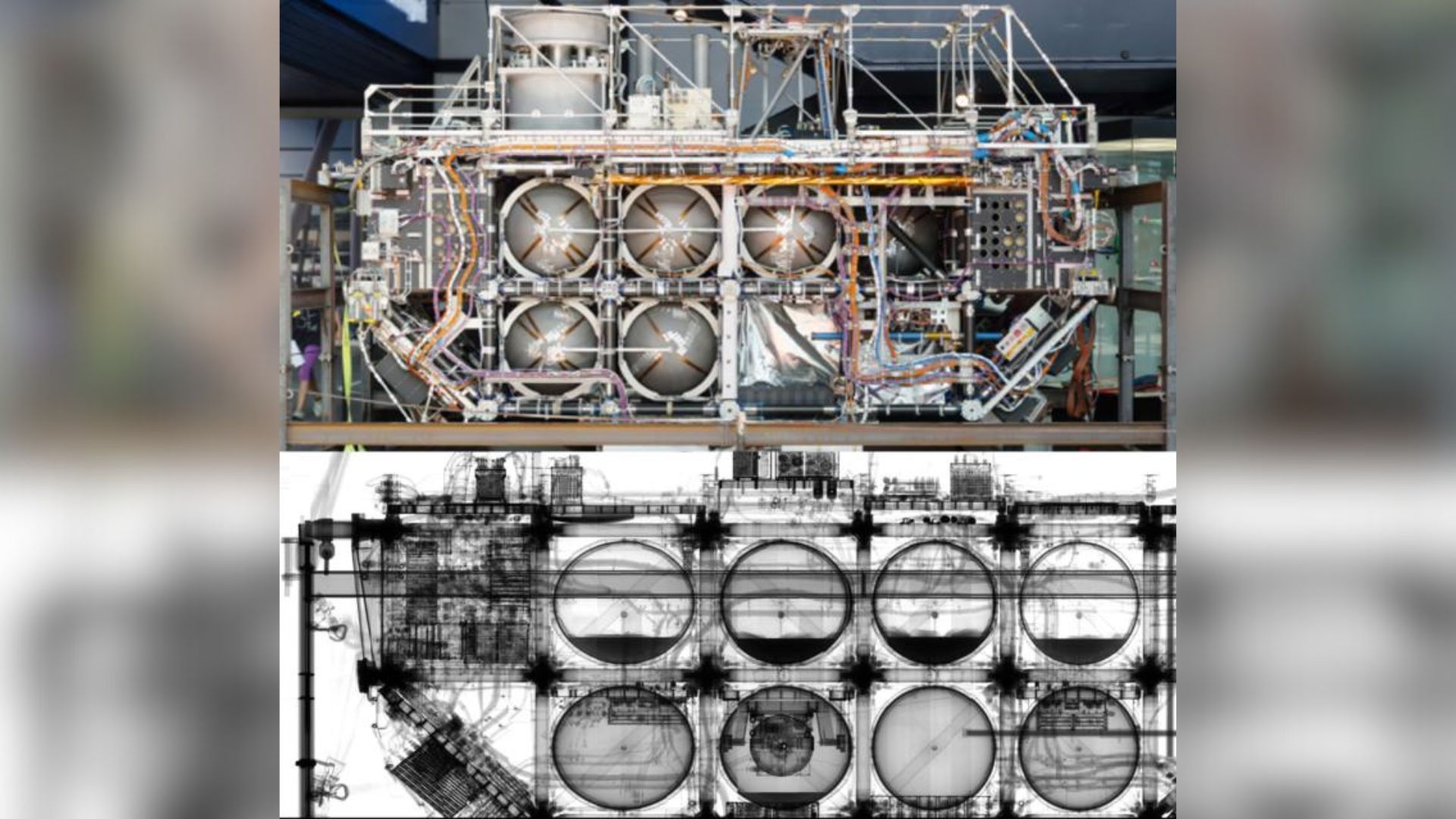
X‑Ray Scan Reveals Satellite’s Hidden Inner Workings – A Space‑Age ‘Full‑Body’ Photo
Scientists have given a satellite a high‑energy X‑ray “full‑body scan,” turning the metal machine almost invisible and exposing its inner anatomy for the first time. The striking image shows the fuel and gas tanks, faint traces of cleaning solutions, and the skeletal framework that once cradled fifteen scientific instruments during its orbit around Earth. This technique, usually reserved for medical imaging, lets researchers peer inside hardware that has survived launch, space exposure, and re‑entry, offering a rare glimpse of how components degrade and interact in the harsh environment of space. By making the satellite effectively transparent, engineers can better understand wear patterns, identify hidden flaws, and improve the design of future missions. The vivid X‑ray picture not only looks like something out of a sci‑fi movie, it also provides practical data that could help reduce space junk and extend the lifespan of satellites. For anyone curious about the unseen side of the technology that powers our modern world, this image is a vivid reminder that even the most robust machines have delicate, hidden guts.
Read more

Japan Teams Up with Industry Giants to Mass‑Produce Humanoid Robots by 2027
A coalition of Japan’s leading tech manufacturers has launched an ambitious plan to bring humanoid robots to market on a large scale by 2027. The partnership, organized by Waseda University’s Kyoto Humanoid Robotics Association (KyoHA), brings together Murata Manufacturing (sensors and communications), Mabuchi Motor (actuators), Renesas Electronics (micro‑controllers), Sumitomo Heavy Industries (gear reducers) and several other firms. Each member will retain ownership of any patents they create, while development costs will be shared among the participants.
The group aims to roll out two prototype models by March 2026: a 2.5‑meter‑tall disaster‑response robot capable of lifting over 50 kg, and a 1.6‑to‑1.8‑meter research robot that mimics human size and agility for use in RoboCup competitions and future commercial tasks. The long‑term vision is to replace human workers in sectors facing labor shortages—healthcare, construction, manufacturing, and even defense—by using robots that can handle the same tools humans do.
Analysts at Morgan Stanley project the global humanoid‑robot market could reach $30 billion this year and soar to $5 trillion by 2050. With Chinese firms currently ahead, Japan’s coordinated effort seeks to close the gap and spark a new wave of robotic innovation.
Read more
LHC Findings Back Fresh Theory on How Hadrons Form – A New Test for Quantum Mechanics
Physicists at the Polish Academy of Sciences have used the Large Hadron Collider’s latest data to confirm a brand‑new model that explains how quarks and gluons combine into hadrons during high‑energy proton collisions. The research, led by Prof. Krzysztof Kutak and Dr. Sandor Lokos and published in *Physical Review D*, introduces entropy‑based calculations for partons (the quarks and gluons inside protons) and predicts specific patterns in the numbers and types of particles that emerge from collisions. When the team compared these predictions with actual LHC measurements, the agreement was striking, outperforming older models that have been the standard for decades. Beyond improving our picture of hadron production, the work also probes deeper questions about the foundations of quantum mechanics, such as how entanglement and decoherence play out in the strong nuclear force. The authors argue that their framework could become a new benchmark for interpreting collider results and guide future experiments at the LHC and other facilities. This breakthrough highlights the power of precise experimental data to test and refine the very principles that underlie quantum theory, marking a significant step forward for particle‑physics research.
Read more
Tiny Robots, Big Impact: How New Micro‑Nano Machines Are Tackling Plastic Pollution and Heart Disease
Researchers led by Associate Professor Yu Tingting have built ultra‑small robots that can clean up micro‑plastic waste and help doctors see inside tiny blood vessels. Their cleaning robot is powered by ordinary visible light and uses a special semiconductor called bismuth tungstate coated with silver nanoparticles, which makes it absorb light efficiently. By adding magnetic iron‑oxide particles, the robot can be steered with a low‑frequency magnetic field. In tests, it removed 98% of micro‑plastics from water in just 93 seconds and could be retrieved magnetically, leaving no extra pollution behind.
The same team has created multi‑module micro‑nano robots for medical use. These tiny machines can travel through blood vessels, sense tiny forces, and build a three‑dimensional map of the vascular network without radiation. Using a clever blend of neural‑network‑based estimation and fast optimization, the system pinpoints the robot’s position within a micrometer in just one millisecond, achieving perfect recognition of vessel shapes in lab models.
Beyond the lab, Yu’s work bridges cutting‑edge materials, advanced manufacturing, and real‑world applications, promising cleaner oceans and safer, cheaper heart‑and‑brain diagnostics for the future.
Read more