How Quantum Computers Could Redesign the Internet as We Know It
Quantum computing is moving from theory to practice, promising to solve problems that are impossible for today’s classical computers. This breakthrough could reshape the very backbone of the internet. Unlike traditional bits, quantum bits (qubits) can exist in multiple states at once, enabling massive parallelism and ultra‑fast calculations. In the coming years, researchers expect quantum processors to accelerate tasks such as cryptographic key generation, complex routing optimization, and real‑time data encryption, making online communications faster and far more secure.
The article explains four key ideas. First, it outlines the transition from classical to quantum computing, highlighting recent hardware milestones. Second, it explores how quantum speed‑ups could lower latency and boost bandwidth for cloud services, streaming, and IoT networks. Third, it describes a vision of a "quantum‑enhanced internet" where quantum repeaters and entanglement‑based links replace conventional fiber, creating a resilient, tamper‑proof infrastructure. Finally, the piece wraps up with a forward‑looking summary, stressing that while large‑scale quantum computers are still emerging, their integration into internet architecture will drive a new era of ultra‑secure, ultra‑fast digital communication.
Read more
Space‑Age Shield: Flexible Boron Nitride Film Could Guard Astronauts from Cosmic Rays
A team of scientists has unveiled a breakthrough material that could become the next‑generation shield for spacecraft and habitats traveling beyond Earth’s protective magnetosphere. By weaving together boron nitride nanotubes (BNNTs) into a thin, flexible film, the researchers created a lightweight barrier that absorbs harmful space radiation far more efficiently than traditional aluminum or polyethylene shields.
The key to the invention lies in a clever trick borrowed from everyday soap: the team used dodecylbenzenesulfonic acid, a common surfactant, to keep the nanotubes evenly dispersed in water, preventing clumping and allowing the formation of a uniform, high‑density composite. This “lyotropic liquid crystal” approach yields a material that can be rolled up like a sheet yet packs a powerful punch against high‑energy particles.
Published in *Advanced Functional Materials*, the study demonstrates that the BNNT film can reduce radiation exposure by up to 70 % in simulated space conditions, while remaining flexible enough for easy integration into spacecraft structures, inflatable habitats, or even personal protective gear for astronauts. If further testing confirms these results, the technology could dramatically lower the mass and cost of radiation shielding, opening the door to longer missions to the Moon, Mars, and beyond.
Read more
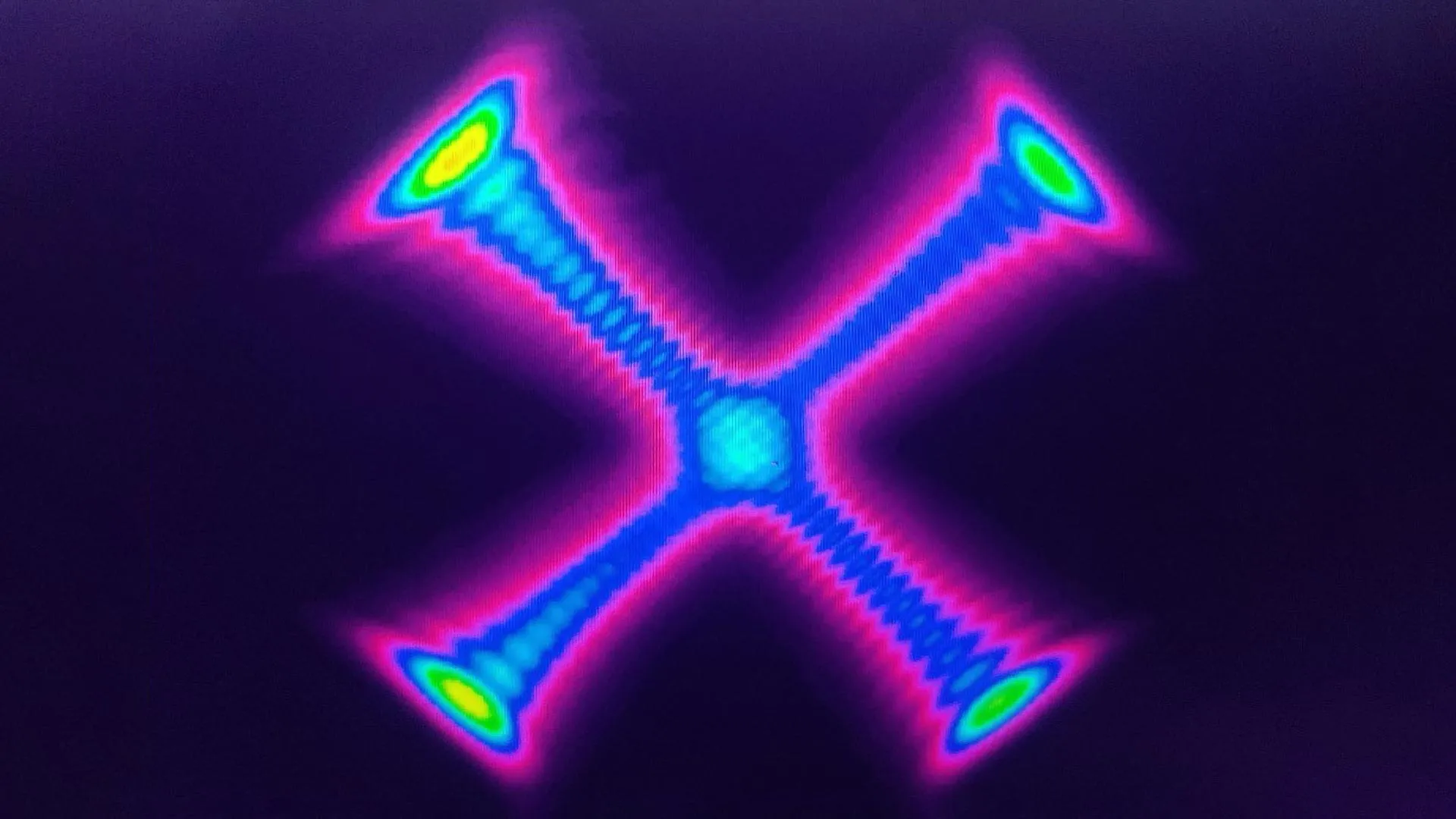
Europe Unveils Bold Plan to Capture Twisting Light Beams for Cleaner, Smarter Tech
Europe has announced an ambitious new initiative to put “twisting” beams of light—known as optical vortices—into everyday use. The program aims to turn these spiraling light streams into powerful tools for creating next‑generation products and streamlining industrial processes. By harnessing the unique properties of vortex light, researchers expect to design smarter optical components, improve nanofabrication techniques, and cut down on wasteful chemicals.
The plan is built around a circular‑economy mindset: devices built with vortex‑based technology should be smaller, use less energy, and be easier to recycle. Advanced predictive models will guide the creation of high‑power light vortices, allowing manufacturers to shrink hardware footprints while boosting performance. Environmental benefits are a key driver, with the initiative promising lower emissions, reduced reliance on hazardous substances, and a lighter overall energy load.
Stakeholders say the network of labs and companies involved will accelerate innovation across optics, materials science, and renewable‑energy sectors. If successful, Europe could set a new standard for sustainable high‑tech manufacturing, turning a once‑esoteric physics concept into a practical engine for greener, more efficient industry.
Read more