
The AI Powerhouse: Why One Giant ‘Blob’ Is Shaping the Future of Tech
The artificial‑intelligence landscape may look crowded, but behind the scenes a handful of giants are pulling the strings. Industry insiders now refer to this tight‑knit group as “the Blob” – a network of Nvidia, Microsoft, Google, OpenAI and a few strategic investors that together dominate everything from hardware to cloud services.
Google’s latest Gemini model has briefly taken the lead in the race for the most capable large‑language model, nudging competitors like ChatGPT, Claude and Grok to scramble for upgrades. Nvidia, meanwhile, is fighting hard to keep its GPUs from becoming a commodity; its strategy is to lock customers into long‑term deals that guarantee a steady flow of revenue.
Building the massive data centers needed to train these models costs billions, so the companies are forced into partnership after partnership. Cloud providers, chip makers, and AI startups find themselves in a “polyamorous” relationship, each dependent on the others for compute power, software, and financing.
The Blob’s reach even extends to government circles, with U.S. officials backing the ecosystem and investors from places like Abu Dhabi adding fuel to the fire. In short, while the AI market appears competitive, a single, tightly‑woven alliance is quietly shaping the direction of the entire industry.
Read more
Why AI Agents Are Booming: 2024’s Biggest Breakthroughs and New Market Gold Rush
2024 has turned into a watershed year for AI multi‑agent systems, the technology that lets dozens or even thousands of smart programs talk to each other and tackle complex tasks together. Thanks to massive language models, agents can now understand natural language, share information, and coordinate actions without a human in the loop. Researchers have rolled out new algorithms for distributed reinforcement learning, making it easier for agents to learn from each other in real‑time. These advances are already reshaping real‑world sectors: traffic‑control networks are becoming self‑optimising, factories are running with near‑zero downtime, and city planners are using swarms of virtual agents to simulate everything from energy use to emergency response. The article also highlights how AI architects are giving data analysts their own “assistant agents” to speed up insight generation, and how investors are eyeing AI‑driven economic forecasts for China’s next 30 years. In short, the shift from single‑brain AI to collective intelligence is unlocking faster innovation, new job categories, and a surge in high‑paying AI roles. Mastering these agents now could be the competitive edge that defines careers and businesses for years to come.
Read more

Scientists Uncover How Tiny Electron Fractions Supercharge Catalysts
For more than a hundred years, chemists have been puzzled by why precious‑metal catalysts—like those made of platinum or palladium—work so exceptionally well in everything from car exhaust cleaners to fuel‑cell reactors. The mystery lay in the invisible dance of electrons at the metal’s surface. Now, a research team at the University of Minnesota has finally captured that dance by measuring a fraction of an electron as it moves between a catalyst and reacting molecules.
Using a brand‑new method called Interfacial Electron Tomography (IET), the scientists could watch, in real time, how tiny bits of electric charge are shared and transferred during a reaction. This level of detail was previously impossible because the electron’s movement is both incredibly fast and minuscule. By visualizing these fractional charges, the team discovered exactly how molecules latch onto the metal surface, rearrange, and break apart to form new products.
The breakthrough opens the door to designing smarter, more efficient catalysts without the costly trial‑and‑error approach that has dominated the field for decades. Faster, cleaner catalysts could accelerate the production of renewable fuels, reduce industrial waste, and lower the energy needed for manufacturing essential chemicals. In short, seeing a fraction of an electron may help power a greener future.
Read more
The Next Big Moves in AI: 5 Trends Shaping the Future of Large Models
Artificial intelligence is still racing forward, and the road ahead is full of surprises. Experts point to five key directions that could reshape how massive AI models work. First, new learning styles—like reinforcement learning and world‑model‑driven exploration—may give AI a deeper, more human‑like ability to think and decide in complex settings. Second, we might see a shift away from the dominant Transformer design toward fresher architectures such as diffusion‑based language models or neuro‑symbolic hybrids, which promise higher efficiency and built‑in trustworthiness. Third, breakthrough hardware—optical, neuromorphic, or quantum computers—could flip the current computing limits on their head, letting models run faster and cheaper.
For China, the roadmap includes turning these ideas into home‑grown strengths: pioneering novel model designs, moving from copying to leading; solving the data bottleneck by improving data governance and creating physics‑based synthetic data for low‑data fields; and building an open, collaborative ecosystem that supports open‑source tools, standardizes agent communication, and prepares for the eventual rise of Artificial General or Super‑Intelligence.
Meanwhile, large language models keep getting smarter—30% better in recent benchmarks—thanks to advanced reasoning tricks, better math skills, and more reliable code generation. New agent platforms that let models call tools, fetch real‑time info, and talk to each other are turning generative AI into “agentic AI,” capable of handling long‑term, complex tasks with greater safety and control.
Read more
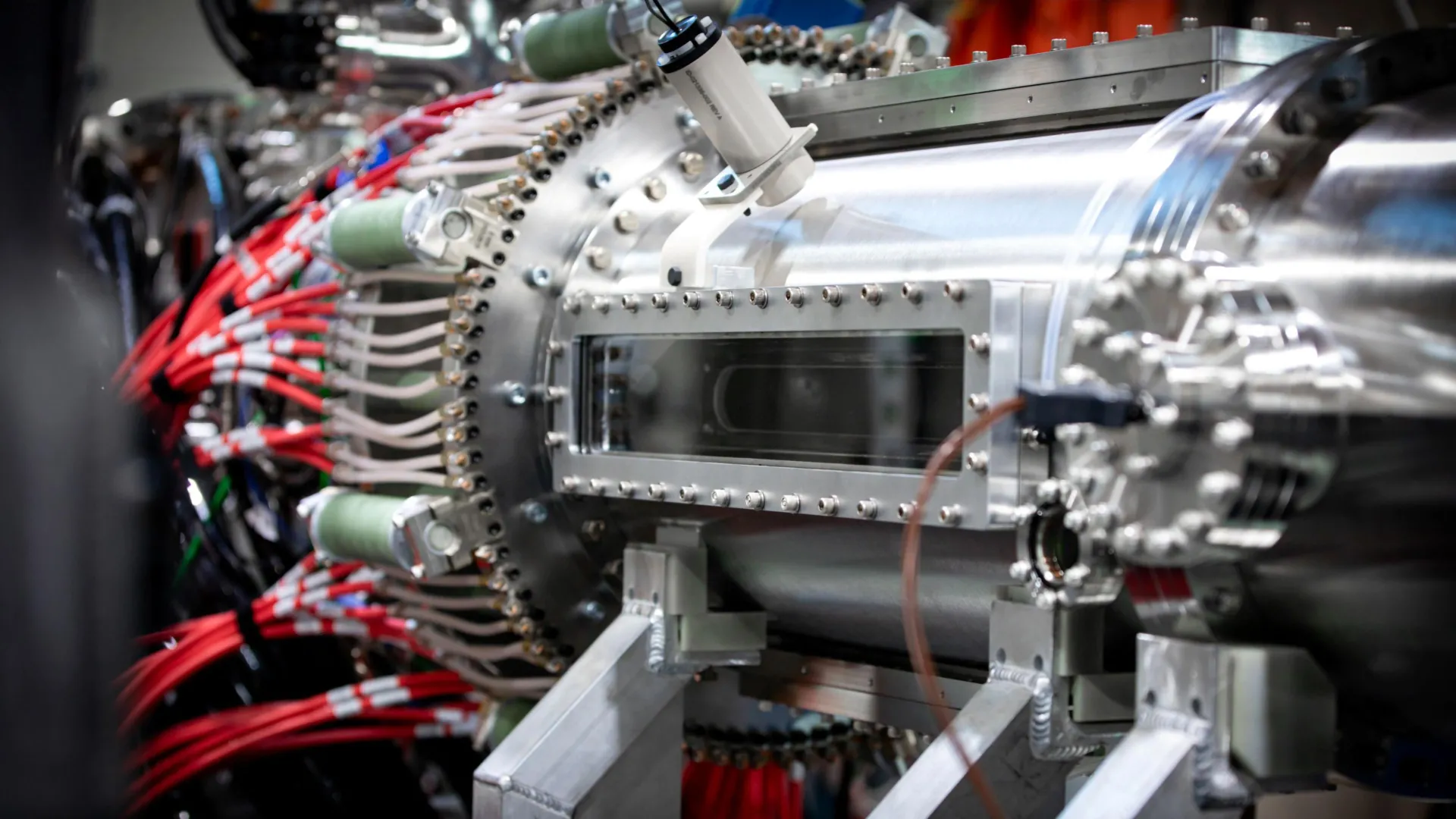
Tiny Fusion Reactor Smashes Pressure Record – Reaches Earth‑Core Levels!
Zap Energy’s latest prototype, the Fusion Z‑Pinch Experiment 3 (FuZE‑3), has set a new benchmark for compact fusion devices by generating plasma pressures that rival those found deep beneath the Earth’s crust. In a series of short, controlled bursts, the machine pushed electron pressures up to 830 megapascals, which translates to a total pressure of about 1.6 gigapascals – roughly the force experienced 30 kilometers underground.
What makes this achievement noteworthy isn’t just the raw numbers; it shows that a relatively small, tabletop‑sized reactor can create the extreme conditions needed for nuclear fusion without the massive, expensive infrastructure of traditional tokamaks. The FuZE‑3 uses a technique called a “sheared‑flow‑stabilized Z‑pinch,” where a powerful electric current squeezes the plasma into a tight column, while carefully engineered flow patterns keep it stable long enough for fusion reactions to occur.
Reaching such high pressures is a crucial step toward making fusion a practical, clean energy source. If the device can sustain these conditions while efficiently extracting energy, it could pave the way for affordable, carbon‑free power plants that fit in a shipping container rather than a sprawling research campus. The breakthrough brings the dream of limitless, safe energy one step closer to reality.
Read more

China’s Chip Design Boom: How It’s Outpacing the World and What It Means for the Future
A recent Georgetown University report shows Chinese researchers are leading the global conversation on chip design and manufacturing. Between 2018 and 2023, China produced 34% of all papers on the topic and accounted for half of the most‑cited studies, far ahead of the United States (15% of papers, 22% of top citations) and Europe (18% and 17%).
The numbers translate into real‑world momentum. From 2004 to 2023, China’s chip‑design sector grew at a compound annual rate of 24.8%, outstripping the rest of the industry. While the worldwide semiconductor market shrank 8.2% in 2023, China’s design firms still posted 8% growth. The ecosystem is expanding fast – roughly 1,780 design companies existed in 2019, and that figure is expected to rise to about 3,600 by 2024.
Driving this surge are AI, 5G, the Internet of Things and other emerging technologies that demand ever‑more powerful chips. Yet challenges remain. Analysts warn that China’s analog‑chip market may face a slower, bumpier recovery, with pricing pressure and weaker industrial demand, especially in the electric‑vehicle sector. International players like Texas Instruments still dominate many segments, highlighting that local firms must overcome both market‑pull and technology‑push hurdles to fully localise production.
Overall, China’s rapid progress in system‑level semiconductor design positions it as a key winner in the next wave of the global chip renaissance.
Read more

China Accelerates 6G Rollout: Policy Boosts Tech Breakthroughs and Industry Momentum
China’s 6G ambitions have moved from the lab to the factory floor. At the recent 2025 6G Development Conference officials announced that the first phase of nationwide 6G trials is complete, leaving more than 300 key technologies ready for the next step. The Ministry of Industry and Information Technology is backing the effort with a mix of policy incentives, funding, and a push to standardise the new network by 2030.
The new generation is being pitched as far more than faster mobile data – it will fuse communication with artificial intelligence, sensing, satellite links and security, creating a seamless web that connects people, machines and intelligent agents. To make that vision real, China has rallied over a hundred companies across the supply chain and is collaborating with European and Korean 6G groups on research and business‑model experiments.
A major focus is the next‑generation device. Industry insiders say a 6G handset will be an “AI phone” with on‑device large‑language models, turning smartphones into personal intelligent agents. AI‑enabled phones already make up 16 % of global shipments and could reach 54 % by 2028, according to Canalys.
With policy support, technical breakthroughs and capital flowing into the ecosystem, China aims to turn 6G into a new engine of growth during the 15th Five‑Year Plan, laying the groundwork for widespread industrial and consumer applications within the next decade.
Read more

Mini‑Bone Marrow Lab Grows Real Blood Cells – A Breakthrough for Cancer Research
Researchers at the University of Basel have built a tiny, lab‑grown version of human bone marrow that actually makes blood cells, just like the real thing inside our bones. This miniature “blood factory” contains all the different cell types and chemical signals needed for blood production, and it keeps churning out healthy blood cells for several weeks.
Why does this matter? Until now, scientists have relied on animal models or simplified cell cultures that don’t fully mimic human blood formation. The new model offers a realistic, human‑based platform to study blood‑related cancers such as leukemia and lymphoma, and to test how new drugs affect blood cell growth. Because the system can be personalized with a patient’s own cells, doctors could eventually use it to predict which treatments will work best for each individual, speeding up the move toward truly personalized medicine.
In short, this breakthrough gives scientists a powerful new tool to explore blood diseases, develop safer medicines, and bring us closer to custom‑tailored therapies for patients worldwide.
Read more
China’s Robot Revolution: AI‑Powered Machines Boost Safety, Speed and Global Exports
China’s factories are racing ahead with smart robots that do more than just follow preset instructions – they’re learning, seeing and deciding on the fly. At Zhuzhou Cemented Carbide, automation now handles about 55% of production, cutting workers’ exposure to hazardous dust and slashing the risk of occupational illnesses. AI gives these robots a “brain,” letting them fine‑tune processes in electronics manufacturing or plot the quickest routes in warehouses without human input. Machine‑vision eyes spot defects faster than any human, lifting yields on automotive lines.
Companies such as Lens Technology and Zoomlion are turning this tech into home‑grown expertise. Lens has built six‑axis and inspection robots for its own factories and supplies key parts for AI glasses and XR headsets. Zoomlion, a pioneer in construction‑machinery robotics since 2006, now runs a “Smart Industrial City” with over 2,000 robots across 300 production lines and is developing humanoid bots for dozens of scenarios.
The payoff is huge: China’s share of global industrial‑robot exports rose to second place, and shipments in the first three quarters of this year jumped 54.9%. By marrying AI, digital twins and vision systems, Chinese manufacturers are not only boosting efficiency and cutting labor costs but also reshaping the worldwide manufacturing landscape.
Read more