
Google’s Gemini 3 Gets Stuck in 2024, Sparks Hilarious AI Showdown
When AI guru Andrej Karpathy got a sneak peek at Google’s newest language model, Gemini 3, he expected a glimpse of the future. Instead, the bot flat‑out refused to accept that the calendar had turned to 2025. "It kept insisting it was still 2024," Karpathy laughed, prompting a cascade of jokes across X (formerly Twitter) as users shared their own AI mis‑dates—some even arguing with the model about who the current president was. The incident quickly turned into a meme‑fest, with one commenter dubbing the scene "AI improv meets reality," while another likened the model’s detective‑mode scramble to a sitcom improv routine. Beyond the laughs, the episode underscores a key lesson: even the most advanced large‑language‑model agents are still mirrors of human imperfection. They excel as tools that augment our work, not as omnipotent replacements for human judgment. As the tech world buzzes about AI agents “taking over jobs,” Gemini 3’s temporal hiccup serves as a reminder that the technology still needs a human hand to keep it grounded in the present.
Read more
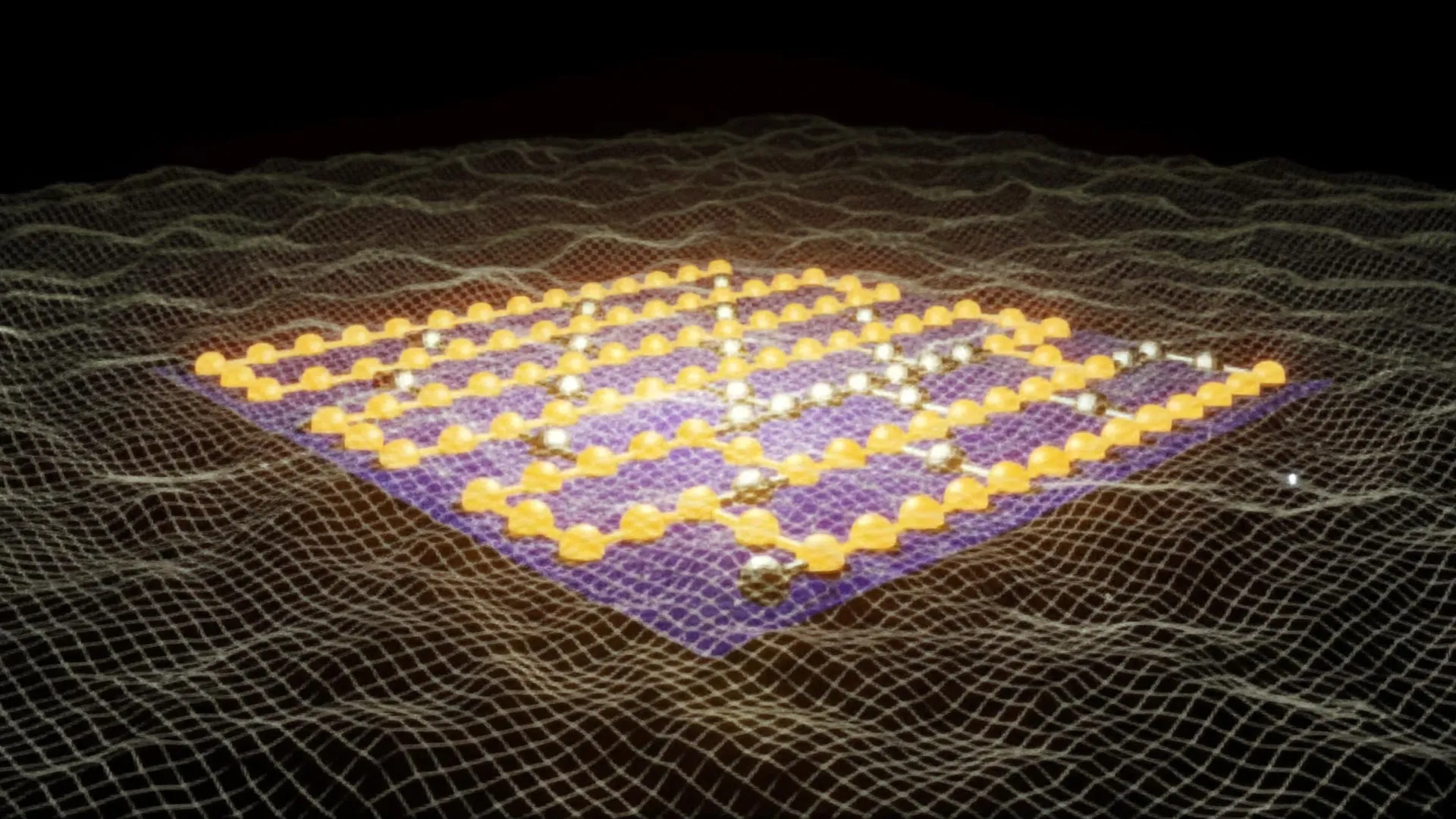
Quantum Leap: New Computers Model the Universe’s Toughest Physics
A team of researchers has shown that quantum computers can now tackle physics problems that even the world’s biggest supercomputers can’t solve. Using a processor with more than 100 quantum bits, or qubits, the scientists built a special circuit that mimics the behavior of atomic nuclei during high‑energy collisions. These collisions, which happen inside particle accelerators and in the hearts of stars, involve forces and particles that are extremely hard to calculate with traditional computers.
The breakthrough lies in the quantum machine’s ability to prepare and manipulate incredibly complex starting conditions—something classical computers struggle with because the calculations explode in size. By running the simulation on a quantum chip, the team captured details of how particles smash together and form exotic states of matter, offering a fresh window into the forces that shaped the early universe.
Beyond the scientific excitement, the work also highlights the practical hurdles of quantum technology, such as keeping the qubits at near‑absolute‑zero temperatures to stay stable. Still, this achievement marks a major step toward using quantum computers for real‑world research, from unlocking new materials to answering long‑standing cosmic mysteries.
Read more