
Google DeepMind Snags Boston Dynamics Veteran to Supercharge Its Robot Revolution
Google’s AI lab DeepMind is stepping up its game in the world of robots. The company announced it has hired the former chief technology officer of Boston Dynamics, a move that signals a serious push toward building smarter, more capable machines. DeepMind’s co‑founder Demis Hassabis says the next big breakthrough in AI‑powered robotics is just a few years away, and the new hire will help turn that vision into reality.
The focus is on creating AI models that can seamlessly control physical hardware—think robots that can walk, lift, and manipulate objects with human‑like dexterity. One startup, Sunday Robotics, is already testing a fresh training method that lets robots learn everyday household chores, with plans to roll out fully autonomous helpers into homes as early as next year.
Thanks to cheaper sensors, better processors, and open‑source software, building legged robots has become more accessible. A wave of U.S. companies—including Agility Robotics, Figure AI, and 1X—are racing to develop humanoid bots, while Tesla’s Elon Musk has set an ambitious goal of producing a million Optimus robots over the next decade. With DeepMind’s new talent and a growing ecosystem, the era of useful, everyday robots may be just around the corner.
Read more
Tencent Unveils R‑4B: An AI That Thinks Faster and Smarter by Adjusting Its Own Reasoning
Tencent’s Hunyuan research team has announced a major leap in artificial‑intelligence technology with its new multimodal large language model, R‑4B. Unlike most AI systems that rely on a one‑size‑fits‑all approach—using massive computing power even for simple tasks—R‑4B can automatically gauge how hard a problem is and decide how deep to think about it. This “auto‑thinking” capability means the model uses just enough resources for easy questions while reserving its full analytical firepower for complex challenges, much like a human who chooses a quick answer for a simple query but takes time to solve a tough puzzle.
The breakthrough was detailed in a paper posted to arXiv (2508.21113v1) on August 28, 2025, and the team collaborated with several leading research institutions. By dynamically adjusting its reasoning depth, R‑4B promises to cut energy consumption, lower costs, and improve response speed without sacrificing accuracy on demanding tasks. Developers can explore the model through the GitCode repository, where they’ll find code, documentation, and examples to integrate this adaptive intelligence into their own applications. In short, Tencent’s R‑4B aims to make AI both smarter and more efficient, bringing us closer to systems that think more like people.
Read more
The Race to 6G: How the Next‑Gen Network Will Transform Our Lives
The world is gearing up for 6G, the next leap beyond 5G, and spectrum – the radio frequencies that carry data – is the key ingredient. Experts say global mobile traffic will keep soaring over the next five years, especially in major cities, creating a fierce demand for new spectrum slots. The 2027 World Radiocommunication Conference in Shanghai will decide which frequencies become the backbone of 6G, making careful planning and standards essential.
Industry leaders propose a two‑step roadmap: first, squeeze every ounce of performance out of 5G, then layer on AI‑driven, satellite‑linked networks to unlock truly seamless connectivity. China is already sprinting ahead, having built a three‑pronged R&D system that combines research, testing, and iterative upgrades. By November 2025, Chinese entities filed 40 % of all global 6G patent applications and have assembled more than 300 key technologies.
A major focus is “terminal innovation.” AI‑powered smartphones, smart glasses, and other devices will embed large language models directly into their operating systems, turning phones into personal assistants that can see, remember, and plan. This shift will push AI‑enabled phones to dominate half of all shipments by 2028.
Beyond consumers, 6G will power factories, autonomous vehicles, drones, and even direct‑to‑satellite phones, delivering ultra‑high bandwidth, ultra‑low latency, and rock‑solid reliability. International cooperation on standards, satellite deployment, and frequency allocation will be crucial to turn this vision into reality.
Read more
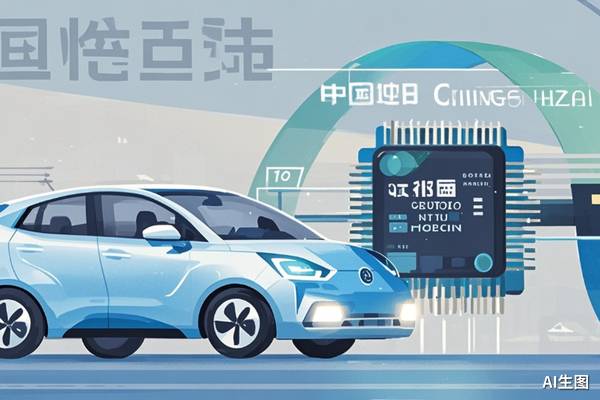
China’s Homegrown Car Chips Stay Strong Even as Nexperia Falters
China’s automotive‑grade semiconductor makers are proving resilient despite the recent turmoil at Dutch chipmaker Nexperia. While many overseas players operate as integrated device manufacturers (IDMs) that only produce their own designs, Chinese firms have built a more flexible ecosystem. For example, Infineon’s foundry works solely on its own products, whereas Jita Semiconductor, part of Hua Da Semiconductor, not only fabricate chips for sister companies but also offers foundry services to external designers. This market‑oriented approach lets Chinese companies adapt quickly to local demand.
Industry analysts warn that focusing exclusively on the automotive market is unsustainable. Even Infineon derives only about half of its revenue from cars, highlighting the need for a second growth engine. Chinese chip makers are responding by expanding into other sectors and pushing technical boundaries. A key benchmark for true substitution is voltage capability: while foreign rivals have reached 1,000 V, domestic chips are now hitting 1,500 V, signaling genuine competitive parity.
The article, originally published on the WeChat public account “Semiconductor Industry Panorama,” underscores that China’s chip ecosystem, built on collaboration and diversification, is well‑positioned to weather external shocks and continue advancing the nation’s automotive electronics ambitions.
Read more
China’s Robot Revolution: From Factory Floors to Everyday Homes
China has become the world’s biggest robot maker, and its industry is now a full‑stack ecosystem—from home‑grown controllers and servo motors to complete robot assemblies and integration services. Thanks to rapid advances in domestic R&D, key components that once had to be imported are now produced locally, cutting costs and opening the door to customized designs.
Exports are no longer driven only by low prices. Chinese robots are winning orders across Southeast Asia, Europe and North America because they match global standards for quality, reliability and performance. In 2024, two‑thirds of all robot‑related patent applications worldwide came from China, underscoring its growing technological edge.
The next frontier is intelligence. With AI and deep‑learning, collaborative robots are shedding their “industrial‑only” label and moving into homes, cafés and wellness centers. Imagine a coffee shop run by a robot barista or a health hub where a robot remembers your preferences and offers personalized advice. These new business models are made possible by cheaper, smarter machines and a robust supply chain.
Experts say the day when robots are as common in households as smartphones is only a matter of time, turning today’s futuristic visions into tomorrow’s everyday reality.
Read more
China Leads the Global Green Revolution: How Its Massive Solar and Wind Push Is Shaping the Climate Future
China’s latest climate report paints a picture of a nation rapidly turning from a fossil‑fuel heavyweight into a clean‑energy powerhouse. By mid‑2025, China will have installed almost half of the world’s wind and solar capacity, hitting its 2030 renewable targets six years early. Photovoltaic (PV) growth has been especially dramatic – a 56‑fold rise in installed capacity since 2013 and a 100‑fold jump in power generation, dwarfing the combined output of dozens of other countries.
The strategy is region‑specific: the western plains host giant, centralized solar farms, while the eastern cities line rooftops with panels, and the central region blends both approaches. China is also experimenting with “PV+” projects that combine solar with agriculture, fish farming, and land‑reclamation, and it is building an integrated system of storage, hydrogen, ultra‑high‑voltage grids, and micro‑grids.
Industrial emissions remain the biggest carbon source, so the government is pushing green manufacturing, smart factories, and circular‑economy parks like Suzhou. A national carbon market now covers steel, cement, aluminum and other heavy industries, representing over 60 % of China’s emissions. By expanding market‑based tools and tightening “dual carbon” controls, China aims to steer the whole economy toward low‑carbon growth, offering affordable green tech to the world and providing a steady anchor for global climate efforts.
Read more