How Tiny AI Agents Are Opening the Door to Everyday AI
Artificial intelligence used to be the domain of big tech labs with massive models that required huge amounts of data and computing power. A new wave of "agents" and compact AI models is changing that story, turning sophisticated capabilities into tools anyone can use. These lightweight agents act like specialized assistants—whether it’s drafting emails, summarizing articles, or planning simple projects—while running on modest hardware such as a laptop or even a smartphone. By focusing on narrow tasks and leveraging clever prompting techniques, they achieve impressive results without the need for billions of parameters or endless training data. This shift democratizes AI, allowing developers, small businesses, and hobbyists to embed intelligent features into apps, websites, and everyday workflows. The article highlights recent breakthroughs, such as the PAN world model that can reason step‑by‑step and generate high‑quality training data on the fly, and new sub‑pixel edge detection methods that push computer‑vision performance beyond traditional pixel limits. Together, these advances signal a future where AI is not a luxury for the few but a practical, accessible tool for the many, empowering creativity and productivity across all sectors.
Read more
China’s Secret AI Lab Chose Science Over Startup Gold
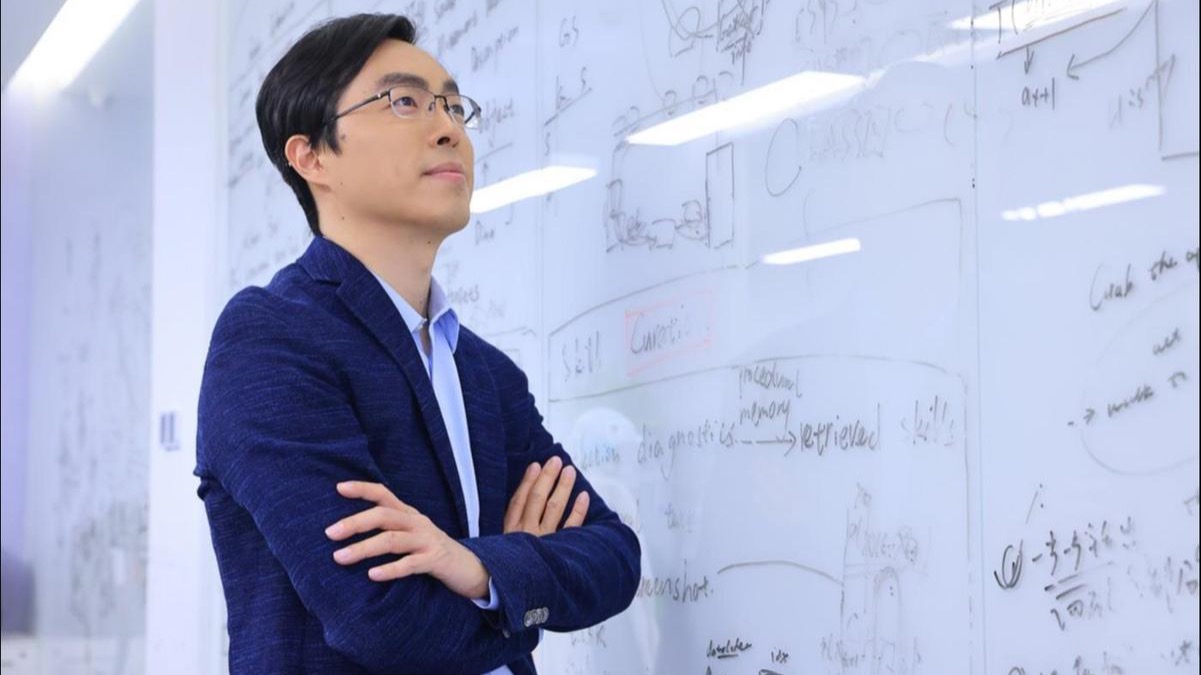
The Beijing Academy of Artificial Intelligence (BAAI) could have become China’s version of OpenAI, but it decided to stay a nonprofit research hub. After a brief internal debate in 2024, the institute chose to focus on pure science instead of launching a commercial spin‑off.
Inside BAAI, veteran researcher Wang Zhongyuan is steering a new direction called “Wujie,” a multimodal model that blends text, images and video—moving beyond the earlier “Wudao” language‑only system. While large language models have reached a technical plateau, Wang believes multimodal AI still has room to grow, hoping to discover a “Scaling Law” that mathematically links data size, model parameters and performance.
BAAI’s latest creation, the EMU 3.5 world model, is a half‑step toward that goal. Though it’s labeled 3.5 rather than 4, Wang says it already shows the promise of the scaling paradigm.
Even without selling products, BAAI has quietly seeded China’s AI boom. Alumni from the academy have founded high‑valued startups such as Zhipu AI and Moonshot AI, each worth roughly 30 billion yuan. The institute provides these entrepreneurs with research support and resources, acting as an incubator for the country’s “Six Dragons” of large‑model companies. In short, BAAI may stay behind the scenes, but its influence on China’s AI landscape is unmistakable.
Read more
Smart Robots Get a Brain: How a Dual‑Arm Bot Learned to Handle Lab Samples on Its Own
In a breakthrough that brings science‑fiction closer to reality, researchers at Hunan University have given a laboratory robot the ability to see, think and act like a human. The dual‑arm machine, designed to mimic the flexibility of a human hand, successfully lifted a glass vial and placed it onto a pharmaceutical spectroscopy analyzer without any human guidance. To achieve this, the team combined three key ingredients: a high‑resolution vision system that lets the robot recognize objects, a powerful "large model" AI that plans the safest path and decides how to grip the vial, and biomimetic dexterous hands that can adjust their grip in real time. Previously, the robot’s vision and the analyzer’s measurement tools worked in isolation; the new AI‑driven control hub links them together, turning the whole setup into an autonomous, end‑to‑end workflow. This "embodied intelligence" marks a shift from traditional robots that follow fixed scripts to machines that can perceive their environment, reason about it, and execute precise actions. The achievement is a major step toward smarter factories, faster drug testing, and a future where robots collaborate seamlessly with humans across many industries.
Read more
China’s Quantum Leap in 2025: From Vortex‑Light Chips to Kilobit‑Scale Cloud Computers
2025 has been a banner year for China’s quantum frontier. In February, researchers from Peking University, Zhejiang University and partners unveiled the world’s first vortex‑light quantum‑entanglement chip, proving that integrated optical chips can generate twisted‑light photons for secure communication. March saw the debut of the home‑grown superconducting quantum computer “Zuchongzhi No. 3,” which set a new global benchmark for quantum‑computational advantage in superconducting systems, signalling China’s shift from follower to leader. By June, the joint effort of QuantumCTek and collaborators delivered the “ez‑QEngine 2.0” controller, capable of measuring and steering more than 5,000 qubits in parallel—an unprecedented scale‑up from single‑chip experiments. July introduced a “nano‑biphoton factory” that produces entangled photon pairs with 99.4 % fidelity, laying the groundwork for next‑generation quantum sensors and networks. September marked the launch of China’s first coherent optical quantum‑computing cloud service, offering 1,000 dedicated qubits for real‑world applications and pushing quantum computing toward practical, kilobit‑scale use. Finally, November’s “Tianyan‑287” system, built on the same chips as Zuchongzhi No. 3, became the nation’s inaugural cloud platform delivering genuine quantum‑computational advantage. Alongside these milestones, China completed the first phase of 6G key‑technology trials, securing over 300 critical patents and positioning the country at the vanguard of next‑generation communications and quantum tech.
Read more
China’s Race to Build an ‘Artificial Sun’: Fusion Breakthroughs and What’s Next
China is fast becoming a world leader in the quest for fusion power – the “artificial sun” that could supply endless clean energy. In 2025 its HL‑3 tokamak hit temperatures above 100 million °C, a milestone that proves both nuclei and electrons can be heated to the extreme conditions needed for fusion. The Experimental Advanced Superconducting Tokamak (EAST) in Hefei set a new record by holding a 100‑million-degree plasma for 1,000 seconds, showing that long‑duration burns are possible. Meanwhile, the Compact Fusion Energy Experimental Device (BEST) has installed its key Dewar base, moving the project into the construction phase.
China National Nuclear Corporation’s tech chief, Huang Mei, says the roadmap follows three steps: experimental reactors, demonstration reactors, and finally commercial plants. Plasma‑combustion tests are slated for around 2027, after which a pilot plant will be built to prove net energy output. If successful, commercial reactors could follow in the 2030s.
Globally, the massive ITER project in France aims to demonstrate magnetic‑confinement fusion by the 2040s, while other nations pursue laser‑driven inertial confinement. Fusion remains a daunting scientific challenge – it requires heating fuel to temperatures hotter than the Sun’s core and keeping it stable for seconds or minutes. Yet the payoff would be a virtually limitless, carbon‑free power source that could reshape energy, materials science, and AI‑driven control systems. China’s recent achievements and its new IAEA Fusion Research Center in Chengdu signal that the world is edging closer to turning the artificial‑sun dream into reality.
Read more