
Millions of Satellite Messages Exposed: Study Reveals Unencrypted Data Can Be Eavesdropped
A new study has uncovered a startling truth about the way we rely on satellites for everyday communication. Researchers discovered that a massive amount of data traveling through space—ranging from private phone calls and text messages to corporate and military traffic—is sent without any encryption, leaving it wide open to anyone with the right equipment. Even the Wi‑Fi signals used by passengers on commercial flights can be intercepted, meaning personal emails, browsing habits, and other sensitive information could be read by strangers orbiting above.
The team presented their findings at the 32nd ACM Conference, highlighting how many satellite operators were unaware of the scale of the problem. Initially, several companies were skeptical, but after the data was shown, they responded positively and began working on fixes. The research underscores a growing security gap in our increasingly connected world, where satellites act as invisible highways for data we assume is private. As more devices depend on space‑based links, experts say urgent steps are needed to encrypt these transmissions and protect users from potential eavesdropping.
Read more
Breakthroughs at China’s Integrated Circuit R&D Hub: Diamond Films, Zinc Batteries, and Ultra‑Fast Light Control
The Integrated Circuit Advanced Process R&D Center (IC‑ARP) is a leading Chinese research hub that blends cutting‑edge chip design with next‑generation materials science. Its core focus spans innovative IC technologies, photonic device integration, computational lithography, and MEMS systems. Recent highlights showcase the center’s rapid‑fabrication breakthrough: a 4‑inch, self‑supporting diamond ultrathin film created in record time. Diamond’s superb thermal conductivity makes it ideal for cooling high‑power chips, and the new method eliminates the need for a silicon substrate, simplifying 3‑D packaging and lowering junction temperatures.
Other headline projects include precise control of aqueous zinc‑battery cathodes, promising safer, higher‑energy storage, and pioneering work on “negative energy interfaces” that could reshape ultra‑nanometallic research. The team also reported advances in petahertz‑scale light‑field control of photocurrents, pushing the limits of ultrafast optics, and new insights into exciton behavior in 3‑D organic‑inorganic hybrid semiconductors.
Together, these achievements illustrate IC‑ARP’s role in driving the next wave of high‑performance electronics, from smarter chips to greener energy solutions, positioning China at the forefront of global semiconductor innovation.
Read more
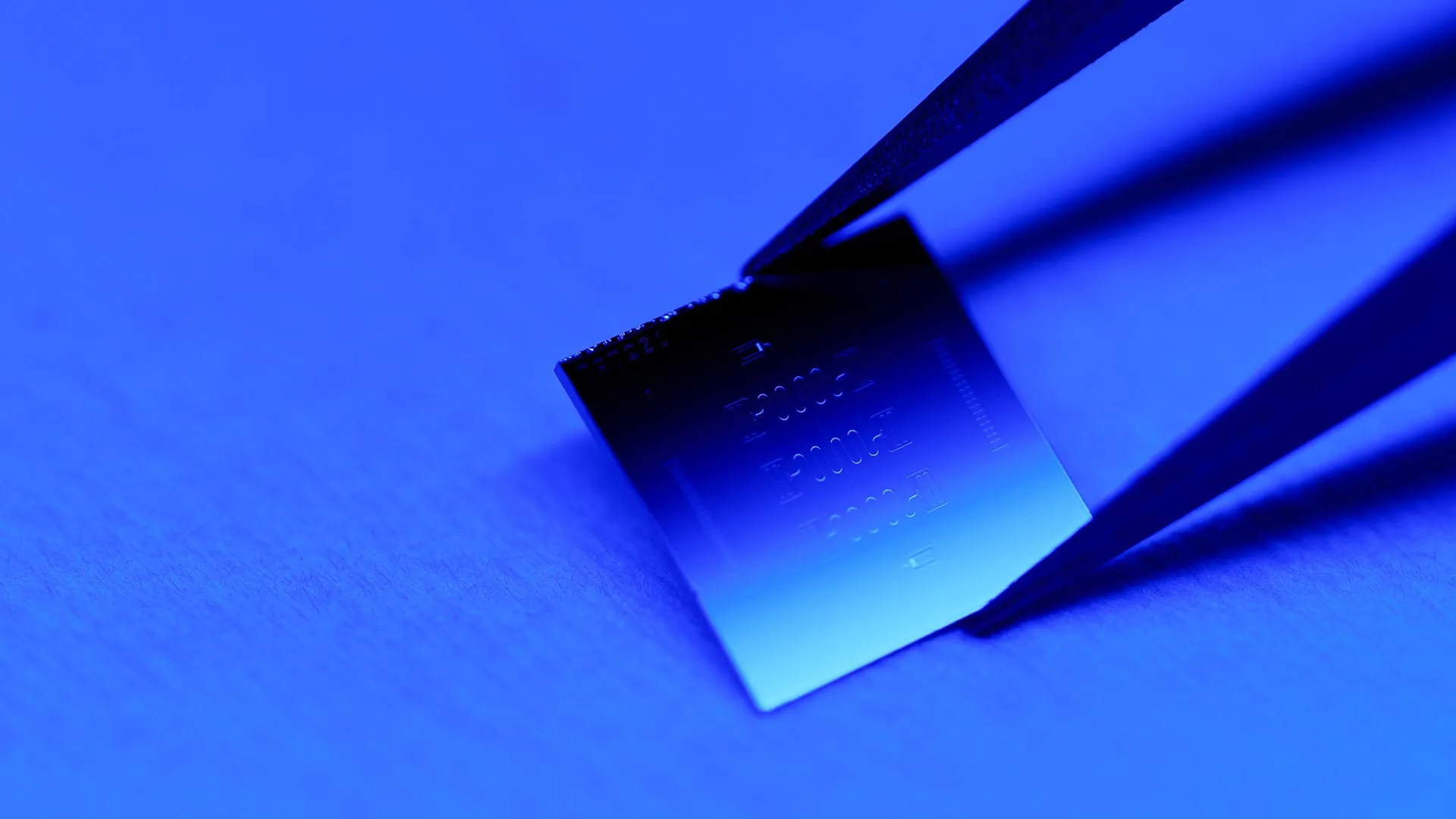
Princeton Unveils Breakthrough Quantum Chip That Could Power the Next Computing Revolution
Researchers at Princeton University have announced a quantum processor that shatters previous performance limits, bringing the dream of practical quantum advantage a step closer. The new chip uses a novel tantalum‑silicon qubit design that can hold a quantum state for more than a millisecond—far longer than the best transmon qubits available today. By addressing two long‑standing problems—tiny surface defects and energy loss in the chip’s substrate—the Princeton team created a qubit that is both more stable and easier to integrate with existing superconducting circuits.
The breakthrough matters because longer coherence times mean quantum computers can perform more calculations before errors creep in, reducing the need for complex error‑correction schemes. In practical terms, the technology could make today’s experimental machines, such as Google’s Sycamore processor, dramatically more powerful and scalable. The researchers emphasize that their design does not require a complete redesign of current hardware, allowing manufacturers to adopt the new qubits with relatively modest changes.
If the approach lives up to early tests, it could accelerate the timeline for quantum computers to solve real‑world problems in chemistry, cryptography, and optimization—tasks that remain out of reach for classical supercomputers. The Princeton team plans to collaborate with industry partners to embed the new qubits into larger processors and demonstrate a clear quantum advantage in the coming years.
Read more
China Unveils Bold 6G Roadmap: AI‑Powered Networks Set to Transform Life by 2030
China has rolled out an ambitious plan to bring 6G to market, aiming for commercial launches in China, Europe and the United States as early as 2030. Industry experts say that by 2040 more than five billion devices could be running on 6G, representing over half of all global connections. The roadmap stresses a two‑step approach: first, fully exploit 5G by building a stable network that fuels the digital economy; second, let 6G emerge naturally once 5G’s value is maximised.
Key to the new generation is the fusion of artificial intelligence, sensing, computing and security – a “smart‑everything” ecosystem that will link people, machines and data in real time. Researchers from the China Academy of Information and Communications Technology and the Ministry of Industry and Information Technology have already released dozens of technical reports, prototype antennas and AI‑native design frameworks.
The plan also aligns with global standards bodies such as the ITU and 3GPP, ensuring China’s work fits into the worldwide 6G timeline. Industry leaders envision AI‑enhanced smartphones, smart glasses and immersive XR devices as the first wave of consumer products, driving a new wave of applications and economic growth. In short, China’s 6G strategy blends deep research, cross‑industry collaboration and AI integration to turn the futuristic vision of ultra‑connected society into reality.
Read more
Breakthrough Flash‑Annealing Technique Powers Ultra‑Fast, High‑Energy Thin‑Film Capacitors
A research team led by Professor Hu Weijin at the National Center for Materials Science, Chinese Academy of Sciences, has unveiled a game‑changing way to make energy‑storage capacitors. By blasting a thin film of lead zirconate titanate with an ultra‑fast heating and cooling cycle—up to 1,000 °C per second—the scientists can lock in high‑temperature ferroelectric and antiferroelectric phases in just one second. This “flash‑annealing” process creates a relaxor antiferroelectric thin film that combines the best traits of both material families: huge electric‑field‑induced polarization changes and excellent thermal stability.
The resulting capacitors store far more energy than conventional thin‑film devices while keeping their performance steady across a wide temperature range, a crucial advantage for next‑generation power electronics, electric vehicles, and renewable‑energy systems. The work, titled “Flash‑annealing enables wafer‑level relaxor antiferroelectric thin films for enhanced energy‑storage performance,” was published in Science Advances on November 15, 2025. This rapid, wafer‑scale method could accelerate the commercial rollout of high‑density, low‑loss energy‑storage components, marking a significant step toward more efficient, compact power‑management technologies.
Read more
Breakthrough Chip Turns a Single Laser Beam into Three Vibrant Colors—No Power Needed!
A team of physicists at the Joint Quantum Institute (JQI) has unveiled a new kind of photonic chip that can take a single‑color laser beam and instantly split it into three different hues, all without any external power or complex tuning. Unlike earlier devices that required active controls or painstaking adjustments, these chips work passively—once the laser hits the chip, the light is automatically reshaped into a trio of colors on demand. The researchers demonstrated the technology in a series of experiments and reported their findings in the journal *Science* on November 6, 2025.
The key to the chip’s performance lies in a specially engineered nanostructure that manipulates light’s frequency through a process called nonlinear frequency conversion. Because the design is fixed, the chip can be deployed in a wide range of applications, from compact multi‑color displays and advanced optical sensors to quantum‑communication systems that need precise color control. The work was led by Daniel Suarez‑Forero, now an assistant professor at the University of Maryland, Baltimore County, and postdoctoral researcher Mahdi Ghafariasl, both formerly at JQI. Their discovery promises to simplify and shrink optical devices, opening the door to cheaper, more reliable technologies that rely on light’s color spectrum.
Read more