ESA Uses Mars Data to Track Fast‑Moving Interstellar Object 3I/ATLAS
The European Space Agency (ESA) has successfully mapped the trajectory of the interstellar visitor 3I/ATLAS by tapping into observations from several Mars missions. By analyzing high‑resolution images and sensor readings from orbiters such as the Mars Reconnaissance Orbiter and MAVEN, scientists were able to pinpoint the object's exact path as it zipped past the Red Planet earlier this year.
This breakthrough demonstrates how data from planetary missions can be repurposed for planetary‑defence work, giving astronomers a new tool to monitor potentially hazardous objects that travel through our solar system at extreme speeds. The ESA team combined optical tracking with gravitational modeling, refining the object's speed, direction, and future position with unprecedented accuracy.
The findings are especially important because 3I/ATLAS, an interstellar comet‑like body, entered the inner solar system on a hyperbolic trajectory, raising questions about how often such objects might threaten Earth. By confirming its course, ESA not only reassured the public that the object poses no impact risk but also showcased a cost‑effective method for early warning. The agency plans to integrate similar Mars‑derived data streams into its ongoing Near‑Earth Object (NEO) monitoring program, strengthening global readiness against future cosmic threats.
Read more
China’s AI Surge: From Underdog to Global Patent Powerhouse
For years, many in the West have underestimated China’s ability to innovate, especially in artificial intelligence (AI). Seven years ago, a few observers warned that China would soon dominate AI research, but the prediction was largely dismissed because Chinese AI firms were still unknown abroad. Since then, the data tells a different story. Chinese scientists are publishing more high‑impact papers than ever, and eight Chinese institutions now rank among the world’s top ten in the Nature Index 2025 Research Leaders list. In several research fields, China’s highly‑cited papers match or surpass those from the United States. The patent landscape shows an even clearer shift: in 2010 China lagged behind Europe and the U.S. in AI and machine‑learning patents, but today Chinese entities hold about 60 % of all global AI patents. The secret, experts say, lies in China’s long‑term innovation strategy. While Western economies have increasingly chased short‑term profits, China’s government and businesses have coordinated around 10‑, 30‑, even 50‑year goals. The public sector steers research priorities and funds breakthroughs, while private firms quickly turn those discoveries into marketable products. This collaborative model has turned China into a formidable AI leader, reshaping the global tech landscape.
Read more

New Super‑Material Beats Diamond at Conducting Heat – Meet Boron Arsenide
Researchers at the University of Houston have uncovered a crystal that conducts heat even better than diamond, the long‑standing champion of thermal conductivity. The material, called boron arsenide, can move more than 2,100 watts of heat per meter per degree Kelvin at room temperature—far surpassing diamond’s roughly 1,000 W/m·K. The breakthrough came from refining the crystal’s purity and perfecting a new synthesis technique that eliminates defects that normally slow heat flow.
Why does this matter? Modern electronics, from smartphones to data‑center servers, generate a lot of heat, and removing that heat efficiently is crucial for speed, reliability, and energy savings. Boron arsenide not only conducts heat at record levels, it also behaves like a semiconductor, meaning it can both manage heat and carry electrical signals. This dual capability could lead to faster, cooler chips and new designs for high‑performance computing, electric‑vehicle power electronics, and even quantum devices.
The findings, published in *Materials Today*, signal a shift in materials science: the era of diamond‑dominant heat management may be ending, replaced by a lighter, more versatile compound that could reshape the next generation of technology.
Read more
Quantum Tech Sparks New Economic Boom: 35 Companies Pour Over ¥100 Million into R&D in First Three Quarters
Quantum technology is quickly turning into a hot new growth engine for the Chinese economy. In the first three quarters of the year, 35 listed companies spent more than 100 million yuan on research and development in this field, signaling strong market confidence.
On the science side, a team from the Chinese Academy of Sciences, led by Zhan Mingsheng and Xu Peng, announced a breakthrough in neutral‑atom quantum computing. They built a novel architecture that uses a fiber‑array to control many atoms at once, achieving the rare combination of high speed, parallel processing and stability that has long eluded researchers.
Across the Pacific, scientists at the University of Chicago’s Pritzker Molecular Engineering School solved a key problem in quantum communication, theoretically extending the distance between quantum computers to 2,000 kilometers—far enough to link major cities.
These advances are more than academic triumphs; they are part of a strategic push. China’s 2025 Government Work Report labels quantum technology a “future industry,” and the upcoming 15th Five‑Year Plan lists it as a new economic growth point. Local governments are now racing to build specialized ecosystems, turning cutting‑edge labs into commercial hubs that could reshape everything from secure communications to ultra‑fast computing.
In short, quantum breakthroughs are moving from the lab to the marketplace, promising a wave of new products, jobs, and global competitiveness.
Read more
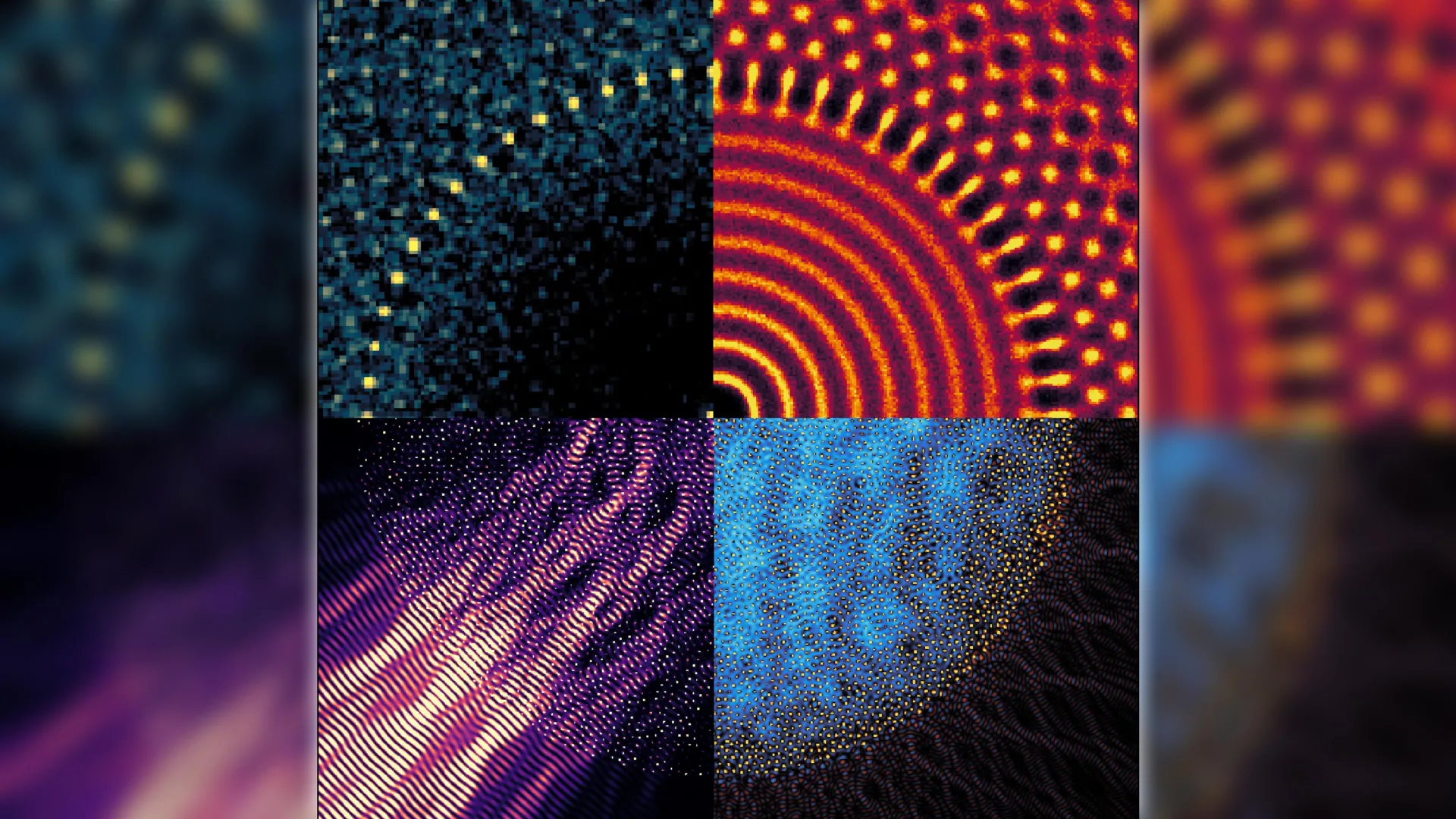
Breakthrough ‘Gyromorph’ Materials Promise Lightning‑Fast, Light‑Blocking Computers
Scientists at New York University have unveiled a brand‑new class of engineered material they call a “gyromorph.” Unlike ordinary substances, a gyromorph blends the chaotic, liquid‑like randomness of a fluid with a carefully designed, large‑scale pattern that repeats across the whole sample. This unusual mix lets the material block incoming light from every direction—something that has stumped researchers working with earlier quasicrystal‑based designs.
Why does this matter? Photonic computers, which process information with light instead of electricity, could become dramatically faster and far more energy‑efficient if they can keep stray photons from leaking out or interfering with one another. Gyromorphs act like an ultra‑effective light shield, preventing unwanted light from scattering while still allowing the precise pathways needed for computation. In laboratory tests the new material demonstrated near‑perfect light‑blocking performance, opening the door to chips that operate at speeds orders of magnitude beyond today’s silicon processors.
The discovery also settles a long‑standing question about whether disorder and order can coexist in a single, functional structure. With gyromorphs, researchers now have a versatile platform that could be tuned for a range of next‑generation technologies, from ultra‑fast data centers to advanced sensors and quantum‑information devices.
Read more
China Pushes Ahead with Safer, Smarter Nuclear Power: Small Reactors and Next‑Gen Tech in the Spotlight
At a high‑profile gathering in Shenzhen on November 12, China’s top nuclear regulator, Huang Xuenong, outlined a bold three‑point plan to modernise the nation’s nuclear fleet. First, he urged the continued refinement of the country’s flagship large pressurised water reactors, stressing that new materials, advanced equipment and digital monitoring can make them both safer and cheaper to run. Second, Huang called for a coordinated push on next‑generation technologies – from compact small modular reactors (SMRs) and Generation‑IV designs to controllable nuclear‑fusion experiments – insisting that development be guided by real‑world energy needs so China doesn’t fall behind strategic opportunities in the medium‑ to long‑term. Finally, he highlighted the need to build a stronger basic‑research backbone for nuclear science, breaking through current technology bottlenecks and achieving true self‑reliance in critical innovations. The remarks were made during the 4th China Nuclear Energy High‑Quality Development Conference and the Shenzhen International Nuclear Energy Industry Innovation Expo, events that showcase the country’s ambition to lead the global nuclear transition while keeping safety and sustainability at the forefront.
Read more

Rain‑Powered Floater Generates Clean Electricity from Droplets
A team of engineers has unveiled a lightweight, floating device that can turn ordinary rain into usable electricity. The clever system drifts on the surface of a body of water and uses the raindrops themselves as tiny power generators. When a drop lands on the device, its kinetic energy is captured and converted into electrical current, which is then stored in a small onboard battery. Because the device is made mostly of water‑friendly materials, it can be deployed in ponds, lakes, or even flood‑prone areas without harming the environment. In laboratory tests, a single square‑meter panel produced enough power to run low‑energy LED lights during a steady rainstorm, and larger arrays could potentially supply power to remote villages or emergency shelters. The researchers say the technology offers a new way to harvest renewable energy, especially in regions where sunlight is scarce but rain is abundant. With further scaling and cost reductions, rain‑powered floaters could become a valuable addition to the growing toolbox of clean‑energy solutions.
Read more
Chinese Companies Rush to Build All‑In‑One Renewable Power Networks
On November 8, China’s State Council Information Office unveiled a new white paper titled “China’s Actions for Carbon Peak and Carbon Neutrality.” The document outlines an ambitious roadmap for the country’s power sector as it scales up renewable energy. It calls for a sweeping upgrade of the grid to make it cleaner, safer, more reliable and smarter, integrating power generation, transmission, consumption and storage into a single, flexible system. The paper stresses the need to boost the power system’s ability to handle risks and maintain stability while rapidly adding wind, solar and other green sources. It also urges the development of a “new power system” that balances supply and demand, cuts carbon emissions, and leverages advanced digital technologies. In response, listed companies on China’s A‑share market are already launching integrated source‑grid‑load‑storage projects, linking renewable farms directly with smart grids, demand‑side management and battery storage. These initiatives aim to accelerate the large‑scale use of clean energy, support China’s goal of peaking carbon emissions before 2030 and achieving carbon neutrality by 2060. The coordinated push promises a more resilient, low‑carbon power network that can meet the country’s growing energy needs while protecting the environment.
Read more

Scientists Use CRISPR to Revive Ancient Gene That Could Stop Gout and Fatty Liver
A team of researchers at Georgia State University has harnessed CRISPR gene‑editing technology to re‑insert an ancient version of the uricase gene into human liver cells. In most mammals, uricase breaks down uric acid, but humans lost the functional gene millions of years ago, leaving us vulnerable to high uric‑acid levels that can cause painful gout attacks and contribute to fatty liver disease. By inserting the ancestral uricase directly into cultured liver cells, the scientists showed that the revived enzyme efficiently lowers uric‑acid concentrations and improves lipid metabolism, suggesting a dual protective effect against both conditions. The study, published in *Scientific Reports*, provides the first proof‑of‑concept that restoring a lost metabolic gene could be a safe, targeted strategy for treating common metabolic disorders. While the work is still in early laboratory stages, the findings open the door to future therapies that could one‑day replace lifelong medication with a one‑time genetic fix, offering hope to the millions worldwide who suffer from gout, non‑alcoholic fatty liver disease, and related health issues.
Read more
China’s Solar Surge Fuels Global Green Revolution
On the 10th anniversary of the Paris Agreement and the 5th anniversary of China’s "dual carbon" pledge, Beijing hosted a high‑profile forum titled “PV Industry Empowers Global Green and Low‑Carbon Transformation.” Backed by the Chinese Academy of Environmental Sciences and organized by the Public Environmental Research Center, the event unveiled the “2025 China PV Construction Progress Report.” The report highlighted China’s rapid expansion of photovoltaic (PV) power—from sprawling solar farms in the Gobi Desert to rooftop panels on city homes and rural buildings. It showed how breakthroughs in solar technology and innovative business models are boosting the country’s contribution to worldwide climate goals. Looking ahead, the report set an ambitious target of installing 100 billion kilowatts of solar capacity, emphasizing a shift toward higher‑quality, more sustainable growth. Attendees discussed how China’s solar push not only helps meet its own carbon‑neutral ambitions but also offers a blueprint for other nations seeking to accelerate the transition to clean energy. The gathering underscored the pivotal role of solar power in shaping a greener, low‑carbon future for the planet.
Read more