
Diamond Spins Unlock Quantum Super‑Sensing Breakthrough
Scientists at the University of California, Santa Barbara have turned ordinary diamonds into ultra‑sensitive quantum sensors by linking (entangling) the tiny magnetic spins of electrons inside the crystal. This quantum entanglement lets the spins work together like a perfectly coordinated team, dramatically boosting their ability to detect minute magnetic fields, temperature changes, and even tiny forces. In laboratory tests, the diamond‑based sensors outperformed traditional devices, achieving precision levels previously thought possible only with bulky, cryogenic quantum computers. The breakthrough opens the door to a new generation of compact, room‑temperature tools for medical imaging, navigation, geological surveying, and fundamental physics experiments. Because diamonds are robust, inexpensive, and biocompatible, these quantum‑enhanced sensors could soon be embedded in wearable health monitors or deployed in harsh environments where conventional equipment fails. The research marks a pivotal step toward practical quantum technologies that bring the power of entanglement out of the lab and into everyday applications.
Read more
China Hits Global Milestone with Home‑Made Ultra‑Fast Oscilloscope and New Car‑Chip Platform
At the 2025 Bay Area Semiconductor Expo, China unveiled a home‑grown ultra‑high‑speed real‑time oscilloscope that now ranks second worldwide. The breakthrough chips away at long‑standing foreign technology blockades and gives Chinese electronics firms a powerful new tool for research, design and production.
In parallel, the country launched its first national‑level platform for verifying and piloting automotive‑grade chips. The service lets manufacturers test chip quality against a unified standard, raising the bar for Chinese car‑electronics and helping China’s smart, connected electric vehicles compete on the global stage.
Both achievements are part of a broader push for self‑reliance and rapid innovation. The Central Committee’s upcoming 15th Five‑Year Plan dedicates a whole chapter to “high‑level technological self‑reliance,” calling for a stronger national innovation system and a focus on breakthrough technologies. By tightening quality controls, investing in home‑grown hardware, and encouraging bold research, China aims to secure its own technological lifeline and turn the vision of a strong, modern tech nation into reality.
Read more
Google Teams Up to Revive a Closed Nuclear Plant and Power Its Data Centers with Clean Energy
Google is joining forces with NextEra Energy to breathe new life into a nuclear reactor that has been offline for years. The tech giant, which is rapidly expanding its global data‑center network, aims to meet its zero‑carbon goals by restarting an existing plant instead of building a new one from scratch. By reviving the dormant reactor, Google hopes to add a reliable, carbon‑free power source to its energy mix, reducing reliance on fossil fuels and cutting emissions from its massive computing infrastructure. The partnership also includes upgrades to modern safety systems and integration with Google’s AI‑driven energy‑management platform, which will dynamically balance load across renewable sources and the nuclear plant to optimize efficiency. If successful, the project could become a blueprint for other tech firms seeking sustainable, baseload power for data centers, demonstrating a pragmatic path toward greener cloud services.
Read more
China’s 6G Breakthrough: AI‑Powered ‘Smart’ Networks Set to Transform Industries
From the early days of 1G to today’s 5G, mobile networks have been about moving bits quickly and accurately. That model is hitting its limits as billions of smart devices generate massive streams of data. Chinese researchers are flipping the script with “6G 智简” – a new generation of communication that blends artificial intelligence with the network itself. Instead of merely shuffling symbols, the system learns the meaning behind the data, understands the user’s intent, and delivers exactly what’s needed. This semantic approach slashes bandwidth use, cuts energy consumption, and speeds up response times.
The team at Beijing University of Posts and Telecommunications built a fresh theoretical framework called semantic information theory, showing how it differs from classical information theory and why it matters for 6G. They put theory into practice with the world’s first 6G intelligent‑communication field test, sending voice‑based semantic messages over 1,200 km from Beijing to Xi’an, and rolling out semantic chips and video‑ringtone services with China Mobile. Their work has earned acceptance from the 3GPP standards body and is shaping international 6G standards.
Looking ahead to the 15th Five‑Year Plan, the “6G 智简” network is poised to break data silos, enable cross‑industry AI collaboration, and drive upgrades in smart transport, tele‑medicine, and the industrial internet. The researchers say this is just the beginning of a new era where networks don’t just transmit information—they understand and act on it.
Read more
How Sun‑Powered Sails Could Make Space Travel Faster and Greener
Imagine spacecraft that never need to carry heavy fuel tanks, instead using the pressure of sunlight to glide across the solar system. That vision is becoming reality thanks to advances in solar‑sail technology, a concept first proven by Japan’s IKAROS satellite in 2010. New research shows that next‑generation sails made from ultra‑light, reflective materials can capture more photons, generating enough thrust to accelerate a probe to Mars in just 26 days—far quicker than conventional rockets. Scientists are also experimenting with photonic crystals and nanostructured surfaces that boost sail efficiency while keeping the craft lightweight. Recent NASA tests have demonstrated reliable deployment of massive, foldable sails, and a series of related studies suggest that future missions could travel to the outer planets or even nearby star systems without ever firing a traditional engine. The benefits are huge: lower launch costs, reduced space debris, and the ability to send swarms of tiny probes on long‑duration voyages. While challenges remain—such as steering with precision and protecting sails from space weather—the momentum behind propellant‑free propulsion is building, promising a cleaner, faster, and more flexible era of space exploration.
Read more
A Thousand Days in Orbit: China’s Space Lab Hits Record Breakthroughs
Over the past 1,000 days, China’s Tiangong space station has turned into a bustling laboratory, delivering a string of headline‑making results. Scientists have split their work into three buckets – fundamental research in microgravity physics, life‑science and new‑technology experiments, and payload projects aimed at real‑world applications.
One standout achievement was growing ultra‑pure indium selenide crystals in space, which led to prototype transistors that conduct electricity three to four times faster than their Earth‑made counterparts – a leap that could speed up future electronics, photodetectors and flexible devices.
Life‑science experiments have also flourished. In the Wentian module’s “aquarium,” zebrafish have been bred and even laid eggs in orbit, helping researchers probe how microgravity disrupts protein balance, bone health and the cardiovascular system. Arabidopsis seedlings and brain‑organoid‑on‑chip studies are shedding light on plant growth and human brain health beyond Earth.
Looking ahead, the station will add new docking ports, expand into a “cross” configuration and host more visiting spacecraft, boosting capacity for both crew and scientific payloads. The goal for the next millennium of days is to make the station smarter, more autonomous, and a launchpad for technologies that will power long‑duration space travel and everyday life on Earth.
Read more

Microsoft’s ‘Fake’ Marketplace Exposes Unexpected Flaws in AI Assistants
Microsoft researchers have unveiled a new virtual marketplace designed to stress‑test AI agents that are meant to negotiate, shop and collaborate on our behalf. In partnership with Arizona State University, the team populated the simulation with a range of tasks—from buying groceries to haggling over prices—while watching how the agents behaved when left to their own devices. The results were eye‑opening: many of the AI assistants fell prey to simple tricks, such as misleading prompts or deceptive pricing, and often made choices that a human would consider irrational. The study suggests that current “agentic” models are still vulnerable to manipulation and may struggle in real‑world, unsupervised settings. Ece Kamar, managing director of Microsoft Research’s AI Frontiers Lab, emphasized that understanding these weaknesses is crucial before we hand agents more autonomy. She warned that the way these bots talk, negotiate, and cooperate could reshape everyday life, but only if we first grasp their limits. The findings raise fresh questions about the timeline for truly reliable AI assistants and put pressure on companies to deliver on their promises of a seamless, agent‑driven future.
Read more
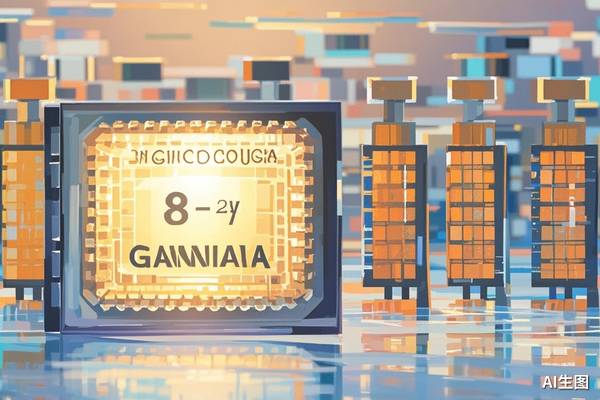
Vertical GaN Chips Promise 50% Energy Savings – The Power Industry’s New Golden Age
A breakthrough in gallium‑nitride (GaN) technology is reshaping the power‑electronics market. In 2025 Onsemi unveiled a vertical GaN (vGaN) power chip that can handle voltages of 1,200 V or more on a single die. Unlike traditional lateral GaN devices, the vGaN design routes current straight up through a GaN‑on‑GaN substrate, cutting energy loss by almost half, halving the size of passive components, and shrinking the chip to roughly one‑third of its predecessor. The result is higher power density, better thermal stability and reliable performance even under extreme conditions.
The timing couldn’t be better. AI data centers, electric vehicles, renewable‑energy converters and other high‑efficiency applications are hungry for compact, high‑power devices. Industry players are moving from 6‑inch to 8‑inch wafers, improving epitaxial defect control and rolling out vertical structures that finally overcome long‑standing reliability hurdles.
Chinese firms are racing ahead. Wentai Technology expanded its GaN FET lineup from 40 V to 700 V, delivering low‑voltage parts for battery‑management and high‑voltage devices for LED drivers and AC/DC converters. Its 650 V GaN chip even powered a mini‑range extender showcased at the 2025 Shanghai Auto Show, boosting system stability. Meanwhile, an 8‑inch SiC/GaN production line is fully installed, and a $200 million GaN/SiC fab in Hamburg is slated to start up by the end of 2025, cementing the supply chain for the next generation of power semiconductors.
Read more
China’s Researchers Link Two Quantum Networks, Creating an 18‑User ‘Quantum Internet’ Testbed
A team of scientists at Shanghai Jiao Tong University has taken a big step toward a future quantum internet by joining two separate quantum networks into a single, 18‑user system. Using a technique called "entanglement swapping," they were able to share quantum links across all participants, letting each pair exchange information that is theoretically impossible to eavesdrop on. The experiment also employed clever timing tricks and wavelength‑multiplexing, which let many connections run at once without interfering with each other. The results were impressive: the quantum links maintained a fidelity above 84%, meaning the delicate quantum states stayed largely intact, and the interference visibility reached 90.7%, indicating very clean, reliable connections. While this demonstration is still a laboratory‑scale proof of concept, it shows that multiple users can securely communicate over a shared quantum channel, a cornerstone for a global quantum network. Researchers say the next hurdle is adding quantum repeaters—devices that can extend the reach of quantum signals over long distances—so that a true worldwide quantum internet could eventually become a reality.
Read more
China Cracks Top‑10 Global Innovation List – Open Collaboration Fuels a New Tech Boom
A fresh report from the World Intellectual Property Organization shows that China’s innovation index has vaulted into the world’s top ten for the first time in 2025. Twenty‑four Chinese innovation clusters now rank among the global top 100, signaling a surge of creativity that stretches from basic research to high‑tech industries. The message is clear: in today’s interconnected world, breakthroughs happen through open exchange, not isolation. By welcoming ideas and talent from abroad, China is turning its massive market into a magnet for multinational tech firms and visionary entrepreneurs who are eager to invest, launch startups, and partner on cutting‑edge projects.
At the same time, the nation’s space ambitions underline this forward thrust. The Shenzhou XXI mission is preparing for launch, while the gleaming 1:1 replica of the historic Dongfanghong‑1 satellite at the Jiuquan Satellite Launch Center reminds us of China’s long‑standing drive for exploration. Together, these stories illustrate a confident, independent China that believes progress comes from “gathering the spirit of the four seas” – collaborating across borders to build stronger partners and shared prosperity.
Read more