NASA’s ESCAPADE Mission to Send Twin Mini‑Satellites ‘Blue’ and ‘Gold’ to Mars This November
NASA is gearing up for a bold new experiment called ESCAPADE, which will launch two tiny satellites—nicknamed Blue and Gold—toward Mars in early November. Unlike most Mars missions that wait for a perfect planetary alignment, ESCAPADE aims to prove that we can reach the Red Planet even when the planets aren’t lined up, opening the door for more frequent trips.
The twin craft will travel a staggering 300 million miles, carrying a suite of cutting‑edge instruments. Engineers at NASA’s Goddard Space Flight Center built a magnetic‑field detector, while Embry‑Riddle Aeronautical University contributed a plasma sensor to study charged particles swirling around the spacecraft. A camera from Northern Arizona University will snap images of Martian dust storms and the planet’s elusive auroras.
Mission leaders say the data will help future astronauts understand Mars’ thin atmosphere and weak magnetosphere—key factors for crew safety. Partners from Advanced Space LLC, Rocket Lab, Blue Origin and several universities are all pitching in, making ESCAPADE a true collaborative effort. If successful, the mission could reshape how we plan crewed journeys to Mars, allowing launches whenever the opportunity arises rather than waiting years for the next alignment.
Read more

Vertical GaN Chips Promise 50% Energy Savings – The Power Industry’s New Golden Age
A breakthrough in gallium‑nitride (GaN) technology is reshaping the power‑electronics market. In 2025 Onsemi unveiled a vertical GaN (vGaN) power chip that can handle voltages of 1,200 V or more on a single die. Unlike traditional lateral GaN devices, the vGaN design routes current straight up through a GaN‑on‑GaN substrate, cutting energy loss by almost half, halving the size of passive components, and shrinking the chip to roughly one‑third of its predecessor. The result is higher power density, better thermal stability and reliable performance even under extreme conditions.
The timing couldn’t be better. AI data centers, electric vehicles, renewable‑energy converters and other high‑efficiency applications are hungry for compact, high‑power devices. Industry players are moving from 6‑inch to 8‑inch wafers, improving epitaxial defect control and rolling out vertical structures that finally overcome long‑standing reliability hurdles.
Chinese firms are racing ahead. Wentai Technology expanded its GaN FET lineup from 40 V to 700 V, delivering low‑voltage parts for battery‑management and high‑voltage devices for LED drivers and AC/DC converters. Its 650 V GaN chip even powered a mini‑range extender showcased at the 2025 Shanghai Auto Show, boosting system stability. Meanwhile, an 8‑inch SiC/GaN production line is fully installed, and a $200 million GaN/SiC fab in Hamburg is slated to start up by the end of 2025, cementing the supply chain for the next generation of power semiconductors.
Read more

Bacteria‑Based Cancer Cure Works Without Relying on the Immune System
Scientists have unveiled a groundbreaking cancer treatment that uses engineered bacteria to attack tumors directly, bypassing the body’s immune response altogether. Building on more than a century and a half of research into bacterial cancer therapies, the new approach programs harmless microbes to seek out and destroy cancer cells while leaving healthy tissue untouched. In laboratory tests, the bacteria infiltrated solid tumors, released enzymes that triggered rapid tumor cell death, and did so without provoking the dangerous inflammation often seen with immunotherapies. Because the therapy does not depend on stimulating the immune system, it sidesteps severe side effects such as cytokine‑release syndrome and autoimmune reactions, making it a potentially safer option for patients who cannot tolerate current immunotherapies. Researchers say the technique could be adapted to target a wide range of cancers and may be combined with existing treatments for even greater effectiveness. Clinical trials are slated to begin next year, marking a promising step toward a new era of “immune‑free” oncology that could expand treatment possibilities for millions of patients worldwide.
Read more
Quantum Computing Is Closer Than Ever: From Lab Breakthroughs to 1,000‑Qubit Cloud Services
Big tech giants like IBM and Google are turning the once‑distant dream of usable quantum computers into a near‑future reality. Their latest prototypes promise scalable designs that could become fully operational in just a few years, potentially reshaping drug discovery, artificial‑intelligence research, and financial forecasting.
In a parallel leap, scientists at the Chinese Academy of Sciences have unveiled a novel neutral‑atom quantum processor built on a fiber‑array platform. By controlling individual atoms through separate fiber channels, they achieved single‑qubit gate fidelities of 99.66 % and parallel‑operation fidelities of 99.61 %, while demonstrating the crucial Rydberg‑blockade effect. This architecture offers natural alignment, high parallelism, and strong scalability, opening a new route toward large‑scale quantum machines.
Meanwhile, Chinese startup Bose Quantum showcased a 1,000‑qubit coherent optical quantum computer at the 2025 China International Fair for Trade in Services. Their prototype outperforms leading competitors such as D‑Wave in problem‑embedding efficiency, error reduction, and algorithmic flexibility. The company also launched a cloud service that gives users access to the full 1,000‑qubit space (2¹⁰⁰⁰ possible states), enabling massive combinatorial‑optimization tasks and open‑source PyTorch neural‑network training. Within months, the platform logged over 68 million solver calls from more than 900 universities and research institutes, signaling the arrival of practical, large‑scale quantum computing for industry and academia alike.
Read more
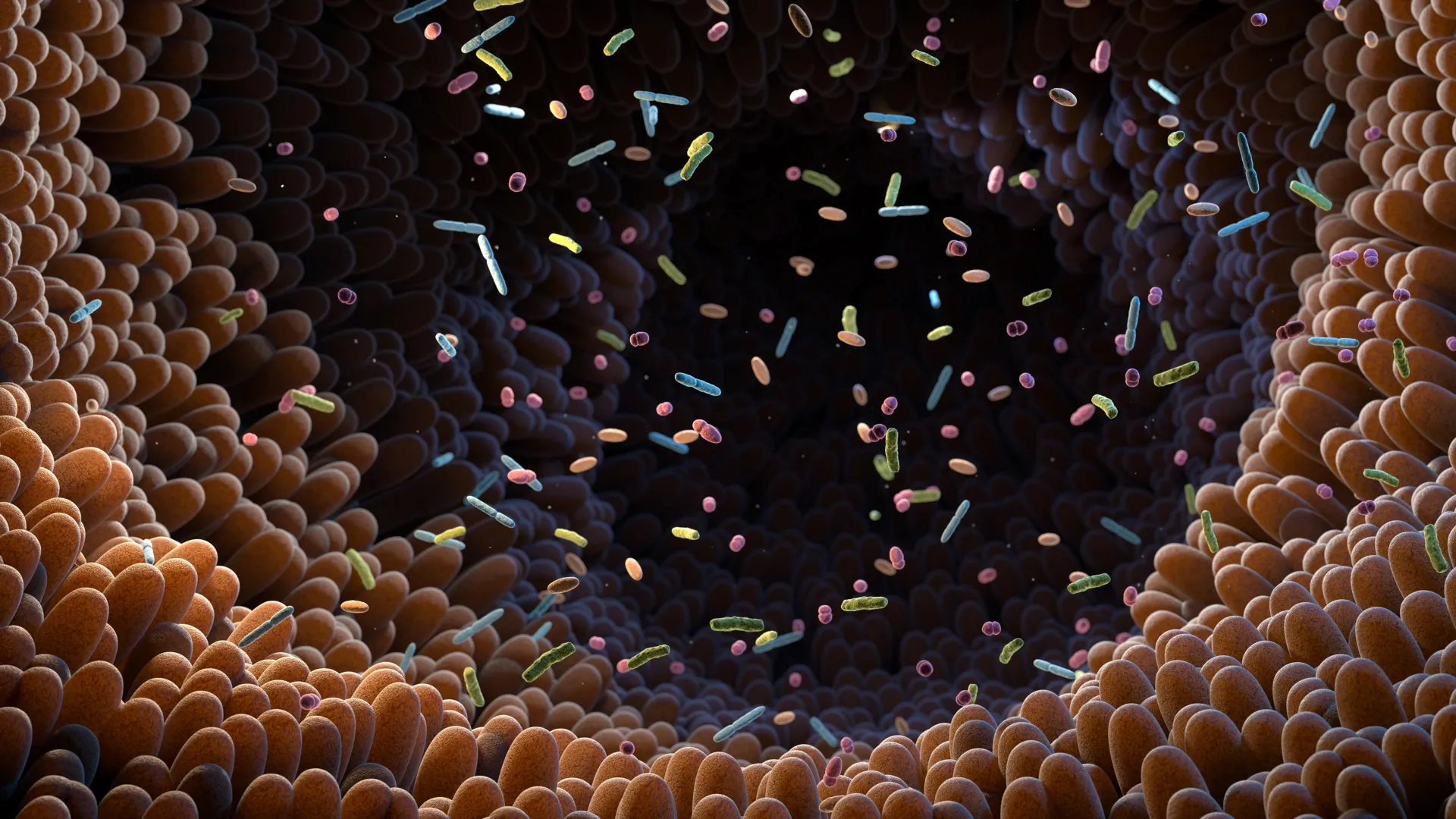
How AI is Decoding the Secret Language of Your Gut Bacteria
Researchers at the University of Tokyo have harnessed a cutting‑edge artificial‑intelligence system to eavesdrop on the tiny chemical conversations that happen inside our intestines. By feeding a massive collection of gut‑microbe data into a specially designed Bayesian neural network called VBayesMM, the team can tell which microbial signals are genuine biological messages and which are just random noise. This breakthrough lets scientists map out how different bacteria talk to each other and to our bodies, revealing patterns that were previously invisible. Early tests show the AI model can predict links between gut‑microbe activity and health conditions such as obesity, sleep disorders, and even certain cancers more accurately than older statistical methods. In plain terms, the technology acts like a translator, turning the complex chatter of millions of microscopic residents into clear, actionable insights for doctors and patients. The ultimate goal is to use these insights to develop personalized diet plans, probiotic therapies, and early‑warning tools that keep us healthier by keeping our gut ecosystem in balance.
Read more
Breakthrough Fiber‑Array Design Boosts Quantum Computer Power
A research team at the Chinese Academy of Sciences’ Precision Metrology Institute has unveiled a new way to build quantum computers using neutral atoms. Led by Zhan Mingsheng and Xu Peng, the scientists created a “fiber‑array” system where each quantum bit (qubit) gets its own tiny light‑carrying fiber. This fiber delivers both the trapping light that holds the atom in place and the control light that manipulates it, all through a single, shared optical path. By keeping the light beams perfectly aligned, the design eliminates the wobble and drift that usually mess up delicate quantum operations. In the lab, the team successfully controlled ten individual atoms, achieving a single‑qubit operation accuracy of 99.66 %. Even when four qubits were run at the same time, the accuracy stayed above 99.6 %. They also demonstrated a key two‑atom interaction called the Rydberg blockade, a stepping stone toward reliable two‑qubit gates. Because each fiber works independently, the system can be expanded simply by adding more fibers, and future versions could use three‑dimensional waveguide arrays or photonic chips. This breakthrough paves the way for larger, more stable quantum processors that could tackle problems far beyond the reach of today’s computers.
Read more