Mini‑Neptunes May Not Be Molten: New Study Suggests Solid Surfaces
Astronomers have long imagined many “mini‑Neptune” exoplanets as scorching lava worlds, with surfaces so hot that rock would melt into a sea of fire. However, fresh research is turning that picture on its head. By analyzing the way these planets interact with their atmospheres, scientists now argue that a solid, rocky surface could exist beneath the thick clouds of gas that envelope them.
“The choice is stark,” explains lead researcher Kempton. “Either the planet’s floor is a lava ocean, or it’s a solid crust. To decide which, we need to look closely at atmospheric clues—like temperature gradients, chemical signatures, and pressure profiles.” The team used advanced computer models to simulate a range of atmospheric conditions, finding that many mini‑Neptunes could retain enough heat to keep a solid surface stable, despite their proximity to their host stars.
If confirmed, this revelation reshapes our understanding of planetary formation and habitability. Solid surfaces could host geological activity, magnetic fields, and perhaps even the building blocks for life—features previously thought unlikely on such worlds. The findings also guide future telescope missions, helping astronomers target the most promising candidates for detailed study. In short, the universe may be offering more diverse and potentially hospitable planets than we first imagined.
Read more
Xiong’an’s ‘Digital Twin’ Blueprint Turns Real‑World City into a Smart Future Hub
Xiong’an New Area is leading China’s push toward truly smart cities by building a “digital twin” – a virtual replica that mirrors every street, building and utility in real time. The project, unveiled on Oct. 27, links sensors, data platforms and AI to create a living model of the city that city planners, engineers and emergency responders can explore online. By syncing the virtual copy with the physical environment, officials can test traffic changes, forecast energy demand, and simulate disaster responses without disrupting daily life. The digital twin also helps residents see how new developments will affect their neighborhoods, fostering greater transparency and public participation. Xiong’an’s ambitious effort aims to cut construction waste, improve resource efficiency, and boost overall quality of life, setting a template for other Chinese megacities. As the glowing lights of Xiong’an’s computing center illuminate the night sky, the city’s “digital eye” watches over a future where urban planning is faster, smarter, and more responsive to the needs of its people.
Read more

New ‘BrainSTEM’ Map Charts Human Brain Development, Paving Way for Better Parkinson’s Treatments
Scientists at Duke‑NUS Medical School have released an unprecedented, single‑cell atlas of the developing human brain called BrainSTEM. By analyzing almost 680,000 individual cells, the team captured the full diversity of brain cell types and traced how they mature, with a special focus on dopamine‑producing neurons—the cells most affected in Parkinson’s disease. The map reveals that many laboratory-grown brain models miss key features of real human tissue, explaining why some drug tests have failed to translate into effective therapies. By providing an open‑source, high‑resolution reference, BrainSTEM gives researchers a reliable benchmark for building more accurate lab models and for testing cell‑based treatments. The breakthrough could accelerate the discovery of drugs that protect or replace dopamine neurons, offering new hope for patients with Parkinson’s. In addition, the atlas serves as a valuable resource for studying other neurological conditions, from autism to Alzheimer’s, by showing exactly how brain cells form and interact during early development. Overall, BrainSTEM represents a major step toward turning detailed brain science into real‑world medical advances.
Read more

Fluorine‑Powered GaN Transistor Shatters 1,200‑Volt Barrier – A Power‑Tech Breakthrough
Researchers at Shandong University and Huawei have unveiled a new way to make gallium‑nitride (GaN) power transistors far tougher and more efficient. By implanting fluorine ions into the device’s edge—a technique they call Fluorine‑Implanted Termination (FIT)—they turned a standard fully‑vertical Si‑based GaN trench MOSFET into a high‑voltage champion. The FIT‑MOS can now withstand more than 1,200 volts before breaking down, more than double the 567‑volt limit of the older mesa‑etched termination (MET) design. The fluorine creates a built‑in negative charge that spreads the electric field evenly, eliminating the sharp corners that previously caused early failure. In addition to the voltage boost, the new transistor shows a low 3.3‑volt turn‑on threshold, an on‑off current ratio of ten million, and a specific on‑resistance of just 5.6 mΩ·cm², allowing it to carry huge currents (up to 8 kA per cm²). These figures make the device a strong candidate for kilovolt‑class applications such as electric‑vehicle chargers, renewable‑energy converters, and industrial motor drives. While other firms are exploring different GaN architectures—JFETs, planar‑gate MOSFETs, FinFETs, and vertical GaN‑on‑GaN diodes—the FIT breakthrough highlights how a simple material tweak can dramatically raise performance and lower costs, signaling a potential shift in the power‑electronics market.
Read more

Tiny Particles Supercharge Cancer Drug – 20,000‑Fold Boost With No Harsh Side Effects
A research team at Northwestern University has turned a standard chemotherapy medicine into a dramatically more powerful and safer treatment by wrapping it in tiny, engineered particles called spherical nucleic acids. These nanoscopic carriers act like precision delivery trucks, guiding the drug straight to cancer cells while sparing healthy tissue. The result? The drug’s ability to kill tumors is amplified by roughly 20,000 times compared with its original form, yet patients experience none of the usual chemotherapy side effects such as nausea, hair loss, or fatigue. The scientists achieved this by redesigning the drug’s molecular structure so it can be activated only where it’s needed, dramatically improving absorption and targeting. Early laboratory tests show the nanomedicine wipes out cancer cells in petri dishes and animal models far more efficiently than traditional chemotherapy. If these findings hold up in human trials, this breakthrough could usher in a new era of “precision nanomedicine,” where cancer treatments are both ultra‑effective and gentle on the body, potentially transforming how oncologists fight the disease.
Read more

China Surpasses U.S. in Top Scientists, Sparks Global Tech Race
A new analysis shows China now has more top‑tier scientists than the United States, signaling a rapid shift in global research power. The country already leads in AI papers and patents, and its gap in core AI technologies and model performance is shrinking fast. In the semiconductor arena, Chinese teams are publishing high‑impact work on materials and manufacturing despite export restrictions, and they are increasingly heading international collaborations.
China’s quantum breakthroughs are especially eye‑catching. In 2020 the photon‑based "Jiu Zhang" computer performed a task in 200 seconds that would take a classical supercomputer hundreds of millions of years—a feat matched only by Google. Earlier, the nation launched the world’s first quantum‑science satellite, Micius, enabling the first intercontinental quantum‑encrypted video call between Beijing and Vienna.
Biotech is another arena where China is taking the lead. Since 2016 it has produced more high‑impact papers than the U.S. and Europe, and by 2023 Chinese researchers contributed the majority of the most‑cited work in synthetic biology, genome sequencing and new antibiotics.
Beyond competition, China is weaving a "Scientific Silk Road" through its Belt and Road Initiative, linking labs and talent across Asia, Africa and Europe. From AI to chips, quantum to biomedicine, China is no longer a follower but an emerging front‑runner in the world’s most advanced technologies.
Read more

New Blood Test Gives Long‑Awaited Diagnosis for Chronic Fatigue Syndrome
Scientists at the University of East Anglia have announced a breakthrough that could finally put an end to the mystery surrounding Myalgic Encephalomyelitis/Chronic Fatigue Syndrome (ME/CFS). Using a cutting‑edge technique called EpiSwitch® 3‑dimensional genomic regulatory immunogenetic profiling, the team identified a set of blood‑based biomarkers that reliably distinguish ME/CFS patients from healthy individuals. The findings, published in the Journal of Translational Medicine, are based on a large, multi‑center study that validated the test across diverse patient groups.
For decades, ME/CFS has been diagnosed largely by exclusion, leaving patients frustrated and often dismissed. This new test offers an objective, laboratory‑based way to confirm the condition, paving the way for earlier intervention, better disease monitoring, and more focused research into treatments. Clinicians hope the assay will become a routine part of primary‑care screening, reducing the stigma and uncertainty that have long plagued sufferers. While further regulatory approval and wider clinical rollout are still needed, the discovery marks a pivotal step toward finally recognizing and managing a disease that affects millions worldwide.
Read more
China’s Space Lab Marks 1,000 Days of Breakthroughs – From Super‑Fast Chips to Space‑Born Zebrafish
Over the past 1,000 days the Chinese space station has turned into a bustling laboratory, delivering a stream of surprising scientific wins that go far beyond expectations. Researchers split their work into three buckets: pure science (life‑science, biotechnology, material science, micro‑gravity physics and new space technologies), frontier‑focused emerging science, and practical payload projects aimed at real‑world uses.
One headline‑grabbing result came from growing indium‑selenide semiconductor crystals in weightlessness. The crystals turned out so pure that prototype field‑effect transistors built from them showed three to four times higher electron mobility than any ground‑based version, boosting key performance metrics such as turn‑on current, switching ratio and stability. These advances could power faster computers, sharper optoelectronic devices, more sensitive photodetectors and flexible electronics.
On the biology side, the station’s Wentian module now hosts a tiny “aquarium” where zebrafish swim among floating plant fibers. The fish have not only reproduced in orbit but are also being used to study how micro‑gravity disrupts protein balance, offering clues to protect astronauts from bone loss and heart problems on long missions.
Looking ahead, the station will welcome more visiting spacecraft, add new docking ports and expand its modules, while scientists plan another wave of experiments to keep pushing China’s space science, technology and applications forward.
Read more
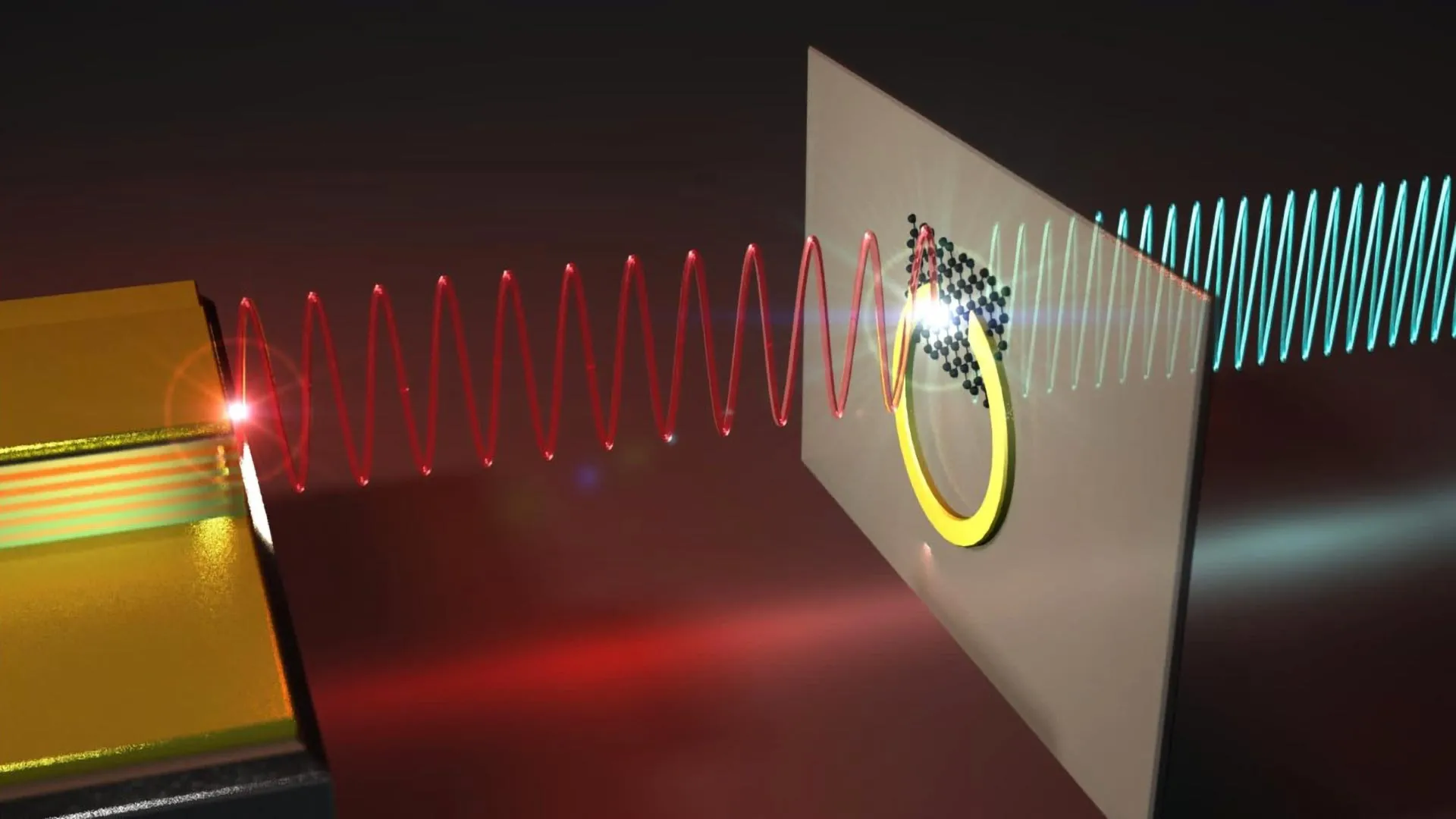
Scientists Unleash New Quantum Light, Paving Way for Ultra‑Fast Tech
Researchers have announced a landmark breakthrough in quantum materials that could reshape everyday technology. By breaking a long‑standing symmetry barrier, the team succeeded in generating a new form of terahertz‑frequency light that behaves like a quantum particle, or “quantum light.” This exotic light can be switched on and off in trillionths of a second, far faster than any conventional laser or LED. The discovery opens the door to a host of applications, from ultra‑high‑speed data links that could make current internet speeds look sluggish, to next‑generation medical imaging that captures real‑time cellular activity without harmful radiation. Because the quantum light can be integrated onto tiny chips, it also promises to boost the performance of quantum computers, making them more scalable and energy‑efficient. The researchers say the material’s unique structure—engineered at the nanoscale—allows electrons to move in coordinated patterns that emit terahertz photons without losing coherence. While still in the laboratory stage, the team is already working on prototypes that could bring this technology to consumer devices within the next decade, heralding a new era of ultrafast, low‑power electronics.
Read more
China’s Space Lab Hits 1,000 Days of Breakthroughs – From Super‑Fast Chips to Space‑Born Zebrafish
Over the past 1,000 days the Chinese space station has turned into a bustling laboratory, delivering a stream of surprising scientific wins that go far beyond expectations. Researchers split their work into three buckets: pure science (life‑science, biotechnology, material science, micro‑gravity physics and new space technologies), frontier‑focused emerging science, and practical payload projects aimed at real‑world uses.
One headline‑grabbing result came from growing indium‑selenide semiconductor crystals in weightlessness. The crystals turned out so pure that prototype field‑effect transistors built from them showed three to four times higher electron mobility than any ground‑based version, boosting key performance metrics such as turn‑on current, switching ratio and stability. These advances could power faster computers, sharper optoelectronic devices, more sensitive photodetectors and flexible electronics.
On the biology side, the station’s Wentian module now hosts a tiny “aquarium” where zebrafish swim among floating plant fibers. The fish have not only reproduced in orbit but are also being used to study how micro‑gravity disrupts protein balance, offering clues to protect astronauts from bone loss and heart problems on long missions.
Looking ahead, the station will welcome more visiting spacecraft, add new docking ports and expand its modules, while scientists plan another wave of experiments to keep pushing China’s space science, technology and applications forward.
Read more