Honolulu Hosts 45th VLSI Symposium: AI‑Ready Chips Take Center Stage
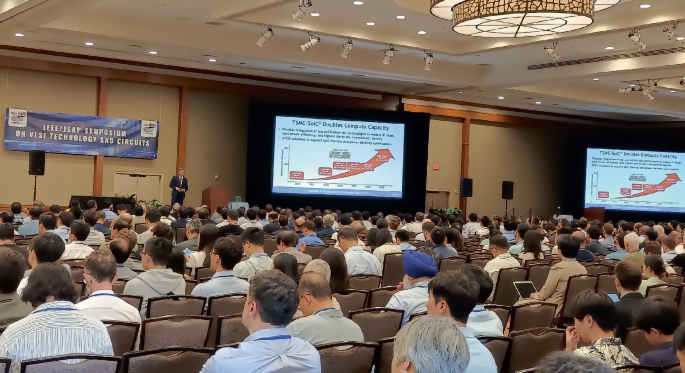
More than 1,500 engineers, researchers and industry leaders from across the globe converged on Honolulu, Hawaii, from June 14‑18 for the 2026 IEEE/JSAP Symposium on Very‑Large‑Scale Integration (VLSI) Technology & Circuits. Marking the 45th anniversary of the event, the gathering was co‑hosted by the Institute of Electrical and Electronics Engineers (IEEE) and the Japan Society of Applied Physics (JSAP), underscoring its status as a premier forum for microelectronics innovation. Attendees explored how breakthroughs in semiconductor materials, circuit design, advanced packaging, and system‑level integration are reshaping the next generation of artificial‑intelligence hardware. Highlights included a plenary talk by Lee‑Chung Lu of TSMC, who detailed cutting‑edge packaging techniques that enable AI chips to scale in performance while staying power‑efficient. Throughout the symposium, participants exchanged ideas on everything from 3‑nanometer process nodes to heterogeneous integration strategies that fuse logic, memory and sensors onto a single package. The consensus was clear: the future of AI hinges on smarter, tighter, and more adaptable chip architectures. The event not only celebrated four and a half decades of VLSI progress but also set the agenda for the next wave of AI‑driven technologies.
Read more
Chinese Cancer‑Ablation Tools Take the Global Stage
Chinese medical innovators are now leading the world in tumor‑ablation technology. In a 2022 study published in JAMA Surgery, Nuosheng Medical showed that its new steep‑pulse device reduced clinically significant prostate cancer to just 6% after six months—far better than the 20% rate seen with older methods—while preserving nerves, blood vessels and the urethra. A separate analysis of 1,452 patients revealed that high‑frequency irreversible electroporation (IRE) kept 97% of men continent and 91% sexually functional.
A breakthrough came in November 2025 when Shanghai Pulmonary Hospital’s team reported that the “Kangbo Knife,” which combines cryo‑thermal ablation with immunotherapy, more than doubled median progression‑free survival—from 11.7 to 26.7 months—for patients with recurring lesions. These real‑world results are now being cited by overseas doctors as a benchmark for product value.
The impact reached the European Association of Urology’s 2026 guidelines, which gave IRE an A‑grade recommendation for localized prostate cancer, citing studies led by Dr. Zhang Kai. Chinese devices are no longer just following Western standards; they are shaping them. The momentum continues at major conferences, where Chinese teams demonstrate live surgeries and share data, cementing their growing influence in the global fight against cancer.
Read more