AI‑Powered Early Warning: How Smart Machines Could Transform Pandemic Response
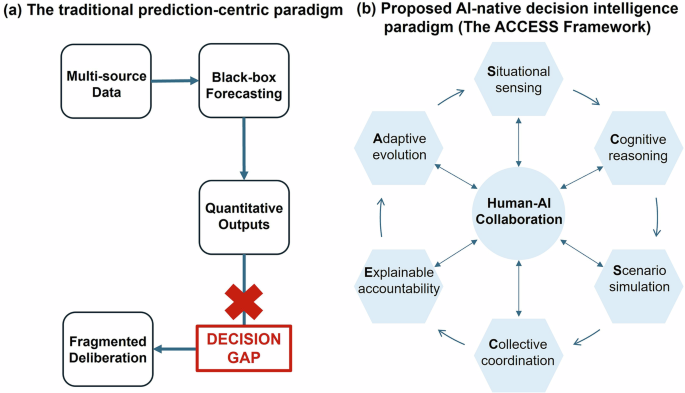
Public health officials are racing against time when a new disease emerges, and traditional surveillance tools often lag behind the spread. A new perspective proposes that the next generation of epidemic alerts should be built around artificial‑intelligence‑native decision intelligence. By harnessing large language models (LLMs) and other generative AI agents, health agencies could ingest real‑time data—from hospital reports to social‑media chatter—and instantly generate forecasts, risk maps, and actionable recommendations. Researchers highlight how LLMs can reason through complex epidemiological scenarios, simulate human behavior, and even debate multiple hypotheses to improve factual accuracy. The approach promises faster detection of hotspots, clearer communication of uncertainty, and more coordinated policy actions across local, national, and global levels. However, the authors caution that AI systems must be transparent, accountable, and rigorously validated before they guide life‑saving decisions. They call on policymakers, technologists, and public‑health leaders to co‑design standards, ethical guidelines, and robust infrastructure that embed AI safely into epidemic preparedness. If these hurdles are met, AI‑native early‑warning platforms could shift public‑health governance from reactive firefighting to proactive, data‑driven protection of communities worldwide.
Read more