China’s Innovative Drug Deals Set to Surge in 2026 – Experts Predict Strong Global Partnerships
2025 was a landmark year for China’s outbound pharmaceutical licensing, with 158 deals worth a record $135.7 billion. Analysts say the surge was driven by China’s lower trial costs – about $25,000 per patient versus $70,000 in the U.S. – and faster patient enrollment, roughly five times quicker than American sites.
While the sheer size of a few mega‑transactions inflated the 2025 totals, experts expect 2026 to keep the same high‑energy pace, even if the overall dollar amount doesn’t surpass last year. Huang Yang of First Financial notes that despite broader U.S.–China trade frictions in chips and cars, drug R&D and licensing are becoming a bridge between the two markets. Chinese‑developed medicines are already entering U.S. trials, and U.S. firms are eyeing Chinese pipelines for mid‑to late‑stage assets.
Cost advantages, an expanding hospital‑based research network, and a reputation for “good and fast” clinical work have made China an attractive source of external innovation for multinational pharma giants, whose internal R&D share has fallen from 51 % in 2004 to 37 % today.
In the first 20 days of January 2026, ten new outbound deals were already signed, underscoring a momentum that industry insiders believe will continue well into the year.
Read more

AI Can Spot Cancer—and It’s Learning More About You Than You Think
A new wave of artificial‑intelligence tools is proving capable of spotting cancer in tissue samples, but researchers warn that the same technology is also picking up hidden clues about a patient’s background. In a recent study, scientists used deep‑learning models on three‑dimensional images of prostate cancer specimens. The AI could predict clinical outcomes and even detect tiny molecular differences that human eyes miss. However, the system also learned to associate certain genetic mutations with specific cancer types. Because those mutations are more common in some demographic groups than others, the AI’s shortcuts can lead to lower accuracy for populations where the mutations are rare. In other words, the technology’s power to read subtle biological signals also makes it vulnerable to bias built into the data it was trained on. The findings highlight a double‑edged sword: while AI could revolutionize early cancer detection, developers must ensure the models are trained on diverse, representative datasets to avoid unintentionally widening health disparities. Experts say the next step is to fine‑tune these algorithms so they focus on truly universal disease markers rather than demographic proxies.
Read more
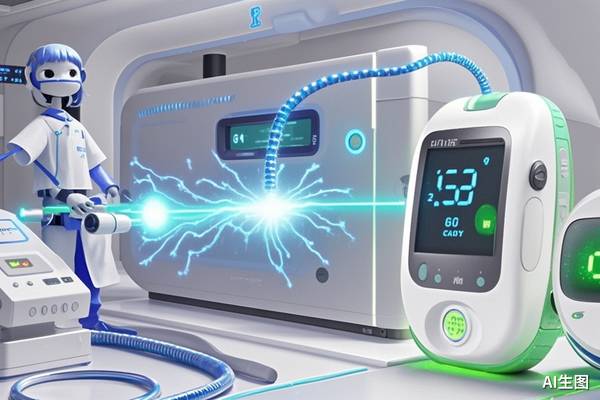
The 10 Medical‑Device Breakthroughs Growing Faster Than Anything Else
China’s medical‑device market is booming, and ten products are sprinting ahead of the pack. Mechanical thrombectomy kits, used to clear blood clots in stroke patients, are expanding at more than 20% a year thanks to a huge pool of vascular‑disease sufferers and mature technology.
The hottest star is transcatheter mitral and tricuspid therapy (TMTT). These minimally invasive valve‑repair tools let elderly patients avoid risky open‑heart surgery, and they’re reshaping heart‑care worldwide. Global leaders such as Abbott and Edwards Lifesciences saw TMTT revenue jump 59% year‑over‑year, with devices like PASCAL and EVOQUE driving the surge. In China, the number of approved TMTT products doubled from three in 2024 to six in 2025, hinting at a massive upcoming wave.
Robotic bronchoscopic surgery also leapt into the spotlight in 2025, as rising health awareness fuels demand for non‑invasive lung procedures and better sleep‑apnea treatment.
Meanwhile, the Shockwave intravascular lithotripsy (IVL) balloon hit the $1 billion milestone for Johnson & Johnson, offering a sound‑wave solution to hard‑to‑treat calcified artery lesions. With roughly 30% of coronary patients facing calcification, IVL’s market share could still climb dramatically.
Together, these innovations illustrate how cutting‑edge products are driving unprecedented growth in the medical‑device sector, rewarding companies that invest early and keep the pipeline flowing.
Read more

AI Beats Most People in Creative Writing Tests—But Top Human Minds Still Lead
A new study published in *Scientific Reports* shows that today’s most advanced language AIs are now as creative as the average person – and sometimes even a bit more so. Researchers from the University of Montreal, Concordia University, the University of Toronto Mississauga, the Mila AI institute and Google DeepMind tested popular AI tools such as ChatGPT, Claude, Gemini and GPT‑4 on a series of “divergent thinking” tasks that measure how many original ideas a person can generate from a single prompt. Over 100,000 human volunteers also took the same tests. The results reveal a clear turning point: on many of the tasks, the AI models scored higher than the typical human participant, indicating that machines have caught up to everyday creative ability. However, the study also found that the most inventive individuals – the top few percent of human thinkers – still outperformed even the strongest AI systems by a noticeable margin. Led by Professor Karim Jerbi and co‑first authors Antoine Bellemare‑Pépin and François Lespinasse, the research highlights both the promise and the limits of generative AI, suggesting that while machines can handle routine creative work, truly groundbreaking ideas remain a human specialty.
Read more
Medical Innovation ETF Draws Fresh Cash as Brain‑Computer Tech Gets Government Boost
The Medical Innovation ETF (ticker 516820) has attracted steady investor money for three days in a row, pulling in more than 11 million yuan in total, with daily inflows averaging about 3.7 million yuan. The fund tracks the CSI Pharmaceutical and Medical Device Innovation Index, which includes 30 fast‑growing health‑care companies such as WuXi AppTec, Hengrui Medicine, and Mindray Medical, together accounting for nearly two‑thirds of the index.
A wave of new policies is super‑charging the brain‑computer‑interface (BCI) market. Seven government departments released a joint plan outlining a strategic roadmap for BCI development, while the National Healthcare Security Administration clarified pricing rules, solving the long‑standing “how to charge” dilemma. The drug regulator also placed implantable BCI devices in a fast‑track approval list, cutting time to market.
Two BCI approaches are gaining traction. Non‑invasive devices—safe, cheap, and easy to scale—are moving quickly from labs to rehab clinics and even consumer gadgets. Invasive and semi‑invasive systems, which capture brain signals with higher precision, are being tested for high‑value medical uses, showing early success in restoring movement for patients with spinal‑cord injuries and strokes.
Meanwhile, the medical‑device sector stays lively. The National Healthcare Security Administration just issued draft pricing guidelines covering 37 new services, including 3D‑printed implants, surgical‑robot arms, and remote‑surgery tools, signaling further market expansion.
All these factors—policy support, technological breakthroughs, and fresh capital—are driving rapid growth and commercialisation in China’s health‑tech arena.
Read more

Breakthrough: Earth Can Beam Quantum Signals Straight to Space
A team of researchers from the University of Technology Sydney has shown that sending quantum‑encrypted data from the ground up to orbiting satellites is not just a theory—it’s a practical reality. In a paper published in *Physical Review Research*, the scientists demonstrated a mathematical proof that a network of just five low‑Earth‑orbit satellites could reliably receive quantum‑entangled photons beamed from Earth‑based transmitters. This "uplink" approach sidesteps the need for bulky, power‑hungry quantum sources on the satellites themselves, making the technology cheaper and easier to scale. The breakthrough could accelerate the rollout of ultra‑secure global communications, quantum‑enhanced GPS, and other applications that rely on the unbreakable security of quantum entanglement. By proving the concept works under realistic conditions, the study paves the way for the next generation of quantum satellites that rely on ground stations for their quantum signals, opening a new chapter in space‑based quantum networks.
Read more