China’s Cutting‑Edge Glioma Breakthroughs in 2024: Light, Sound, Magnetism and Immune Hacks
Chinese researchers are pushing the frontiers of brain‑tumor treatment with a suite of novel physical and immune‑based strategies. A near‑infrared‑activated photosensitizer (UCNPs‑F127@Cur) developed by Wang Shilong’s team can penetrate deep tissue, force glioma stem cells to differentiate, and curb tumor regrowth. Liu Xujie’s group created near‑infrared‑II cyanine dyes that, when paired with a transferrin‑guided nanoparticle (Tf‑IRLy NPs), cross the blood‑brain barrier, light up tumors for imaging, and deliver precise photothermal therapy. Wu Dejun introduced an ultrasound‑triggered nanoplatform (Aza‑BD@PC NPs) that floods cancer cells with singlet oxygen and releases hydrogen sulfide to spark ferroptosis, offering a new sonodynamic attack. Magneto‑mechanical manipulation using iron‑oxide nanoprobes, reported by Cheng Yu, shows that disrupting the G2/M phase of cell division can dramatically shrink glioma and breast tumors, especially when combined with cycle‑specific drugs. On the drug‑delivery front, nanocarriers are being fine‑tuned to ferry therapeutics across the blood‑brain barrier, while oncolytic virus work reveals that blocking neutrophil extracellular traps (NETs) boosts viral killing; a phase‑I trial of a non‑secretory IL‑12 adenovirus showed promising safety and remission in two patients. Immunologically, teams uncovered a “tumor‑nerve‑immune” loop where hypoxia‑driven neuronal activity fuels an immunosuppressive microenvironment, and demonstrated that antiepileptic levetiracetam or engineered bacteria can re‑program macrophages and microglia to support T‑cell attacks. Clinically, real‑world data confirm that Tumor Treating Fields (TTFields) combined with standard chemoradiotherapy extend survival in high‑grade glioma, especially when patients maintain high compliance, achieve gross‑total resection, and have MGMT promoter methylation. Together, these advances map a multi‑modal roadmap—light, sound, magnetism, nanotech, and immune modulation—to outsmart one of the toughest brain cancers.
Read more
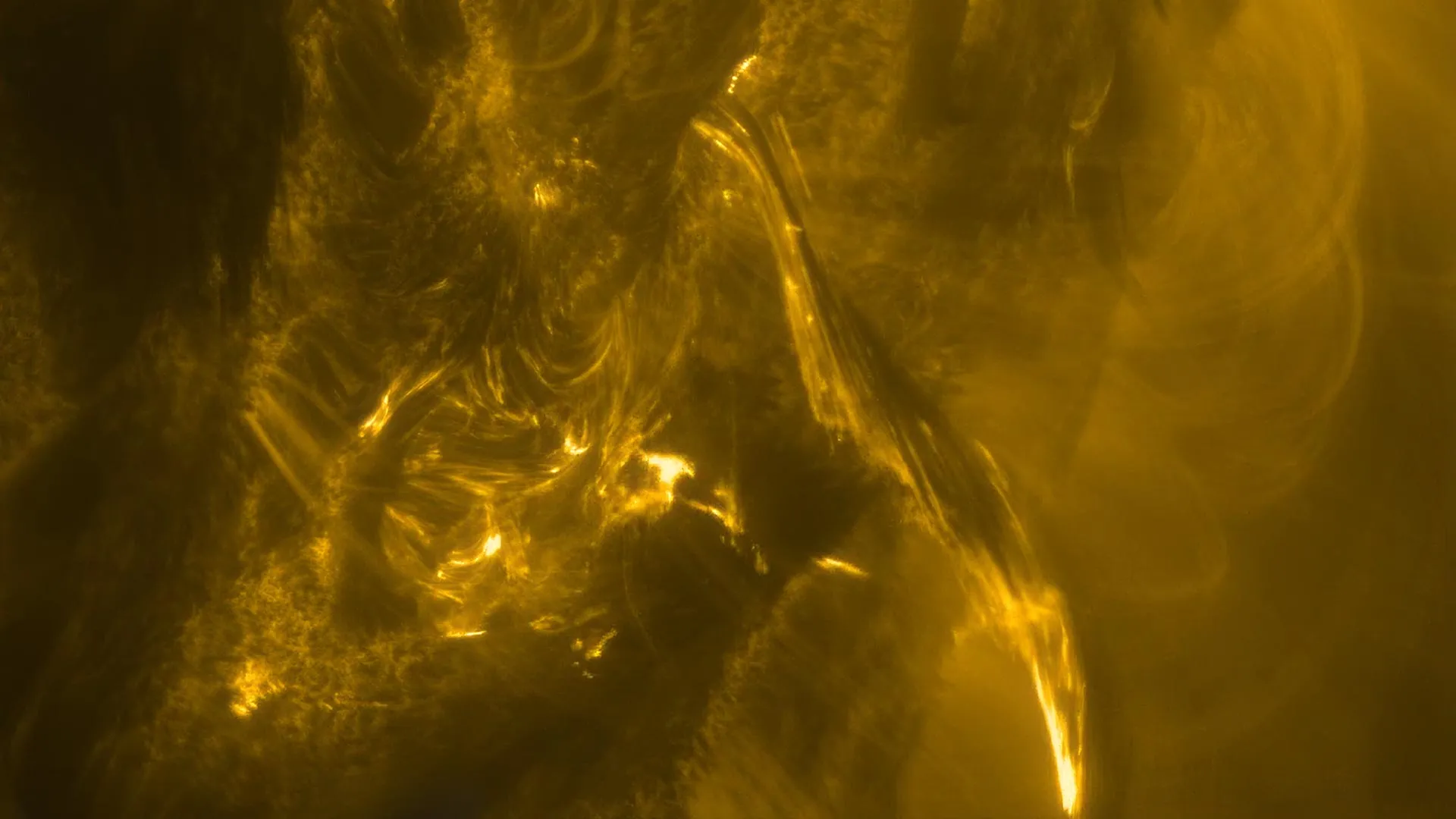
Spacecraft Spots ‘Magnetic Avalanche’ Behind Sun’s Biggest Explosions
A European‑NASA spacecraft called Solar Orbiter has finally filmed the elusive “magnetic avalanche” that sparks the Sun’s most powerful eruptions, known as solar flares. Using its suite of high‑resolution imagers—including the Extreme Ultraviolet Imager, the Polarimetric and Helioseismic Imager, and the STIX X‑ray telescope—the probe captured a rapid cascade of magnetic field lines snapping and reconnecting in the Sun’s outer atmosphere. This chain reaction releases a massive burst of energy that can launch billions of tons of plasma into space at near‑light speed, sometimes hurling dangerous radiation toward Earth. The new observations show exactly how the avalanche starts, how it spreads across the solar surface, and why some flares become “super‑flares” capable of disrupting satellites and power grids. Scientists say the breakthrough will improve space‑weather forecasting and help protect modern technology. The findings also deepen our understanding of magnetic processes that occur throughout the universe, from distant stars to black‑hole jets.
Read more