Breakthrough Tiny Chip Could Supercharge the Next Generation of Quantum Computers
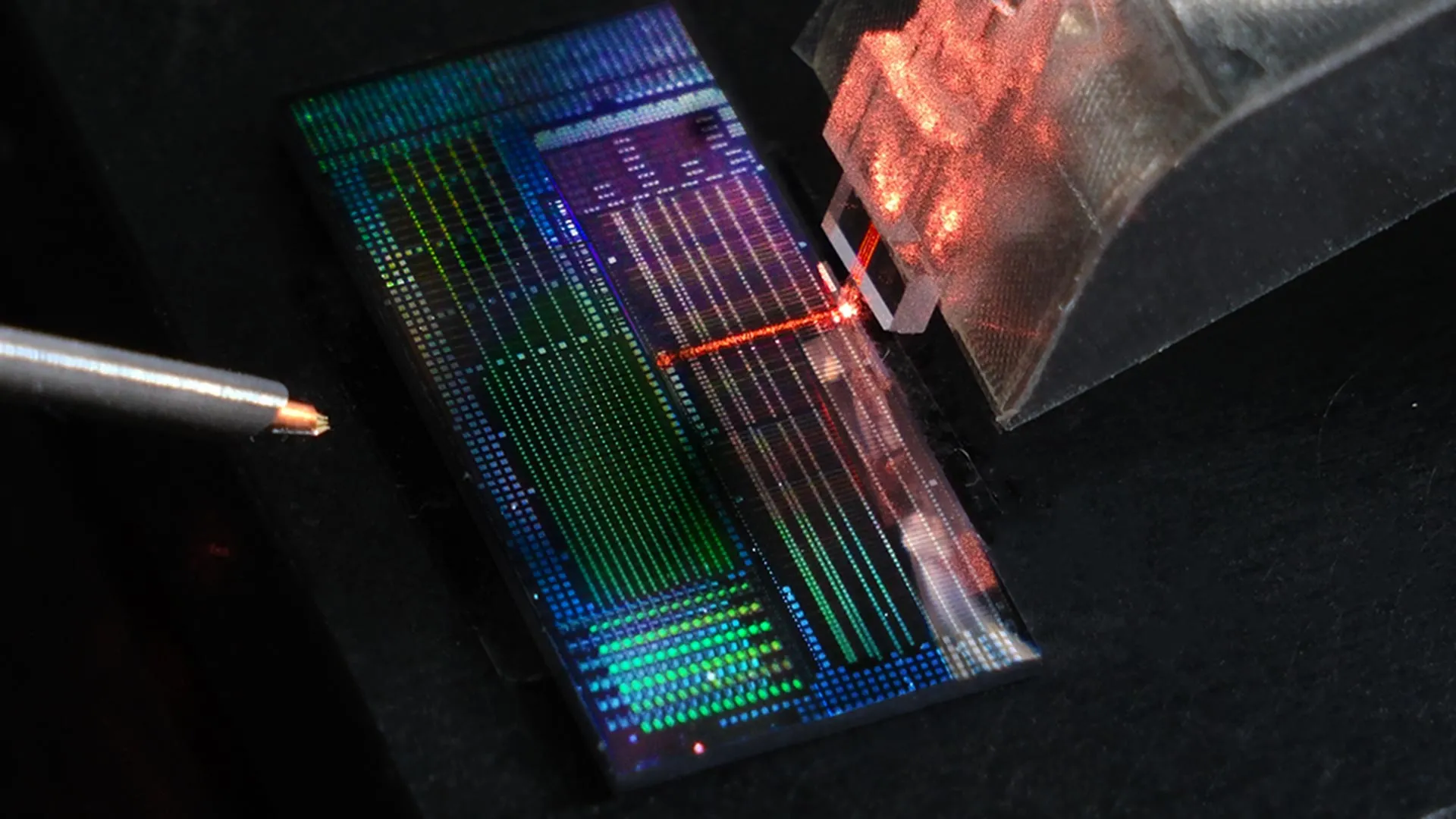
Researchers at the University of Colorado Boulder have unveiled a minuscule, chip‑sized device that may dramatically reshape quantum computing. The new component, only a few micrometres across, integrates a sophisticated metasurface—a patterned layer only a few nanometres thick—that can replace the bulky, delicate optical parts traditionally required to manipulate quantum bits (qubits). By compressing these functions onto a single, ultra‑thin layer, the chip promises to make quantum machines smaller, more reliable, and far less noisy. The breakthrough builds on earlier work from Harvard, where scientists demonstrated that a similar metasurface could streamline complex optical setups. Together, these advances suggest a future where quantum processors are not confined to massive laboratory rigs but could fit into compact, scalable hardware. The Colorado team’s prototype also shows faster generation of “magic states,” a crucial ingredient for error‑corrected quantum calculations, meaning computations could become both quicker and more accurate. If the technology scales as expected, it could accelerate the rollout of practical quantum computers for tasks ranging from drug discovery to climate modeling, bringing the once‑theoretical power of quantum mechanics closer to everyday applications.
Read more